India's PSLV Rocket Returns to Flight After May Failure
India's workhorse PSLV rocket is ready to fly again eight months after a rare failure, carrying a military Earth observation satellite and 15 other payloads into orbit. The successful return marks another step forward for India's ambitious space program.
India's reliable PSLV rocket is making its comeback tonight, proving that setbacks are just setups for stronger launches.
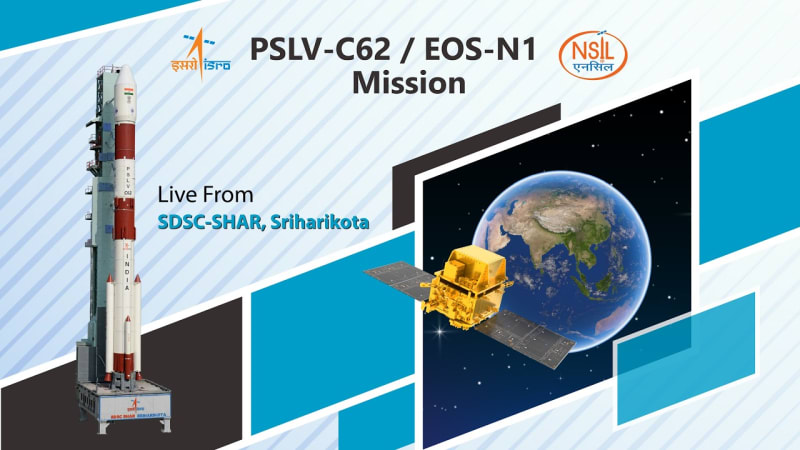
The four-stage Polar Satellite Launch Vehicle lifted off from the Satish Dhawan Space Centre carrying EOS-N1, a military satellite designed to monitor Earth in hundreds of different wavelengths of light. Fifteen other payloads joined the ride, including satellites from Thailand, the UK, Brazil, and Spain.
Tonight's mission comes eight months after the PSLV experienced only its third failure in 63 launches since 1993. The May 2025 incident resulted in the loss of ISRO's EOS-09 satellite, but the Indian Space Research Organisation worked quickly to identify and fix the problem.
The 145-foot-tall rocket has an impressive resume that speaks to India's growing space capabilities. It launched the Chandrayaan-1 moon probe in 2008, the Mars Orbiter Mission in 2013, and India's first sun-studying spacecraft Aditya-L1 in 2023.
EOS-N1, also called Anvesha, will join India's expanding fleet of Earth observation satellites that serve both civilian and military purposes. The satellite's advanced imaging technology can capture data across hundreds of light wavelengths, providing detailed information about our planet's surface.
The diverse group of companion payloads shows how space is becoming more accessible to countries and companies worldwide. A Brazilian satellite will help locate distressed fishing boats, while an Indian company demonstrates new in-orbit fueling technology that could extend satellite lifespans.
One payload won't stay in orbit at all. Spain's Orbital Paradigm is testing a reentry capsule called KID that will separate from the rocket's fourth stage and splash down in the South Pacific, gathering valuable data for future space missions.
The Ripple Effect
India's space program continues to inspire developing nations worldwide by proving that consistent investment in science and technology pays off. The country now handles commercial launches through NewSpace India Limited, creating jobs and building expertise that strengthens its entire tech sector.
This mission represents the ninth organized by ISRO's commercial arm, showing how space exploration can be both ambitious and economically sustainable. Each successful launch builds confidence for partners who want reliable, affordable access to orbit.
The PSLV's return to flight demonstrates something important beyond rockets and satellites: resilience works. India analyzed the failure, made corrections, and came back stronger.
More Images


Based on reporting by Space.com
This story was written by BrightWire based on verified news reports.
Spread the positivity! 🌟
Share this good news with someone who needs it