NASA Launches 3 Universe-Exploring Satellites on SpaceX Ride
Three new NASA telescopes just launched into orbit to study distant stars, black holes, and alien worlds. The missions show how small, affordable satellites are opening up the universe to more scientists than ever before.
Three new NASA telescopes are now circling Earth, ready to unlock mysteries about stars, black holes, and planets beyond our solar system.
The spacecraft hitched a ride to space on January 11 aboard a SpaceX rocket that carried 40 satellites into orbit. While most were commercial satellites for communications and Earth imaging, three belonged to NASA scientists eager to explore the cosmos.
The smallest of the trio, SPARCS, is about the size of a shoebox. Built by researchers at the University of Arizona, it will watch 20 nearby stars for powerful flares that could make or break the chances for life on orbiting planets. Understanding these stellar outbursts helps scientists figure out which planets might be habitable.
BlackCAT, built at Penn State University, will hunt for X-ray flares from supermassive black holes lurking at the centers of distant galaxies. The cubesat will also catch gamma-ray bursts, some of the most energetic explosions in the universe.
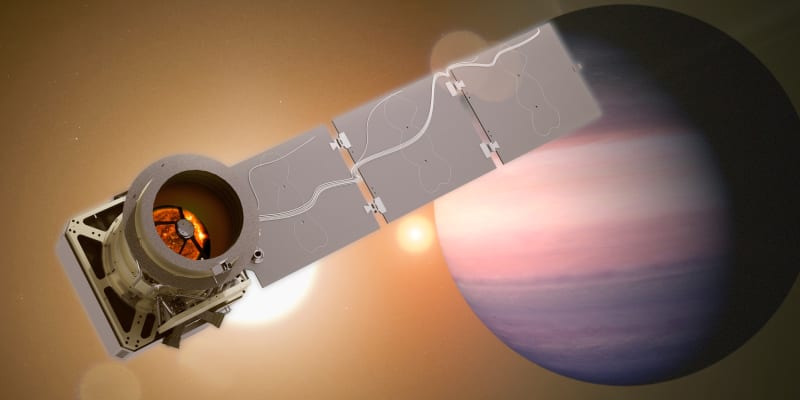
The largest spacecraft, Pandora, carries a telescope to study the atmospheres of exoplanets. As these distant worlds pass in front of their host stars, Pandora will analyze the starlight filtering through their atmospheres, revealing what gases might be present. That data could eventually help identify worlds with conditions suitable for life.
All three missions cost a fraction of traditional space telescopes. Pandora came in under $20 million through NASA's Astrophysics Pioneers program, which gives smaller research teams a shot at space missions. The two cubesats were funded through research grants that universities and small institutions can actually compete for.
The Ripple Effect
This democratization of space science means more diverse ideas get tested. Graduate students gain hands-on experience building real spacecraft. Researchers who might never lead a billion-dollar mission can still contribute meaningful discoveries about our universe.
NASA plans to select up to two more Pioneers missions this year, continuing the trend of opening space exploration to more scientists with creative ideas. The agency is purposefully spacing out its calls for proposals so teams can learn from recently selected missions and pitch fresh concepts.
Four years ago, this program didn't exist. Now multiple Pioneers missions are already in space or preparing to launch, including Aspera to study galaxy evolution and an "artificial star" satellite called Landolt that will help calibrate brightness measurements from ground telescopes.
The universe is getting a little less mysterious, one small satellite at a time.
More Images


Based on reporting by SpaceNews
This story was written by BrightWire based on verified news reports.
Spread the positivity! 🌟
Share this good news with someone who needs it


