India's Sacred Groves Grow Twice the Giant Trees
In India's Western Ghats, forest patches protected by spiritual belief are nurturing the next generation of trees far better than surrounding villages. These sacred groves hold nearly twice as many giant tree species and successfully grow young trees that will become tomorrow's forests.
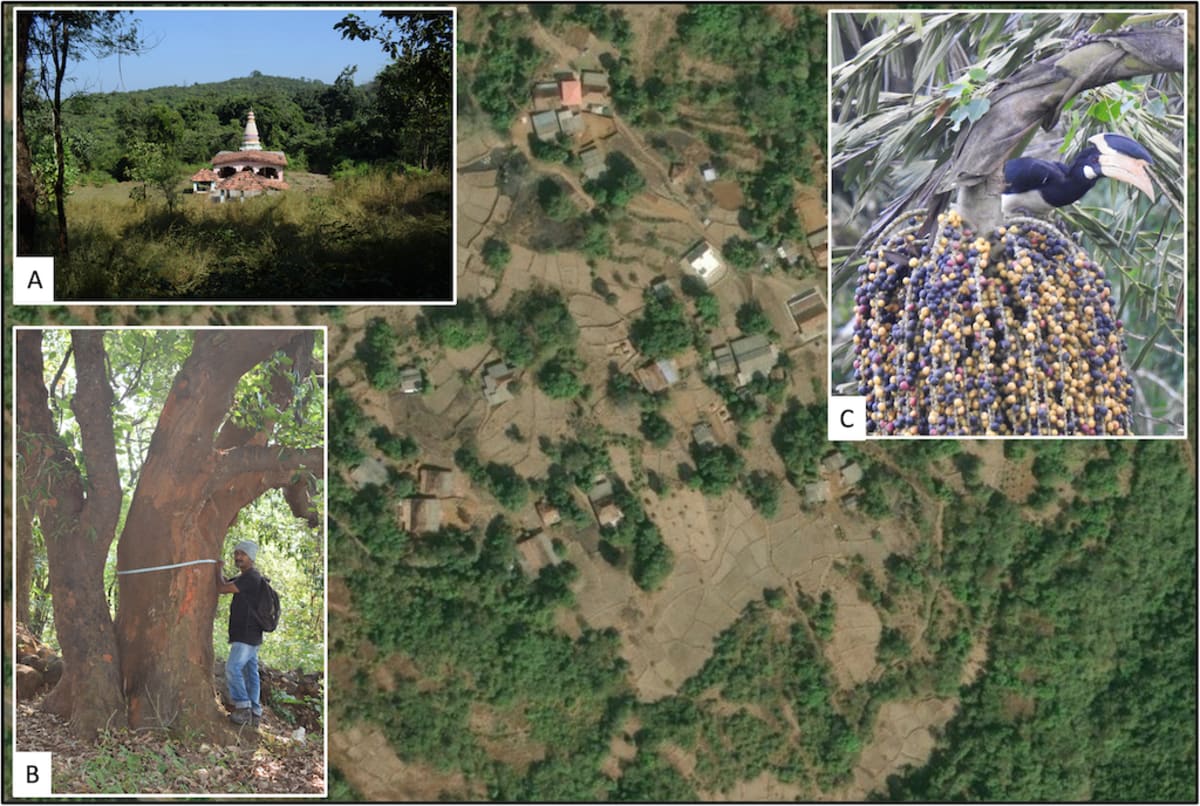
In villages across India's Western Ghats mountains, the tallest and oldest trees aren't growing in national parks. They're thriving in sacred groves, small forest patches that communities have protected for generations because they believe the trees belong to their gods and ancestors.
A new study reveals just how powerful this spiritual protection has been. Researchers counted 82 giant trees across four sacred groves and surrounding villages in the Western Ghats, a 1,000-mile mountain range along India's west coast.
The sacred groves held nearly twice the variety of giant tree species compared to nearby villages. Twelve species grew only in the groves, while village trees were mostly mango and jackfruit planted for food.
But the real discovery came when researchers looked down instead of up. Young tree seedlings were flourishing under the grove's giant trees but struggling to survive in villages.
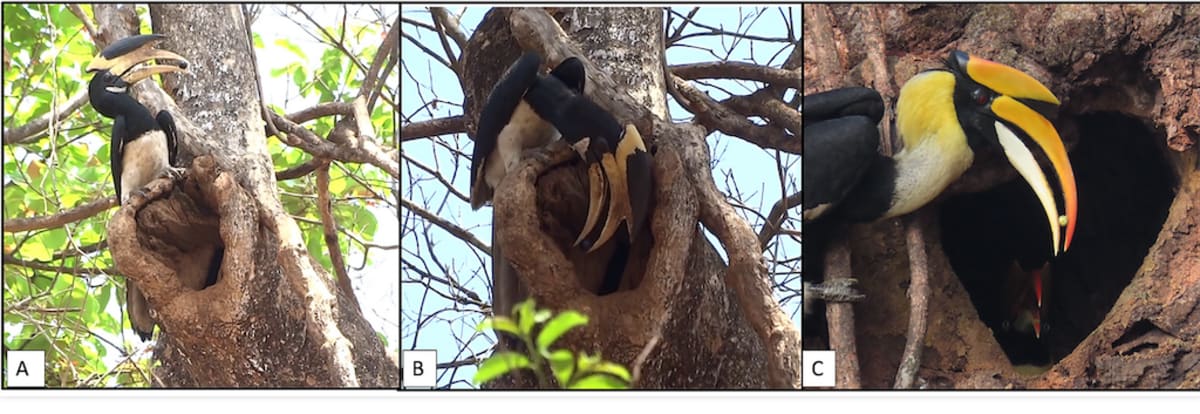
The reason tells a beautiful story about how nature works together. Giant trees act like magnets for fruit-eating birds like hornbills, which eat the fruit and drop seeds in their droppings. In sacred groves, where the ground stays undisturbed by livestock and foot traffic, those seeds sprout and grow into saplings.
Researcher Kevin Matteson calls giant trees "ecological catcher's mitts" that pull in birds and spread forest diversity. A great hornbill can't perch on a sapling. One researcher compared watching them try to an adult balancing on a toddler's plastic chair.
The numbers show the difference. Fishtail palm saplings grew under 91% of grove trees but only 47% of village trees. For another species eaten mainly by hornbills, saplings appeared under 77% of grove trees but just 5% in villages.
India has more than 100,000 sacred groves, protected by community rules against cutting trees that tie back to Hindu, Buddhist, or animist beliefs. The study's lead researcher, Omkar Pai, worked with local experts who knew every tree and its story.
The Ripple Effect
This research shows that protecting forests means protecting the cultures around them, not just individual animals or trees. The sacred groves work because entire ecosystems stay intact, including the beliefs that keep chainsaws away and the ground undisturbed.
The approach offers hope for conservation worldwide. When communities have spiritual or cultural reasons to protect nature, those areas can become nurseries for future forests without expensive enforcement or fencing.
The groves face modern pressures as simple forest shrines get replaced with concrete temples and young people leave villages, taking traditional knowledge with them. But the study proves what local communities have known for generations: sometimes the best way to grow a forest is to believe it's sacred.
These ancient patches of green are quietly ensuring that tomorrow's giants have a place to take root today.
More Images


Based on reporting by Mongabay
This story was written by BrightWire based on verified news reports.
Spread the positivity!
Share this good news with someone who needs it