India's Shukla Trains for 2027 Mission After ISS Journey
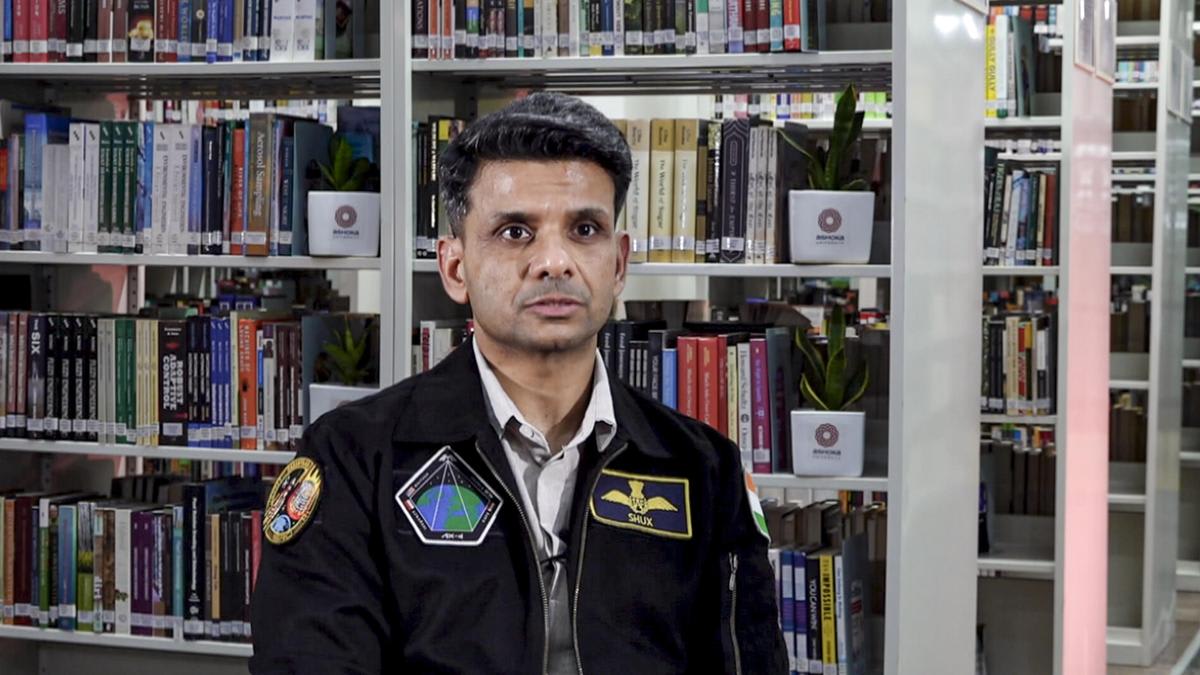
Group Captain Shubhanshu Shukla, who spent 18 days aboard the International Space Station last year, is now preparing to help India become only the fourth nation to independently send humans to space. The Gaganyaan mission, scheduled for mid-2027, aims to launch three astronauts to orbit and safely return them to Indian waters.
After becoming the first Indian to reach the International Space Station in 41 years, Shubhanshu Shukla isn't resting on his achievements. The Indian Air Force test pilot is now training for an even more ambitious goal: helping India join the elite club of nations capable of independent human spaceflight.
Last June, Shukla spent 18 days aboard the ISS as part of NASA's Axiom-4 mission, marking India's return to space since Wing Commander Rakesh Sharma's historic 1984 journey. Now based in Bengaluru with his family, he's working as one of four astronaut-designates for India's Gaganyaan mission.
The mission, tentatively scheduled for mid-2027, plans to send three crew members to a low-Earth orbit of 400 kilometers for three days before bringing them safely back to Indian sea waters. If successful, India will join the United States, Russia, and China as the only nations to independently accomplish human spaceflight.
"When India pursues this and we are able to do it successfully, it will give a lot of courage to other nations who are looking at doing something like this, because it feels possible," Shukla told reporters at Ashoka University in Sonepat.
The 40-year-old astronaut, nicknamed "Shux" by friends, draws on his experience as an IAF test pilot to help design and refine the systems that will carry astronauts to space. In April, India's space agency ISRO successfully completed the second Integrated Air Drop Test, proving safety measures before any crew boards.
Why This Inspires
Shukla's journey shows how one nation's achievement can inspire others to reach higher. His experience aboard the ISS wasn't just about personal glory. The scientific experiments he conducted, from researching stem cells to prevent muscle damage in space to studying microalgae in microgravity, were all designed with India's future space missions in mind.
During his time on the ISS, Shukla followed a strict schedule, working 13-hour days that started at 6 a.m. and ended with tea from a pouch while gazing at Earth through the window next to his sleeping quarters. He described seeing both Earth and Moon as "surreal," though sometimes the inability to fully share the experience with loved ones back home made him feel alone.
The emotions of being the first Indian in space after four decades sometimes threatened to overwhelm him. "Sometimes the weight of emotions can be crushing, can cripple you, the weight that comes with just the sheer understanding of what is happening," Shukla said. His fantastic crew helped him stay focused on the mission.
In January, he received the Ashoka Chakra, India's highest peacetime gallantry award, recognizing his contributions to the nation.
As nations race back to the moon and beyond, Shukla believes this is a crucial moment for space exploration. With Gaganyaan, India is developing entirely new technologies for human safety systems, opening doors that seemed impossible just years ago.
Based on reporting by The Hindu
This story was written by BrightWire based on verified news reports.
Spread the positivity!
Share this good news with someone who needs it