India's Solar Boom Cuts Fossil Fuel Use by 3.3% in 2025
India just achieved something remarkable: the nation's renewable energy grew so fast in 2025 that it actually reduced fossil fuel power generation for the first time. Solar power alone doubled in just three years, making India the world's third-largest solar generator.
India's clean energy revolution hit a major milestone in 2025 when renewable power grew so rapidly that the country reduced its fossil fuel use by 3.3%. It's the first time the world's most populous nation has powered down its coal and gas plants while meeting growing electricity demand.
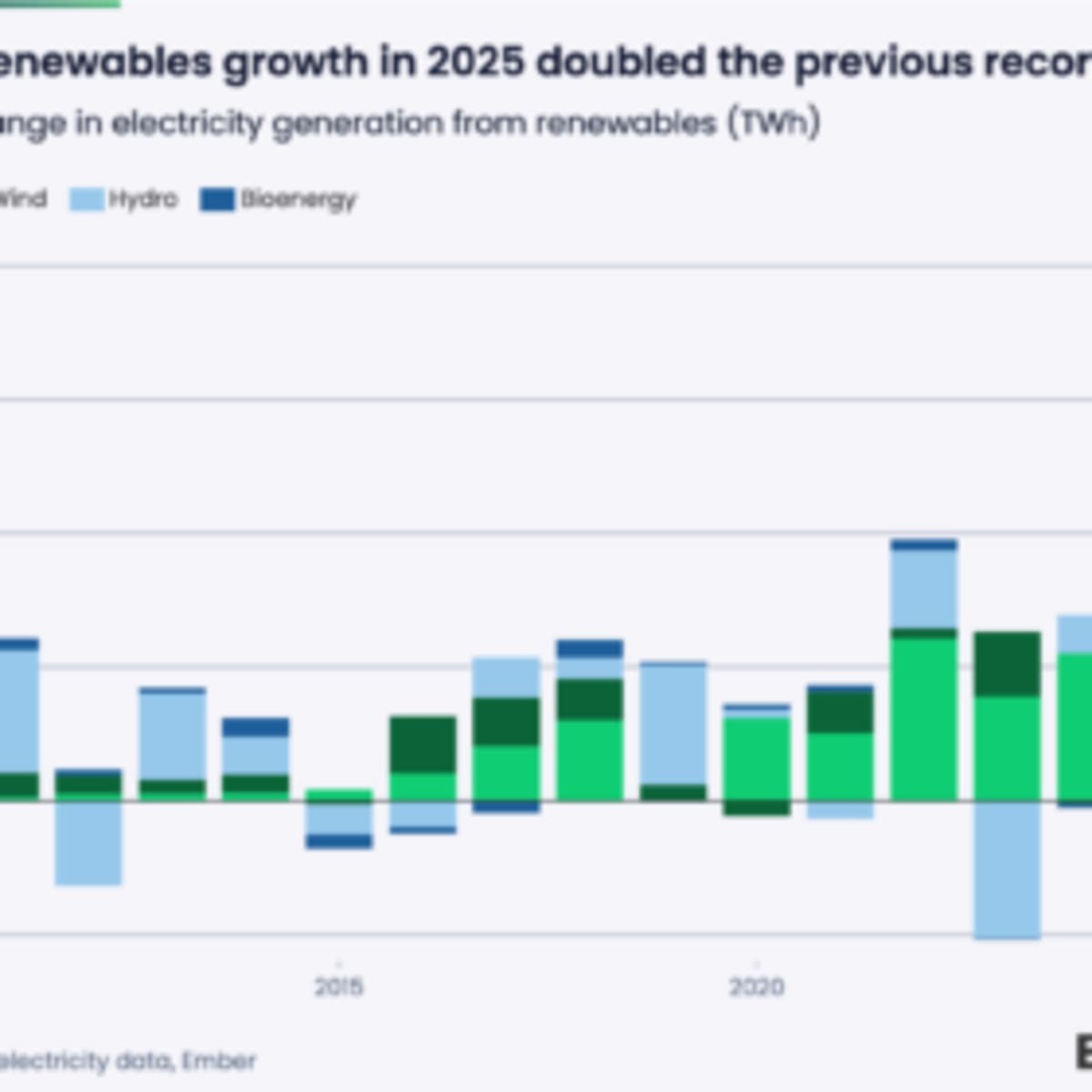
The numbers tell an incredible story. Solar and wind power surged by 98 terawatt hours last year, twice the amount of new electricity India actually needed. That meant fossil fuels could take a back seat for the first time in the country's modern history.
Solar power led the charge with a stunning 37% increase, adding 53 terawatt hours to the grid. India installed a record 38 gigawatts of new solar capacity in 2025, surpassing the United States for the first time. Rooftop solar panels on homes and businesses contributed significantly, adding an estimated 22 terawatt hours on their own.
The transformation happened faster than anyone expected. Solar output doubled in just three years, jumping from 96 terawatt hours in 2022 to 196 terawatt hours in 2025. Solar has now overtaken hydropower to become India's largest source of clean electricity, accounting for nearly 10% of the country's total power generation.
Wind energy wasn't far behind, growing by 28% and adding 22 terawatt hours. Together, solar and wind now provide 14% of India's electricity, closing the gap with the global average of 17%.
India now ranks as the world's third-largest solar generator, producing nearly twice as much solar electricity as Japan. Only China and the United States generate more power from the sun.
The Ripple Effect
This clean energy surge creates benefits far beyond reducing emissions. Battery storage projects are scaling up rapidly, enabled by new auction designs that bundle solar farms with energy storage. This means solar power captured during sunny afternoons can light homes and power factories after dark.
The expansion strengthens India's energy independence too. Every terawatt hour of solar power reduces the country's dependence on imported coal and natural gas, protecting the economy from global price shocks. Aditya Lolla from Ember, the energy research group that compiled the data, notes that solar combined with batteries is "opening a path to fast-scaling, round-the-clock clean power."
The shift is creating jobs across the country, from manufacturing solar panels to installing rooftop systems on millions of buildings. Communities that once struggled with unreliable electricity now have access to affordable, locally generated power.
India's success proves that developing nations don't have to choose between economic growth and climate action—they can achieve both at once.
More Images

Based on reporting by Google News - Solar Power Record
This story was written by BrightWire based on verified news reports.
Spread the positivity!
Share this good news with someone who needs it