India's 'Tree Orphanage' Grows 2,000 Trees, 500 Guardians
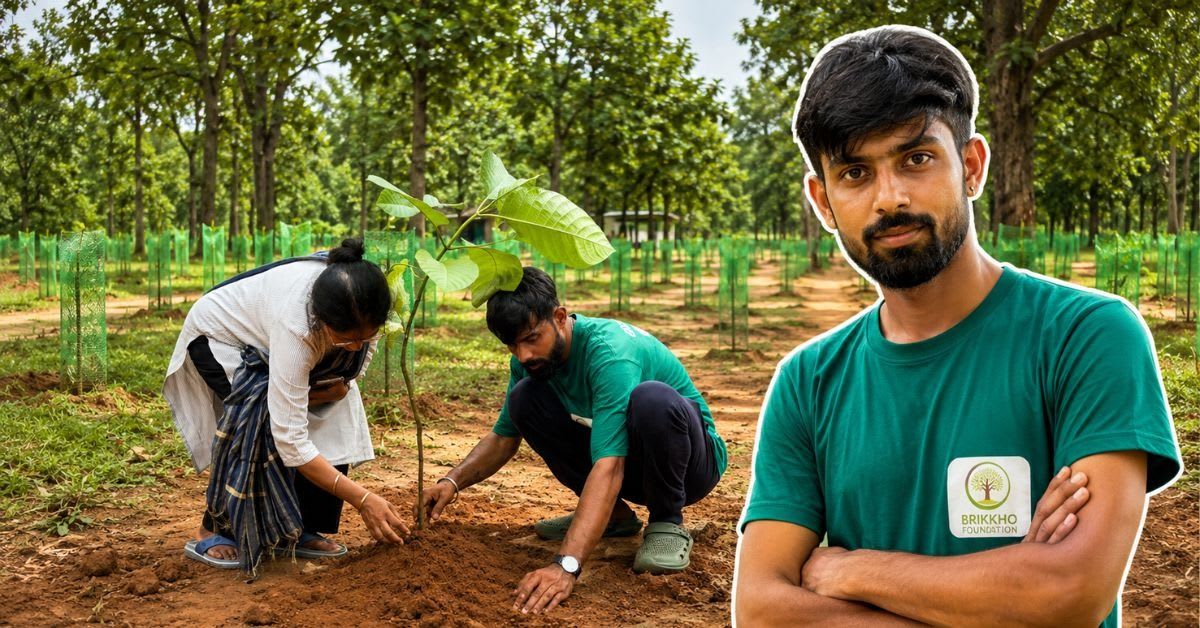
In Santiniketan, India, a 29-year-old filmmaker transformed his passion into Brikkho Foundation, where people don't just plant trees—they adopt and nurture them for years. Since 2021, over 500 people have adopted 2,000 native trees with a 95% survival rate, creating lasting bonds between communities and nature.
Somnath Ghosh noticed something heartbreaking: people would plant trees during ceremonies, snap photos, then abandon the saplings to die alone.
The 29-year-old filmmaker from Santiniketan, India, decided trees deserved better. If orphaned children could find homes and guardians, why couldn't forgotten trees?
In 2021, Ghosh founded Brikkho Foundation, India's first "Orphanage Home for Trees." The name isn't just poetic—it's practical.
His path to tree guardianship started years earlier with a tough choice. Ghosh had spent years building a multimedia studio, buying cameras and drones piece by piece.
But while working with the Burdwan Forest Department, living inside the forest changed him. He sold his equipment to fund his environmental calling.
The COVID-19 lockdown clarified his mission. For 150 days, Ghosh and volunteers fed stray dogs left hungry when tea stalls closed.
They delivered medicine to elderly neighbors and carried relief supplies to the Sundarbans after Cyclone Amphan. Caring for nature, he realized, meant caring for people too.
Brikkho's adoption model works simply. For 600 rupees (about $7), anyone can adopt a native tree online.
The Foundation plants it in the Sonajhuri forest, named for trees whose golden blossoms fall like drops of gold. They use land from the Forest Department and volunteer farmers.
Then the real work begins. Brikkho's team monitors each sapling for three years with soil preparation, fencing repairs, and organic nutrients until the tree can thrive independently.
So far, 500 to 600 people have adopted trees, creating a forest of over 2,000 saplings. The survival rate hits 95 percent—far above typical plantation drives.
Why This Inspires
Many adopters plant trees to honor loved ones, returning years later to watch their memorials grow tall and strong. What started as individual acts of remembrance has become a movement connecting strangers through shared guardianship.
Ghosh didn't just solve the problem of abandoned saplings. He created a system where environmental action comes with accountability, where planting means promising.
His "tree orphanage" proves that genuine conservation isn't about numbers planted—it's about relationships nurtured, one sapling at a time.
More Images
%2Fenglish-betterindia%2Fmedia%2Fmedia_files%2F2026%2F07%2F24%2Findia-first-tree-orphanage-2026-07-24-17-23-19.jpg)
%2Ffilters%3Aformat(webp)%2Fenglish-betterindia%2Fmedia%2Fmedia_files%2F2026%2F07%2F24%2Fvolunteers-of-bf_11zon-2026-07-24-18-54-12.jpg)
%2Ffilters%3Aformat(webp)%2Fenglish-betterindia%2Fmedia%2Fmedia_files%2F2026%2F07%2F24%2Ftrees-planted-in-the-forest_11zon-2026-07-24-18-54-28.jpg)
Based on reporting by The Better India
This story was written by BrightWire based on verified news reports.
Spread the positivity!
Share this good news with someone who needs it