India's Zari Artisans Build Livelihoods from Home
Women in Kasganj, India, are earning steady incomes by embroidering metallic threads into table covers and bags from their own homes. A decentralized network connects their craft directly to global markets.
In the quiet neighborhoods of Kasganj, Uttar Pradesh, women are turning spools of metallic thread into sustainable livelihoods without ever leaving home.
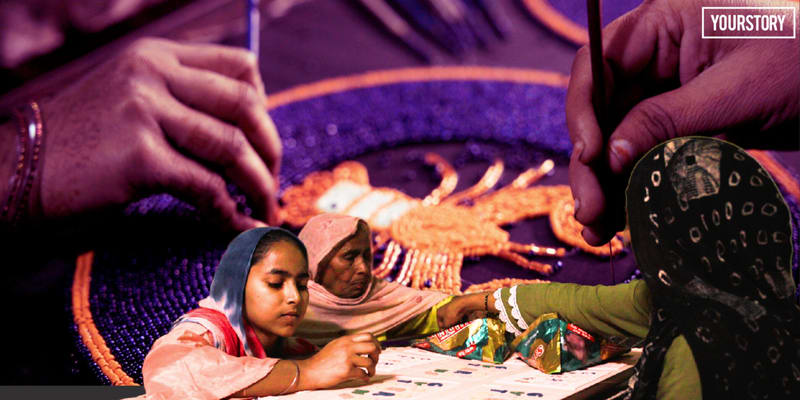
The craft is called zari work: intricate embroidery stitched onto fabric stretched across wooden frames called addas. What starts as blank material in homes across Baddoo Nagar and Hidayat Nagar becomes finished table mats, purses, and decorative covers sold in urban and international markets.
This isn't factory work. Women receive fabric bundles, trace patterns, and stitch for hours around their wooden frames. The work fits around family life, school pickups, and household responsibilities.
Naseem Akhtar has spent decades organizing this home-based network. He coordinates orders, delivers materials, and connects artisans from four neighborhoods to steady buyers. "Quality brings the next order," he says simply.
Training happens neighbor to neighbor. New learners sit beside experienced embroiderers, practicing simple stitches until their work meets production standards. Only then does earning begin. The progression is gradual but reliable.
Unlike traditional sari embroidery, Kasganj's zari cluster focuses on export products: table mats, bags, and decorative accessories. Designs often come from external companies, but the embroidery happens entirely in local homes.
India's One District One Product program gave the cluster structured support. For artisans working from home, this meant smoother access to credit, training opportunities, and platforms where repeat customers discover their work.
The Ripple Effect
The impact extends beyond individual earnings. Home-based work means women can contribute financially without relocating or leaving children. Neighborhoods become production hubs where skills pass between generations.
Quality control remains strict: uniform stitching and clean finishing determine whether batches get accepted. This standard protects both artisan reputation and buyer confidence across the supply chain.
Akhtar notes challenges like fluctuating tariffs and price pressures that squeeze small producers. Yet the craft persists because it's rooted in organized home production and a trained, distributed workforce.
Each finished piece carries hours of patient work, steady hands, and the quiet determination of women building financial independence one stitch at a time.
More Images

Based on reporting by YourStory India
This story was written by BrightWire based on verified news reports.
Spread the positivity!
Share this good news with someone who needs it