Indigenous Rangers Bring Endangered Quolls Back From the Brink
In Western Australia's remote Karlamilyi National Park, Martu rangers are using generations of Indigenous knowledge to save the northern quoll, a cat-sized marsupial that once thrived across their Country. Their cultural memory is filling scientific gaps and giving this endangered predator a real chance at recovery.
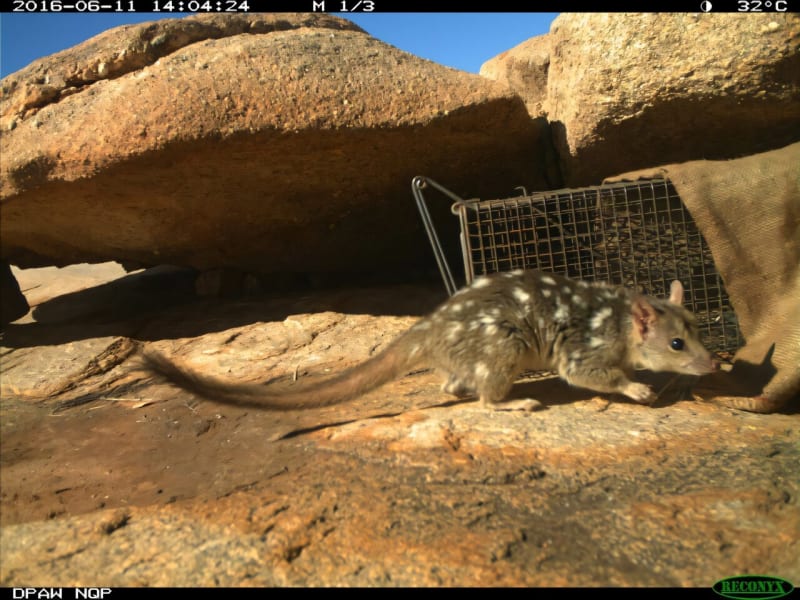
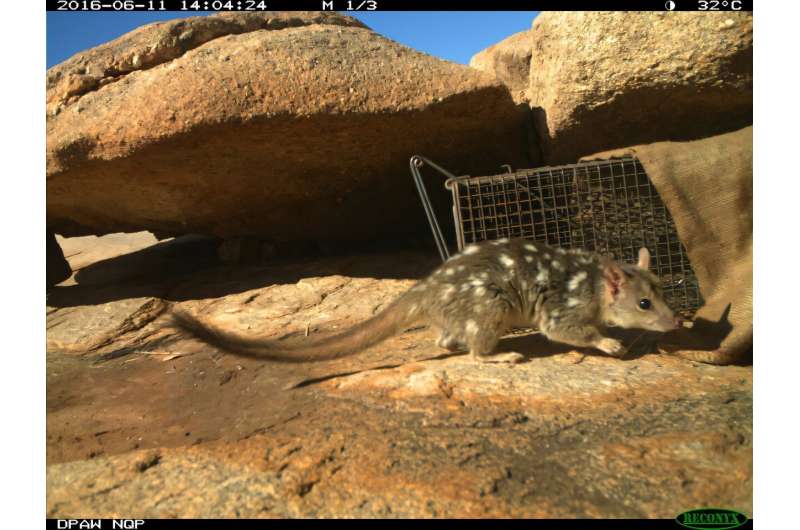
Muuki Taylor remembers the stories his Elders told him about wiminyji, the northern quolls that once roamed so freely across Martu Country that people caught them for meals. Today, scientists are lucky to capture even one on camera.
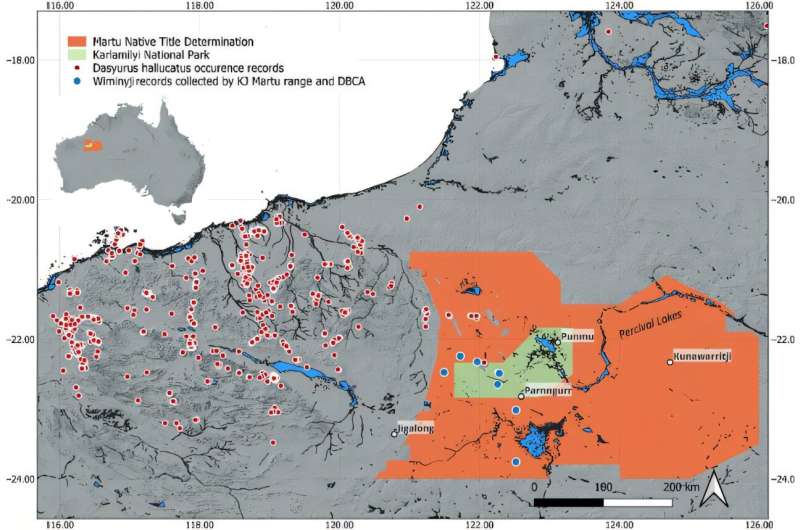
The northern quoll, one of Australia's largest marsupial predators after the dingo, has vanished from most of its historic range. In Karlamilyi National Park's red rock outcrops, a small population clings to survival in what may be their last stronghold in the Western Desert.
But here's where the story takes a hopeful turn. Martu rangers from the Kanyirninpa Jukurrpa organization are partnering with government scientists to rewrite what we know about these cat-sized carnivores. Their ancestral knowledge is revealing that wiminyji didn't always hide in rocky caves. They once thrived in sandy areas and open country.
"Having this Indigenous knowledge overlayed is really cool because it gives us a glimpse of what northern quolls were doing before Australia was settled by Europeans," says Dr. Harry Moore, a fauna ecologist. Western science had assumed the quolls' current restricted habitat was normal, but Martu knowledge shows they're actually living at their limits.
Last year, about 50 rangers, scientists, Elders and children gathered for a research expedition combining trap cameras with traditional tracking knowledge. The cameras caught wiminyji on film, and for many Martu Elders, it was their first glimpse of an animal their parents had described.
"Seeing wiminyji for the first time was emotional," says Danielle Booth, a ranger from Punmu. Since that trip, rangers working independently have recorded multiple new sightings, expanding the scientific understanding of where these animals still survive.
The Ripple Effect
This partnership represents something bigger than saving one species. When a tough, adaptable generalist like the northern quoll disappears from an area, it signals major environmental change. "It's a warning sign," Moore explains, "that something is definitely changing."
The collaboration, now published in Wildlife Research journal, shows how Indigenous land management can lead conservation efforts. Martu rangers aren't just filling gaps in Western science. They're teaching their children on Country, passing down knowledge that could be the difference between extinction and recovery.
Anthony Bullen, a ranger from Parnngurr, puts it simply: looking after wiminyji matters "otherwise they go extinct."
With Martu knowledge lighting the path forward, these ancient predators have more than memories keeping them alive.
More Images

Based on reporting by Google: species saved endangered
This story was written by BrightWire based on verified news reports.
Spread the positivity!
Share this good news with someone who needs it