Indigenous Youth Lead Climate Science in San Diego
Indigenous knowledge and Western science are joining forces in San Diego to tackle climate change, thanks to a grassroots nonprofit training the next generation of Indigenous scientists. Coastal Defenders just received $250,000 in grants to expand their work connecting Indigenous youth with ocean research opportunities.
For thousands of years, Indigenous peoples have been stewards of the land and waterways that modern science is only beginning to understand. Now, a San Diego nonprofit is proving that the best climate solutions come from honoring that ancient knowledge while training Indigenous youth in cutting-edge research methods.
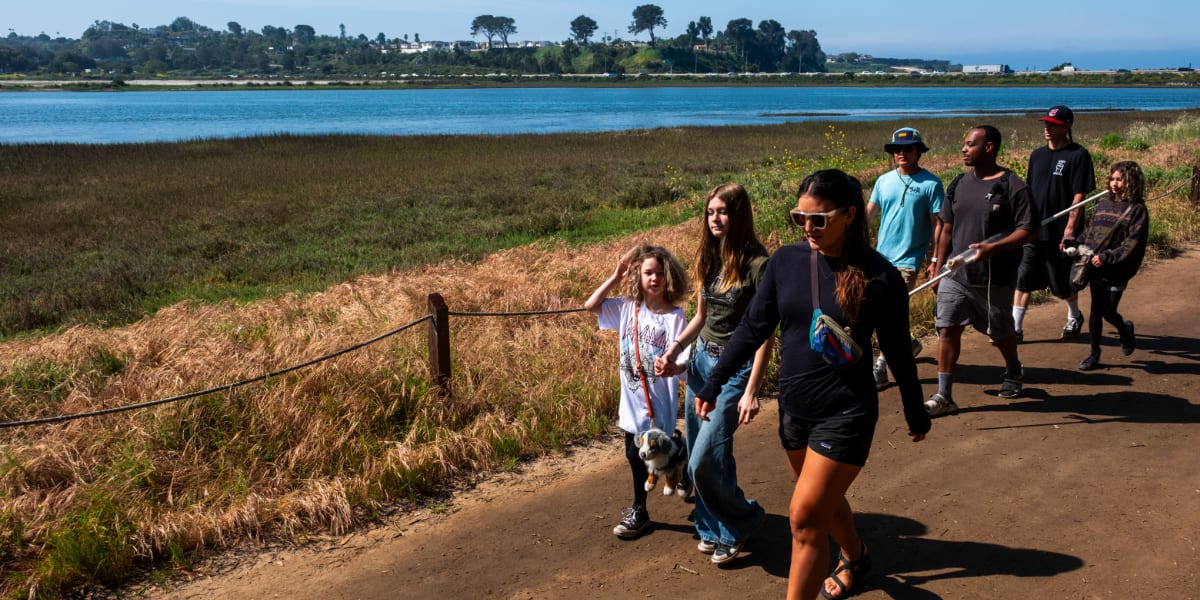
Coastal Defenders, founded by Coach Jules Jackson, a Nanticoke water protector, is changing the game for Indigenous science education. The grassroots organization mentors Indigenous young people through hands-on climate research in wetlands and estuaries across San Diego County.
"No one is going to know the land and waterways more than the people who have been stewarding these ecosystems for thousands of years," said Coach Jackson, who brings traditional fishing and oystering practices from her ancestral territories to her work on Kumeyaay land. Her mentor Dr. Stan Rodriguez taught her that knowledge is only knowledge when it's shared.
The program pairs Indigenous youth with scientists from institutions like Scripps Institution of Oceanography and Cal State Long Beach. Together, they study kelp forests, document climate change impacts, and monitor coastal ecosystems using both traditional Indigenous knowledge and modern tools like underwater photogrammetry and Arc-GIS mapping technology.
Blaine Mazzetti, the program's Tribal Youth Advisor, has watched dozens of young people discover career paths they never knew existed. "I enjoy watching the youth come out here and work with the scientists; without Jules and Coastal Defenders, they would have not had that experience," he said.
The program teaches everything from CPR and water safety to SCUBA diving and scientific poster presentations. Students learn to present at conferences, publish research papers, and build professional networks that last well into their careers.
San Diego Foundation recently awarded Coastal Defenders part of $250,000 in Community Workforce Connections grants, funded by the Reuben H. Fleet Foundation. The money will support training in advanced mapping technology and help students present their research at scientific conferences.
Professor Christine Whitcraft from Cal State Long Beach explained why this work matters. "If we just had that counting, measuring approach, we wouldn't capture everything the ecosystem has to tell us," she said. "Having traditional and Indigenous knowledge really builds our sense of place and ensures that we understand the complete wetland ecosystem."
The timing couldn't be more critical. San Diego County is home to 18 Indigenous reservations, the most of any county in the United States, yet Indigenous scientists remain underrepresented in environmental research.
The Ripple Effect
The impact extends far beyond individual career paths. Students are creating a modern visual database with hundreds of thousands of underwater and coastal photographs, documenting ecosystems that their ancestors have known intimately for generations. Graduate student and Science Advisor Xavius Boone recently deployed GoPro cameras in Batiquitos Lagoon to study fish populations and habitat patterns, blending ancestral knowledge with modern technology.
These young researchers are building bridges between two ways of knowing, creating climate solutions that honor the past while protecting the future.
Based on reporting by Google News - Climate Solution
This story was written by BrightWire based on verified news reports.
Spread the positivity!
Share this good news with someone who needs it