Indonesian Kids Map Their Coral Reefs Through Storybooks
Children in Raja Ampat can name dozens of fish species just from playing in the sea, and a new children's book is turning their deep environmental knowledge into a tool for protecting their islands. When asked to name orange and yellow things in nature, kids rattled off rockhead fish, salamander fish, and coral species most adults couldn't identify.
Dozens of children on Arborek Island can identify marine species most oceanography students would struggle to name, and they learned it all just by growing up near the water.
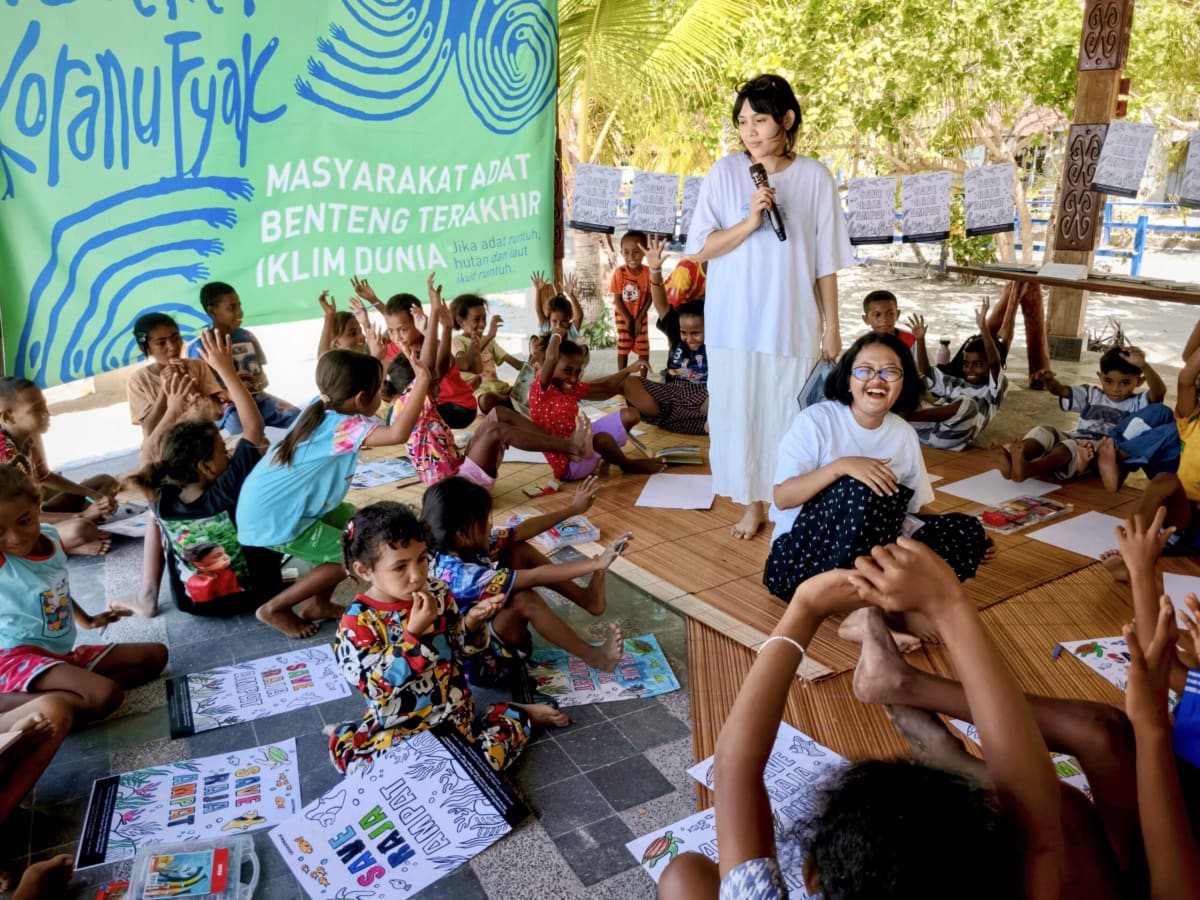
When author Titah Asmaning Winedar asked kids from this small Indonesian island to name yellow and orange things in nature, they didn't say bananas or pumpkins. They listed rockhead fish, salamander fish, starfish, and specific coral types they see when swimming near their homes in the Raja Ampat archipelago.
Research backs up what these children demonstrate every day. A 2014 study of 22 villages in Indonesian Borneo found that kids who grow up connected to nature develop sophisticated understanding of their local ecosystems, recognizing complex relationships among forests, rivers, and wildlife.
Titah and illustrator Sekar Bestari wanted to honor that knowledge. They created a children's book called "Luka-Luka Pulau Kecil" (The Wounds of Small Islands) that transforms the biodiversity of Raja Ampat into a colorful story about protecting what matters.
The book follows Pin, a child who loves swimming and notices that rainbows borrow their colors from the surrounding islands. When mining barges arrive, the rainbow's colors disappear one by one, along with the red hibiscus flowers, birds-of-paradise, and coral reefs they represent.
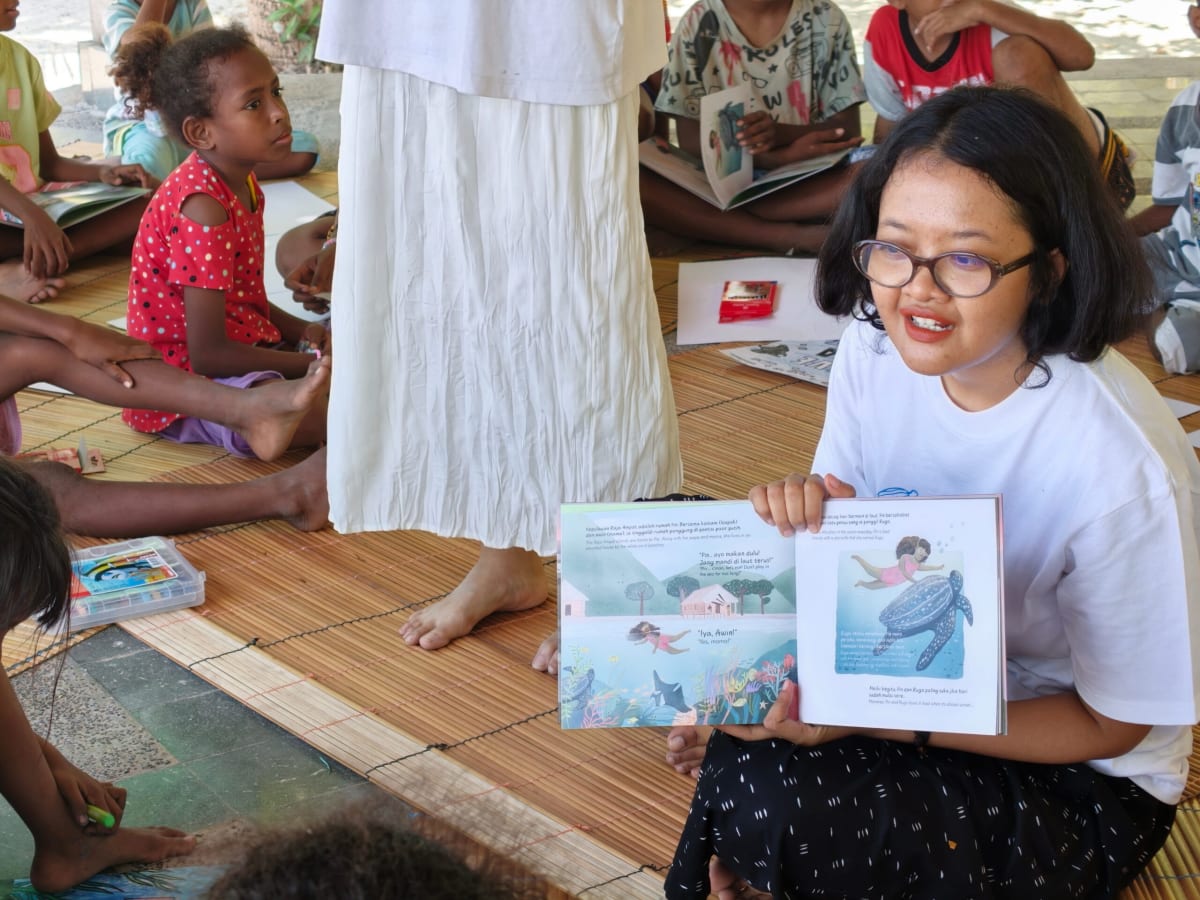
During a recent reading at a gathering of 20 Indigenous groups in Arborek, the children's knowledge emerged in unexpected ways. One girl named Esther told Titah there's a traditional way to call sea turtles: split open a coconut and leave it in the sea.
"Don't underestimate children's knowledge," Sekar said after watching kids engage deeply with environmental concepts. "Most of the time when we read the books to children, they understand them."
The Ripple Effect
The book does more than teach. It validates what Indigenous children already know about their home in one of Earth's most biodiverse marine regions.
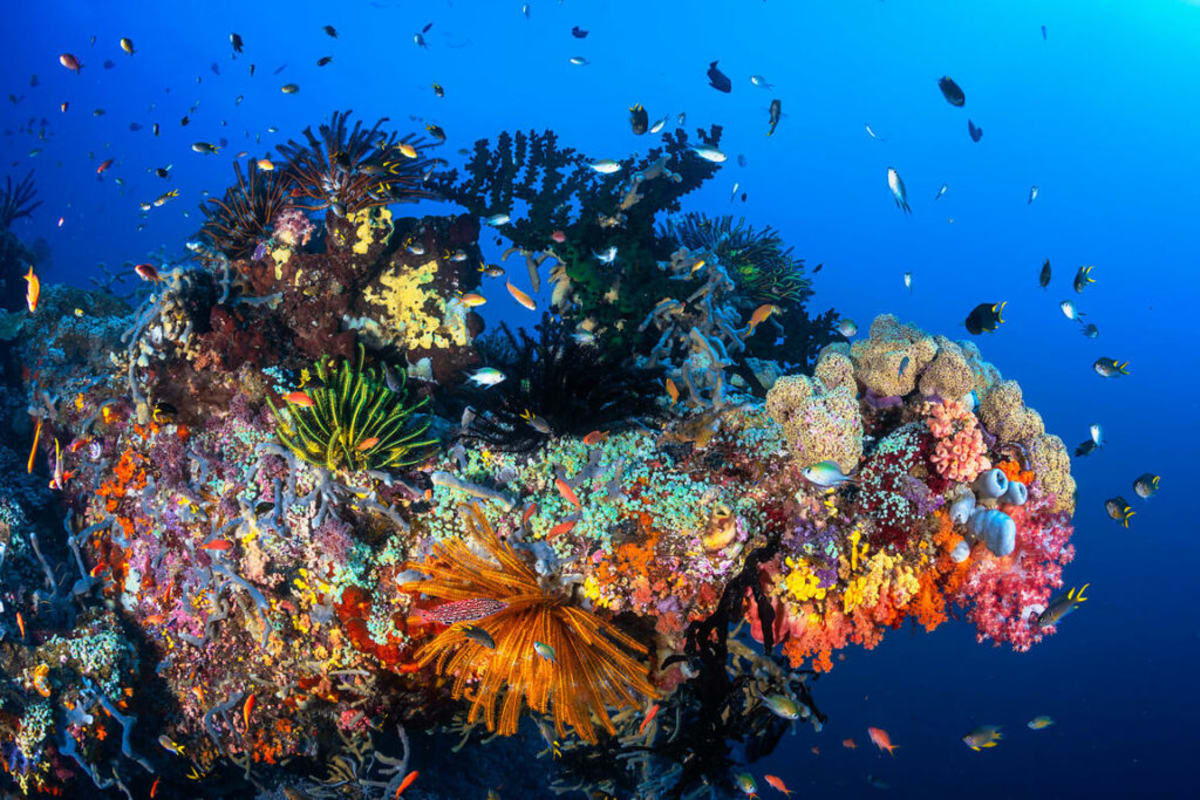
Raja Ampat sits in the heart of the Coral Triangle, where researchers estimate 75% of the world's known coral species live. The children swimming in these waters aren't just playing; they're becoming the next generation of environmental guardians.
When Sekar asked the children during the reading if they'd be sad if marine animals disappeared, they responded in unison: "Very sad." That emotional connection to their ecosystem, combined with detailed knowledge of species and traditions, gives them tools to protect their islands as discussions about nickel mining continue in the region.
Titah hopes the book sparks something bigger. "When they see that a Raja Ampat story has been made into a book like this, our hope is that they feel, 'Oh, my story is important too.'"
These children are already documenting their world with every fish name they remember and every traditional practice they share, proving that the best environmental educators might be the ones still learning to read.
More Images
Based on reporting by Mongabay
This story was written by BrightWire based on verified news reports.
Spread the positivity!
Share this good news with someone who needs it