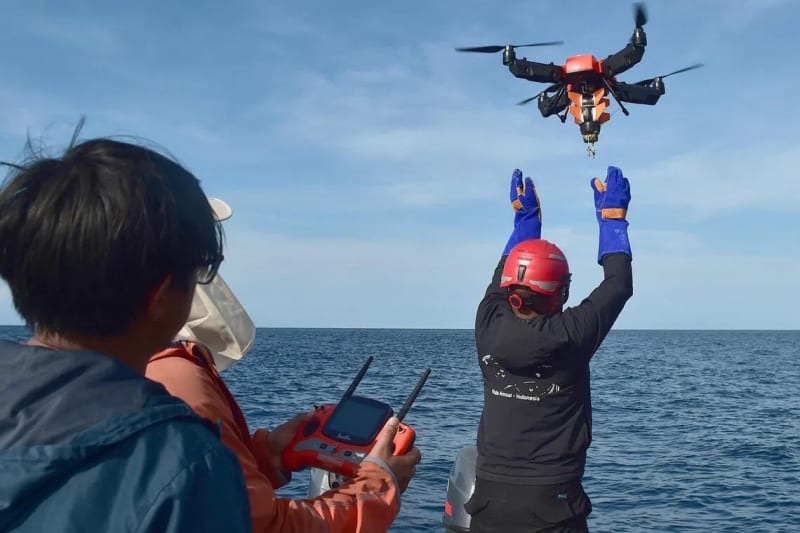
Indonesian Scientists Tag Pygmy Blue Whale With Drone
Researchers in Indonesia successfully used a drone to attach a satellite tracker to a rare pygmy blue whale for the first time, revealing a 2,000km migration path. The breakthrough allows scientists to study whale movements safely while helping protect these endangered giants from ship collisions.
After eight failed attempts, Indonesian researchers finally landed a satellite tag on a pygmy blue whale using a drone, and the breakthrough could change how we protect these rare ocean giants.
When the drone successfully attached the tracker to the whale's back in October 2025 off Kupang, Indonesia, the research boat erupted in cheers. It was the first time anyone had used a drone to deploy a long-term satellite tag on these elusive creatures.
The new method solves a major problem. Previously, researchers had to get dangerously close to whales using boats and airguns to shoot tags onto their backs, risking injury to both the animals and the team. Each missed shot meant losing $5,000 worth of equipment in the ocean.
Mochamad Iqbal Herwata from Konservasi Indonesia, who led the expedition, says drones allow scientists to tag whales from 300 meters away with less stress to the animals. If they miss, they can simply retrieve the tag from the water and try again.
The tagged whale swam approximately 2,000 kilometers before the tracker stopped transmitting after 10 days. For the first time, scientists could see how these pygmy blue whales cross national borders from Indonesia through Timor-Leste and beyond.
Why This Inspires
This isn't just about better research methods. Understanding where these whales travel helps governments create marine protected areas along their migration routes, protecting them from deadly ship collisions in busy shipping lanes.
Indonesia has already responded. In December 2025, the country established the West Wetar Marine Protected Area directly along the whale migration pathway the researchers mapped.
The data also opens doors for coastal communities. Local residents in Timor-Leste, Alor, and Wetar can now develop whale-watching ecotourism businesses, knowing when and where these magnificent animals will pass through their waters.
Pygmy blue whales grow up to 24 meters long and are among the rarest whale species. The Lesser Sunda Seascape surrounding Indonesia and Timor-Leste serves as one of the world's most important whale migration corridors, making this research critical for global conservation efforts.
Later this year, the team plans to tag more whales across the Ombai Strait, a high-traffic marine corridor where better monitoring could prevent ship strikes. Each new tag adds another piece to the puzzle of how these ocean giants navigate our seas.
What started as nine researchers in a boat with a drone has become a model for ethical wildlife research that protects animals while gathering the data needed to save them.
More Images



Based on reporting by Regional: singapore breakthrough (SG)
This story was written by BrightWire based on verified news reports.
Spread the positivity!
Share this good news with someone who needs it