INRAE Scientists Reveal Trees Flex Hidden Wood Muscles
Trees possess a remarkable form of self-awareness that allows them to flex specialized wood like human muscles to stand tall. Researchers at France's INRAE say this breakthrough could help safeguard vulnerable forests and food crops against severe storms.
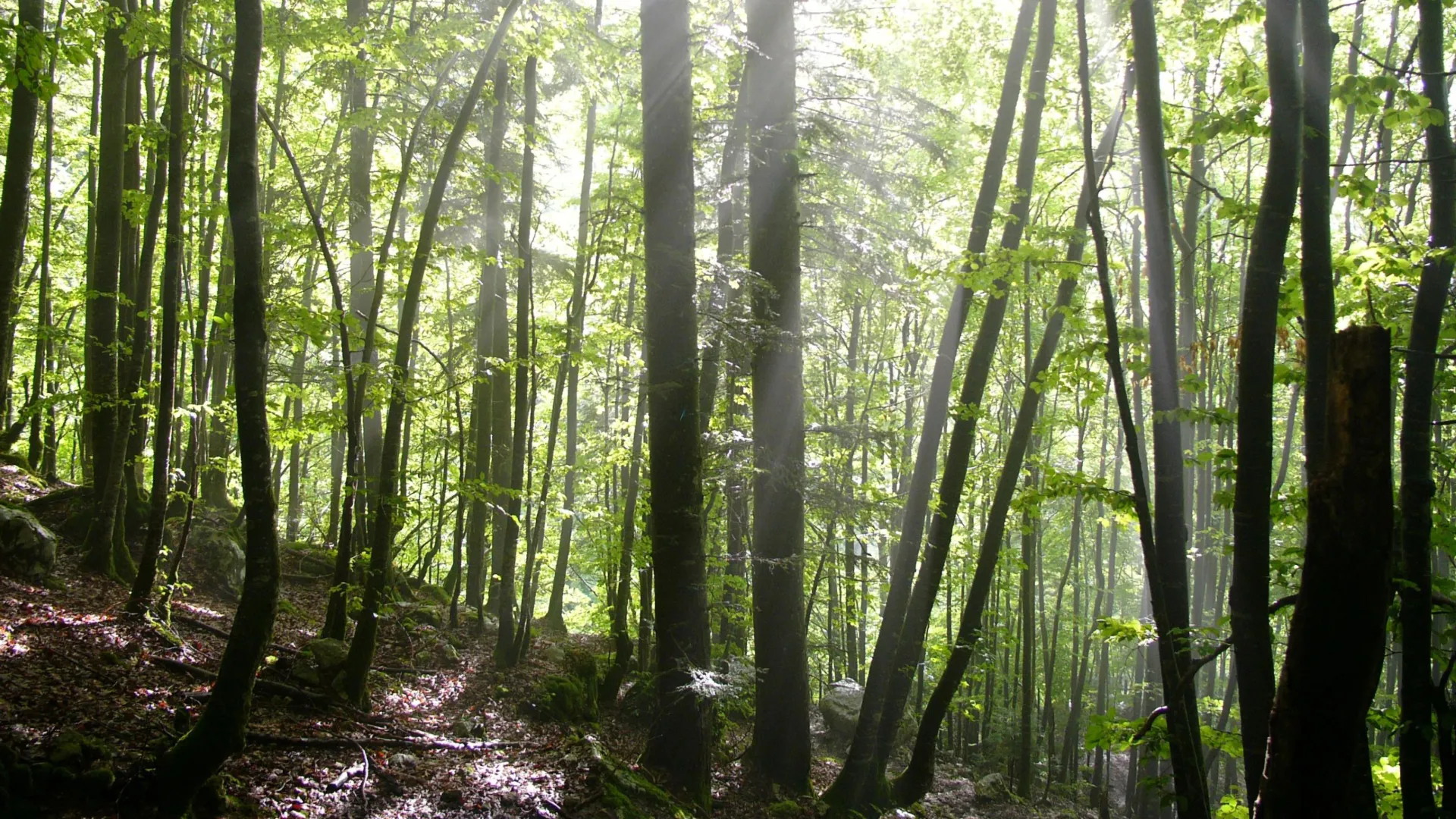
Next time you walk through a tranquil forest, look up at the towering canopy and prepare to see nature in a whole new light. Trees possess their own quiet sense of body awareness, flexing specialized wood like opposing muscles to correct their posture and stand tall.
Researchers at France's National Research Institute for Agriculture, Food and Environment (INRAE) made this revelation by unlocking the biological secrets behind tree posture. Biologists previously knew that plants possessed proprioception, the sixth sense that animals use to perceive body position.
Yet nobody knew precisely how a rooted tree converted that self-awareness into physical motion without real muscles. To solve the mystery, the French team designed an ingenious rotating platform bathed in uniform sphere lighting.
By removing the directional cues of gravity and natural sunlight, the scientists isolated how young poplars respond exclusively to their own curved shapes. The results surprised even the veteran researchers.
The team observed that the trees produced specialized tension wood to pull their bent trunks back into place. When a trunk developed an extreme curve, the tree abruptly stopped growth on one side and generated pulling forces on the opposite flank.
These opposing layers of wood worked together just like bicep and tricep muscles in the human arm. By coordinating these contracting pushes and pulls, the saplings carefully nudged themselves back into a straight alignment.
Scientists now see trees not as passive victims of their environment, but as active participants in their own survival. They continuously read their surroundings, assess their own posture, and actively flex to thrive.
The Ripple Effect
This newfound understanding of forest biomechanics offers immediate practical solutions for our warming planet. As climate change unleashes more violent windstorms and soil erosion, trees with stronger self-correcting posture can weather the shocks far better.
Agricultural scientists can also apply this knowledge to secure global food supplies. Heavy rains often cause cereal crops like wheat and barley to collapse before harvest, a devastating problem known as lodging.
By selecting crops with superior posture control, farmers can keep entire fields standing tall through harvest season and significantly boost crop yields. The discovery will also help timber growers cultivate straighter, higher-quality wood with fewer internal structural flaws.
By listening closely to the quiet intelligence of our forests, humanity gains powerful natural blueprints to build a greener and more resilient tomorrow.
Based on reporting by Science Daily
This story was written by BrightWire based on verified news reports.
Play Today’s BrightWire Positive Mini Crossword & Word Game
Keep your mind sharp with our free 5-minute uplifting daily crossword and positivity word puzzle.
Spread the positivity!
Share this good news with someone who needs it