Invisibility Cloak Inventor Now Building Black Hole Tech
The physicist who made Harry Potter's cloak real 20 years ago has moved on to something even wilder. John Pendry is now bending light through time instead of space.
Twenty years after inventing a device that sounds like pure magic, John Pendry casually mentions he's moved on to "more exciting things." The Imperial College London physicist who created the world's first invisibility cloak is now trying to simulate black hole physics using light-bending materials.
It's a remarkable pivot for someone whose 2006 breakthrough captured imaginations worldwide. But Pendry's real legacy isn't the Harry Potter physics that made headlines. It's the metamaterials revolution he sparked that's quietly reshaping our world.
Back in the 1990s, Pendry was studying how electrons interact with solid matter when a collaborator showed him special stealth technology used to hide British ships from radar. The material itself wasn't special, but its structure was. That insight changed everything.
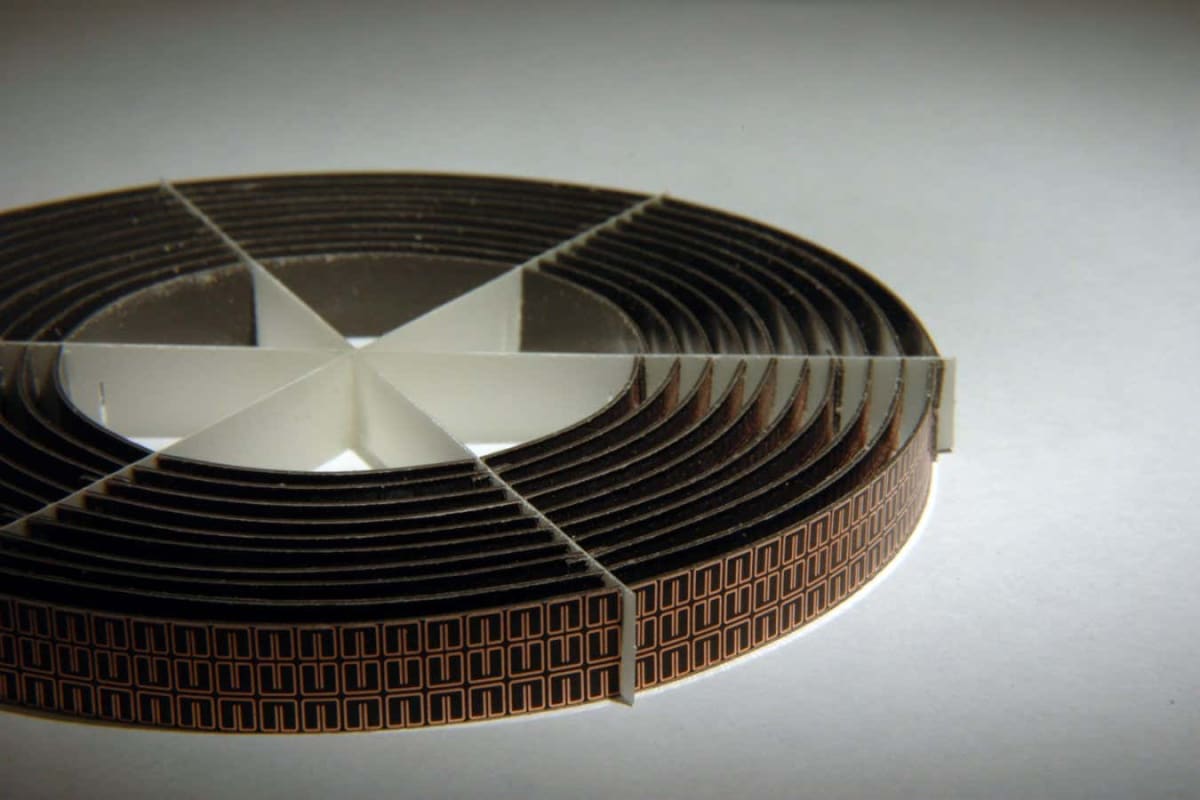
Pendry realized you could create materials with impossible properties by etching tiny grooves, rings, or pillars into ordinary substances. These metamaterials could bend light in ways no natural lens ever could. The invisibility cloak was just the flashiest application.
Today, those same principles are heading into products you'll use every day. Venture capitalist Nathan Myhrvold owns 60 of Pendry's metamaterial patents and has founded multiple companies built on his ideas. Within the next decade, metamaterials could be embedded in self-driving cars, humanoid robots, and 6G communications satellites.
The market analysts are watching could be worth 6 billion pounds by 2033. Engineers are also exploring metamaterials for earthquake protection, letting buildings bend and flex in ways that defy traditional physics.
The Ripple Effect
What makes Pendry's story so compelling isn't just the jaw-dropping applications. It's how a scientist working on "unfashionable problems" in the 1970s ended up revolutionizing multiple industries decades later. His curiosity-driven research into electron behavior led to breakthroughs no one could have predicted.
The invisibility cloak that caused conference rooms to erupt in 2006 looks nothing like a wizard's cape. It's a circuit board that hides objects from microwaves. Yet that underwhelming prototype proved something profound: we can engineer materials that break the rules of nature.
While the world remains fascinated by invisibility, Pendry has already moved on. His current obsession is bending light through time instead of just space. If he succeeds, we might be able to create materials that mimic the wild physics near black holes, right here on Earth.
For someone who made science fiction real once already, betting against his next trick seems unwise.
More Images


Based on reporting by New Scientist
This story was written by BrightWire based on verified news reports.
Spread the positivity!
Share this good news with someone who needs it