Ireland's 3,000-Year-Old Goat Breed Still Roams Wild Today
Scientists discovered that Ireland's rare Old Irish Goat shares DNA with goats from the Late Bronze Age, proving an unbroken 3,000-year lineage. This living link to ancient farming communities is now critically endangered but offers hope for preserving Ireland's agricultural heritage.
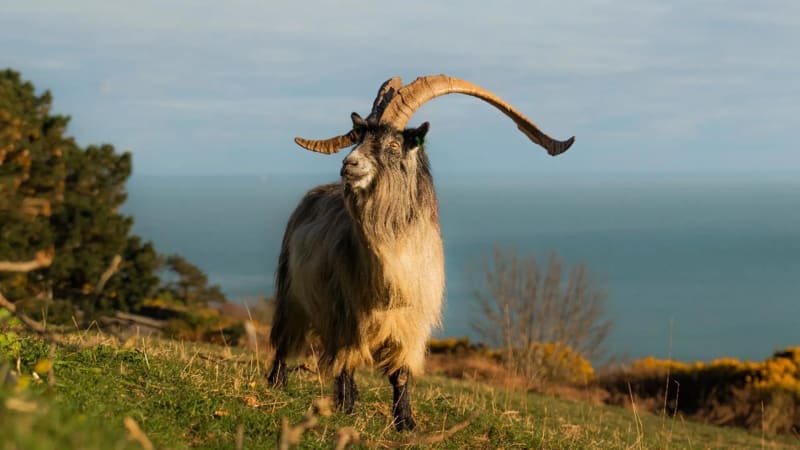
Deep in Ireland's mountains, wild goats still roam the same hills their ancestors claimed 3,000 years ago, and scientists just proved they're the real deal.
Researchers at University College Dublin analyzed ancient goat bones from a Late Bronze Age hillfort dating to 1100-900 BCE. When they compared the DNA with modern breeds worldwide, they found a stunning match: the critically endangered Old Irish Goat living in Ireland today.
The discovery confirms what local communities have believed for generations. The Old Irish Goat, known in Irish as "an Gabhar Fiáin" (the wild goat), represents an unbroken genetic thread stretching back through millennia of Irish history.
Scientists examined remains from Haughey's Fort in County Armagh and the medieval town of Carrickfergus. Using protein fingerprinting and genetic sequencing, they confirmed these are the oldest goat remains ever found in Ireland. Both the Bronze Age and medieval specimens shared their closest genetic ties with today's Old Irish Goat.
For thousands of years, these tough animals thrived on Ireland's marginal lands. Small farmers valued them for nutrient-dense milk and their ability to survive where other livestock struggled. The goats also hold deep cultural significance, appearing in folklore, place names, and festivals like the ancient Puck Fair in Killorglin, where a goat is crowned "King Puck" each August.
Goats often get overlooked in archaeological research because their bones are nearly impossible to distinguish from sheep. Historical records suggest goat herds were actually quite important, supplying a thriving skin trade from Irish ports.
Why This Inspires
This discovery proves that fragile threads connecting us to ancient history can survive against all odds. While medieval goats showed broad genetic diversity, today's Old Irish Goats reveal signs of recent inbreeding from sharp population decline. The genetic bottleneck is a modern problem, not an ancient one, which means conservation efforts could still reverse the trend.
The Old Irish Goat Society calls the findings powerful validation of their conservation work. These animals carry a living genetic record of Ireland's agricultural past in their DNA. Every kid born into wild herds today extends a lineage older than written Irish history.
Advanced genetic analysis opens doors to understanding Ireland's early farming communities in ways researchers never could before. The country's goat history may be even richer than anyone imagined, and these shaggy survivors hold the keys to unlocking it.
Based on reporting by Science Daily
This story was written by BrightWire based on verified news reports.
Spread the positivity!
Share this good news with someone who needs it