Ireland's Famous "Kerry Cow" Was Actually a Bear
Ancient bones thought to be Ireland's earliest domestic cattle turned out to be bear and wild boar, rewriting 30 years of farming history. The discovery shows how new science can solve old mysteries and bring clarity to our past.
For three decades, a handful of bone fragments told what seemed like an amazing story about Ireland's ancient past, but scientists just discovered the tale was completely wrong.
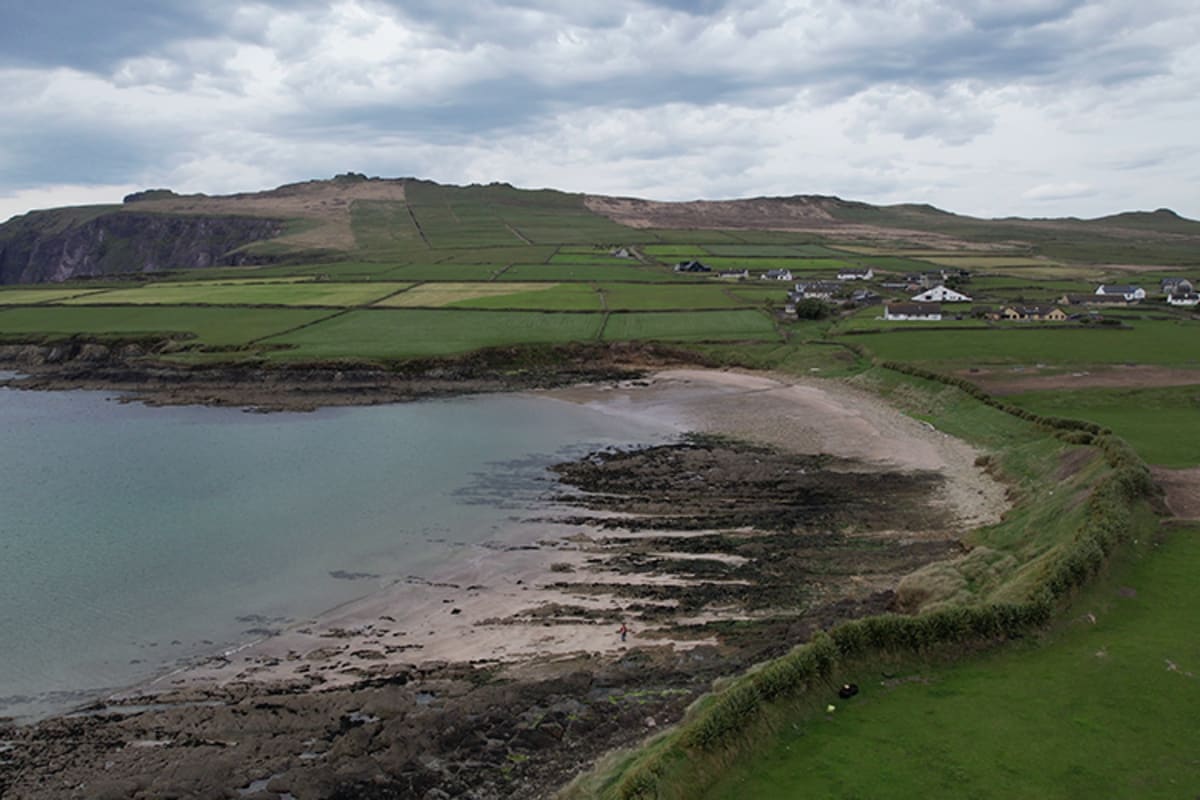
Researchers at University College Dublin used modern protein analysis to re-examine famous bones from Ferriter's Cove on Ireland's Dingle Peninsula. The fragments, nicknamed the "Kerry Cow," were identified in the 1980s as domesticated cattle and became a cornerstone of debates about how farming reached Ireland.
The problem? They were never cattle at all.
Dr. Martin Moucheron and his team used a technique called ZooMS, which identifies animals through proteins preserved in their bones. The results were clear: the supposed cattle bones actually came from a bear and a wild boar.
This finding removes what many researchers considered the strongest evidence that domesticated animals reached Ireland before 4000 BC. For years, the Kerry Cow suggested that hunter-gatherers on the island were trading with farming communities from Europe before agriculture took hold in Ireland.
The discovery happened because researchers went back to old collections with new tools. Professor Peter Woodman excavated Ferriter's Cove in the 1980s and 1990s, when identifying fragmented bones meant looking at their shape. But these pieces were too small and broken for reliable visual identification.
Why This Inspires
This story shows how science keeps improving our understanding of history. The original archaeologists did their best with the tools available, and nobody blamed them for the misidentification. Instead, today's researchers built on that earlier work with techniques that didn't exist 30 years ago.
The discovery also demonstrates the value of questioning long-held assumptions. Even famous findings deserve fresh examination when better methods become available. The team's willingness to test a widely accepted interpretation led to a clearer picture of Ireland's past.
Now the archaeological record makes more sense. Ireland's transition to farming aligns better with patterns seen across Britain and Europe, all happening around 4000 BC. While the Kerry Cow turned out to be neither from Kerry nor a cow in the strictest sense, its re-identification gives us something more valuable: accuracy.
The research reminds us that scientific progress means being open to revising our stories when evidence points in new directions, and that's worth celebrating.
Based on reporting by Google: archaeological discovery
This story was written by BrightWire based on verified news reports.
Spread the positivity!
Share this good news with someone who needs it
%2Fhttps%3A%2F%2Ftf-cmsv2-smithsonianmag-media.s3.amazonaws.com%2Ffiler_public%2Fcf%2F4d%2Fcf4d3176-9efd-4c9f-b643-2bc4f16839b6%2Fscripps_oceanography_geoscientist_lisa_tauxe_inserts_samples_i-32fad9c82902379b111b3658ab9c8a35.jpeg)