Iron Battery 80x Cheaper Than Lithium Lasts 6,000 Cycles
Chinese scientists developed an iron-based battery that costs 80 times less than lithium and survived over 6,000 charge cycles without losing capacity. The breakthrough could make clean energy storage affordable enough to transform power grids worldwide.
📺 Watch the full story above
Scientists in China just solved one of the biggest obstacles standing between us and affordable clean energy everywhere.
Researchers at the Chinese Academy of Sciences created an all-iron flow battery that costs a fraction of current lithium options while matching their performance. The new battery survived more than 6,000 charge and discharge cycles without any loss in storage capacity.
The secret lies in a carefully designed iron-based liquid that stops a common problem plaguing iron batteries for decades. Previous versions generated unwanted hydrogen gas that slowly destroyed the battery's ability to hold energy. The new formula blocks that reaction completely.
Here's why the cost difference matters so much. Lithium carbonate, the key ingredient in most batteries today, swings wildly in price between $7,000 and $80,000 per metric ton. Iron sulfate, which powers these new batteries, costs roughly 80 times less and comes from industrial waste that factories already produce.
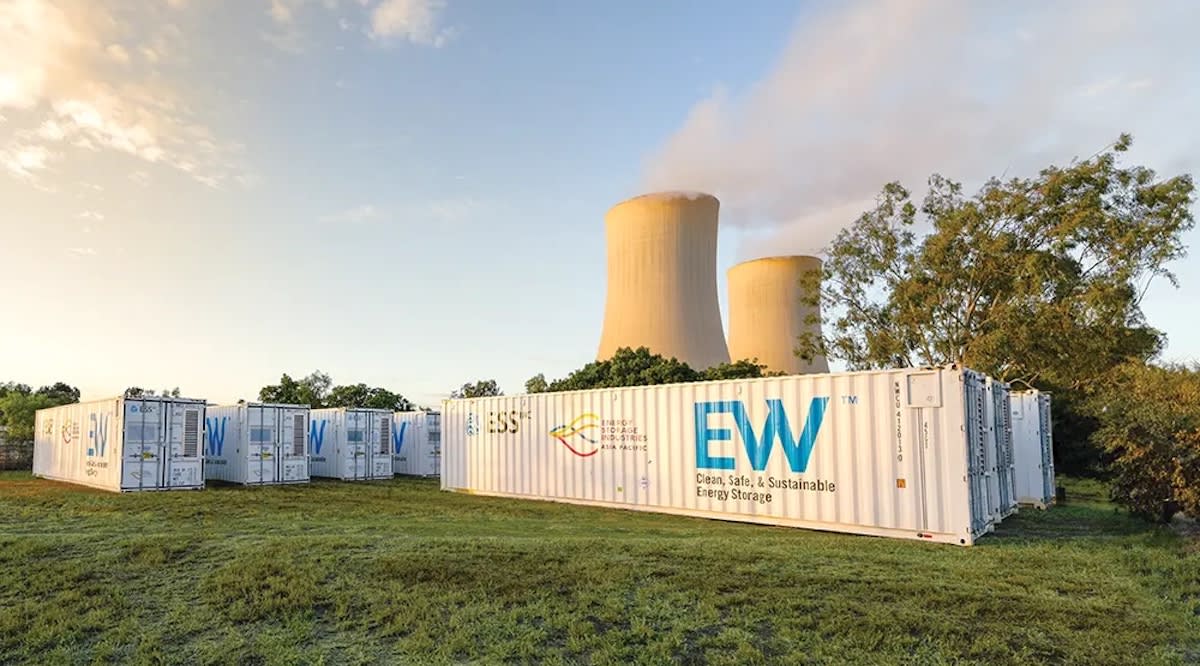
Flow batteries work differently than the ones in your phone. They store energy in large tanks of liquid instead of solid materials, pumping the fluid through a special cell when power is needed. That design makes them perfect for storing massive amounts of renewable energy from solar panels and wind turbines.
The Ripple Effect spreads far beyond just cheaper batteries. Grid-scale storage is the missing piece that lets communities run entirely on wind and solar power. When the sun sets or wind stops blowing, stored energy keeps homes and hospitals running without burning fossil fuels.
Right now, vanadium flow batteries dominate commercial energy storage, with giant 100-megawatt installations operating across China, Europe, and the United States. But vanadium costs a fortune and supplies are limited. Iron is everywhere and practically free by comparison.
The researchers tested 12 different organic compounds before finding the winning formula. Their best design uses an iron complex with a bulky molecular structure and negatively charged protective layer that repels damaging chemical reactions through basic physics.
One important detail requires patience. The 80 times cost savings refers only to raw materials, not the complete installed system with pumps, electronics, and other equipment. If the new design also eliminates expensive membranes, the real-world savings could be enormous. If standard membranes are still needed, the advantage shrinks but remains significant.
The batteries haven't been tested outside the laboratory yet. Moving from promising research to proven technology deployed across power grids takes time and rigorous real-world testing.
Still, lithium iron phosphate batteries already deliver similar cycle life at prices that keep dropping, which shows the 6,000-cycle benchmark represents genuine commercial viability. Iron flow batteries reaching that same endurance at dramatically lower material costs could reshape how the world stores clean energy.
Affordable storage means renewable energy becomes practical everywhere, not just in wealthy regions with big budgets for expensive batteries.
More Images

Based on reporting by CleanTechnica
This story was written by BrightWire based on verified news reports.
Spread the positivity!
Share this good news with someone who needs it