Israeli School Deploys AI Robot to Help Teachers
A high school near Haifa is using an AI robot named Buddy to support teachers and keep sick students connected to class. The friendly device helps with lesson planning and personalized learning while teachers focus on creativity and emotional development.
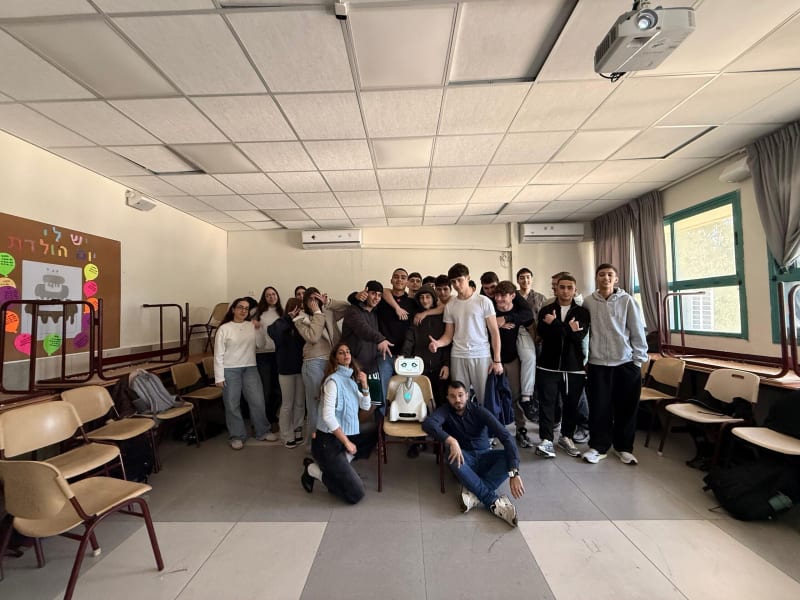
Students at ISTS Kiryat Bialik near Haifa now have an unusual classroom companion: a cat-sized robot with glowing blue lights and a smiling animated face.
The AI-powered assistant, called Buddy, rolled into the Israeli high school this year as one of the country's first classroom robots. It supports technology classes and helps special needs students while freeing teachers to spend more time on what matters most.
Buddy looks like something from a friendly sci-fi movie. Its rectangular screen displays cartoon eyes and a smiling mouth, while blue LED lights glow around its rounded body. A camera mounted above the screen lets it see and interact with students.
The robot assists teachers by helping build lesson plans and pulling examples from online resources. Students can brainstorm with Buddy, get guidance on assignments, or even program the robot themselves as part of their coursework. It also prompts short physical activity breaks to keep students energized.
School administrators emphasize that Buddy enhances rather than replaces teachers. "It allows teachers to dedicate more time to meaningful student engagement while ensuring every child receives personalized attention," said Raya Tubul, director of the ISTS Kiryat Bialik campus.
The robot serves another important purpose: connecting sick students to their classroom. Through a dedicated app, Buddy can transmit live video and audio so students at home don't miss out on learning or social connection with their peers.
Meirav Zarbiv from Israel's Education Ministry told reporters the robot's primary purpose is "to strengthen and enhance the work of teachers." By handling routine tasks, Buddy gives educators more bandwidth for creative thinking, critical thinking, and social-emotional learning.
The Ripple Effect
The ISTS school network, founded in 1949, now serves 100,000 students across 264 middle and high schools in 54 Israeli municipalities. This pilot program could pave the way for AI assistants in classrooms throughout the network and beyond.
The technology particularly benefits students who need extra support. Special needs students gain another avenue for personalized learning, while homebound students maintain their connection to school community through Buddy's remote capabilities.
As schools worldwide explore how AI fits into education, this Israeli experiment shows technology working alongside human teachers rather than threatening to replace them.
The smiling robot in Kiryat Bialik proves the future of learning might be more collaborative than we imagined.
More Images



Based on reporting by Google News - Israel Technology
This story was written by BrightWire based on verified news reports.
Spread the positivity!
Share this good news with someone who needs it