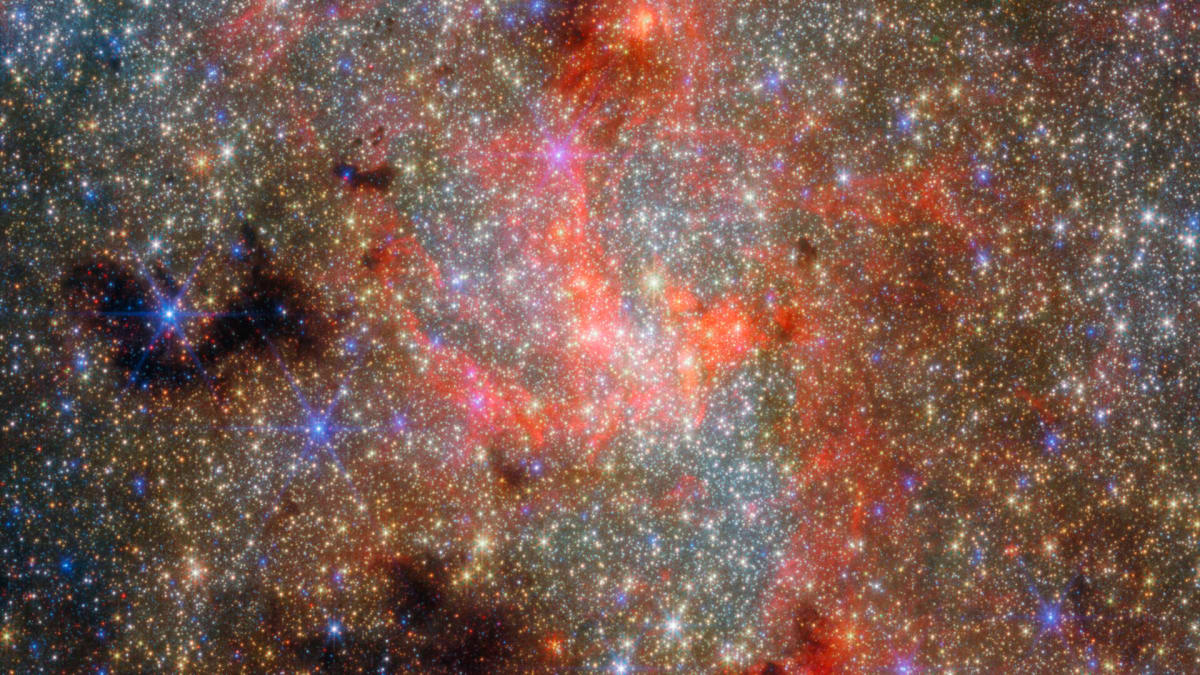
Israeli Team Detects Star-Birth Particles 400 Light-Years Away
Scientists from Israel have measured invisible cosmic ray particles deep inside a distant dust cloud for the first time, opening a new window into understanding how stars are born. The breakthrough discovery using NASA's James Webb Space Telescope could transform modern astrophysics.
Scientists just observed something they thought was impossible: invisible particles that help create stars, hidden 400 light-years away inside a giant cloud of space dust.
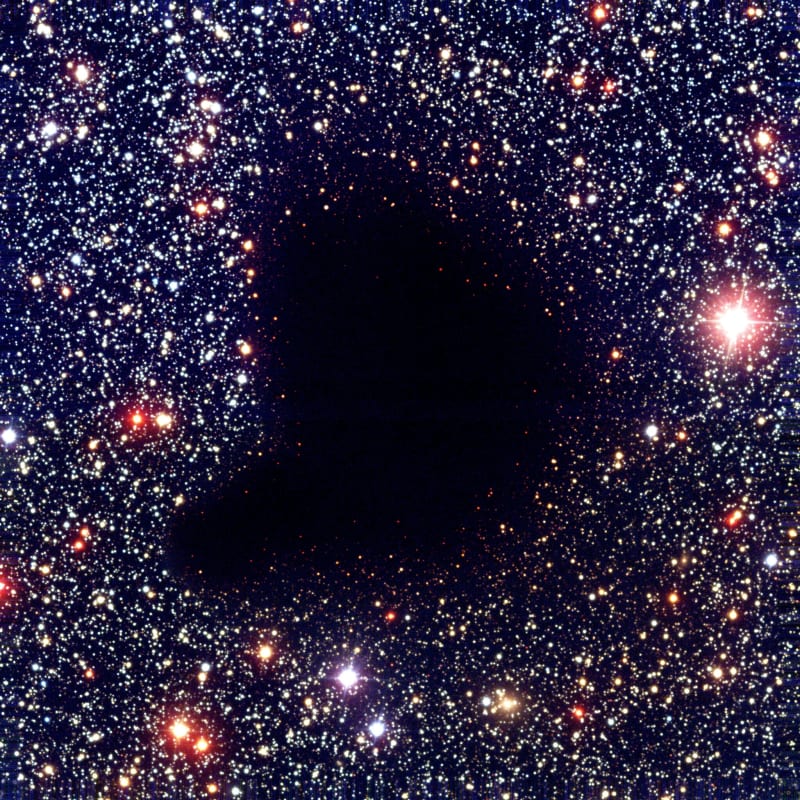
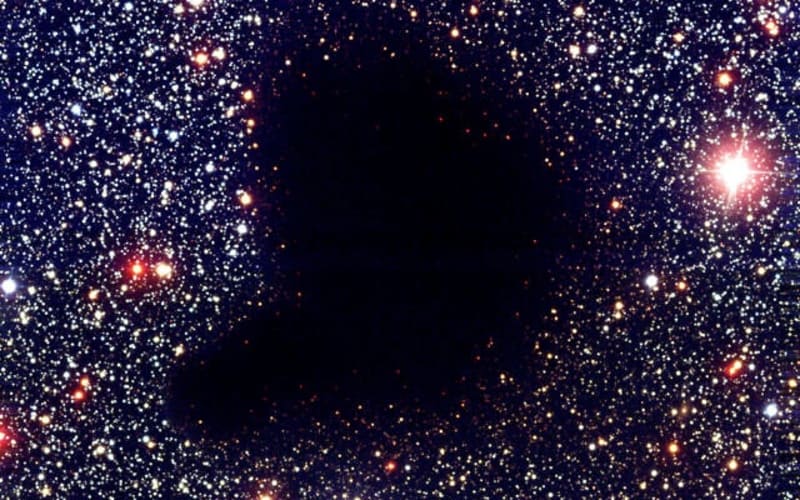
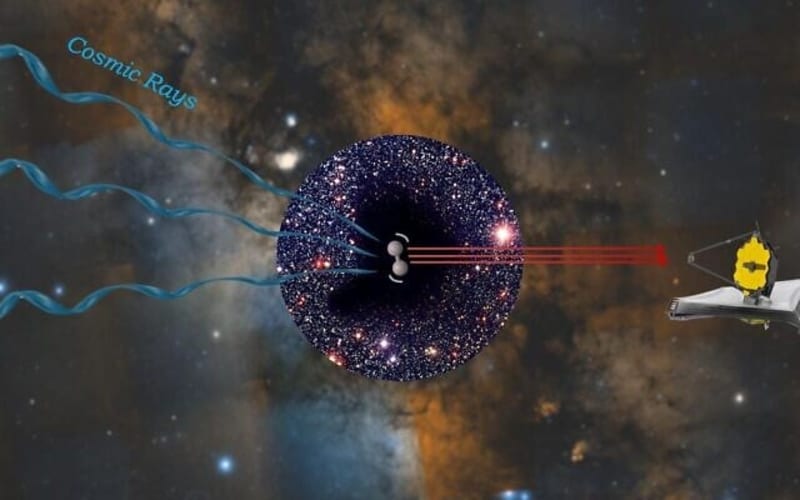
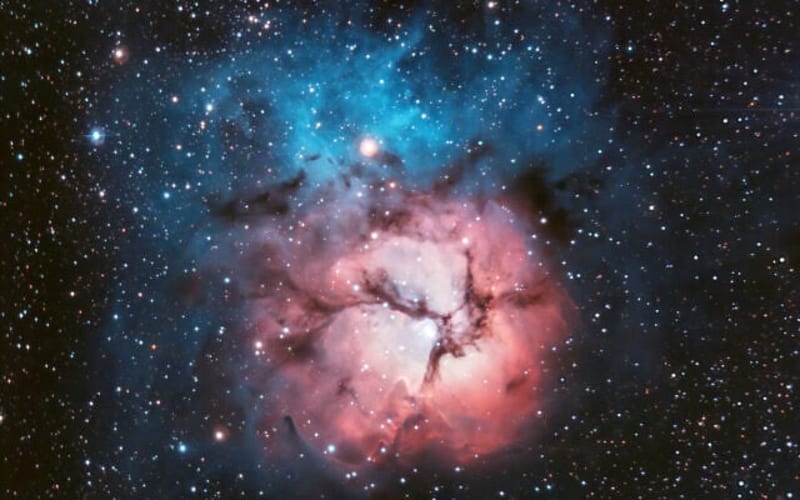
Professor Shmuel Bialy from Israel's Technion Institute and his team used NASA's James Webb Space Telescope to detect cosmic rays inside the Barnard 68 nebula. These high-energy particles, racing through space nearly as fast as light, play a crucial role in forming new stars.
"Nobody thought it would be possible to observe these cosmic rays because they were never seen before," Bialy told reporters. "Now, we show that it's possible."
Despite their confusing name, cosmic rays aren't actually rays at all. They're particles of matter like protons and electrons, buzzing around the galaxy at incredible speeds. When they slam into enormous clouds of dust and gas called nebulae, they make hydrogen molecules vibrate, releasing infrared radiation that the telescope can detect.
These cosmic ray collisions trigger chemical reactions inside the clouds, creating new molecules like water, ammonia, and methanol. Understanding this process helps scientists figure out how stars like our own Sun are born.
The discovery happened partly by chance and partly through determination. During the pandemic, Bialy kept working on decades-old theories about radiation from cosmic rays, calculating equations for fun. "I thought that even if we never observe it, I'm having fun," he said.
His friend Sirio Belli, an Italian astronomer, joined him for a first attempt using a telescope in Arizona. After 20 hours of observation, they saw nothing. But they didn't give up.
The pair applied to use NASA's James Webb Space Telescope, which orbits the Sun nearly a million miles from Earth and is far more sensitive than ground-based instruments. NASA approves only one in ten proposals, but after several tries, they got their chance with eight hours of observation time.
This time, the signal came through strong and clear.
The Ripple Effect
This breakthrough opens an entirely new field of research in astrophysics. Scientists can now study how cosmic rays shape the birth of stars throughout our galaxy, answering questions about stellar formation that have puzzled researchers for generations.
The research also shows how persistence pays off in science. Bialy's childhood fascination with the night sky, when he spoke his first sentence in Russian exclaiming "Look, look, a star!" led him to this moment of discovery decades later.
His team's work proves that sometimes the "impossible" just needs better tools and scientists willing to ask "why not?"
Now astronomers worldwide can use this technique to peer inside distant nebulae and watch the cosmic dance that creates new suns.
More Images

Based on reporting by Google News - Israel Technology
This story was written by BrightWire based on verified news reports.
Spread the positivity!
Share this good news with someone who needs it
%2Fhttps%3A%2F%2Ftf-cmsv2-smithsonianmag-media.s3.amazonaws.com%2Ffiler_public%2F3f%2F55%2F3f5579c8-c4a7-43a5-bb54-6498478792fd%2Fhelix1940__fitmaxwzk3mcw2ntbd.jpg)