James Webb Captures Dying Star Creating Future Worlds
The James Webb Space Telescope just revealed the most detailed image yet of a star's final moments, showing how its death becomes the recipe for new planets. The Helix Nebula, 650 light years away, is literally breathing out the building blocks of tomorrow's solar systems.
A dying star is putting on one of the most beautiful shows in the universe, and we just got our closest look yet.
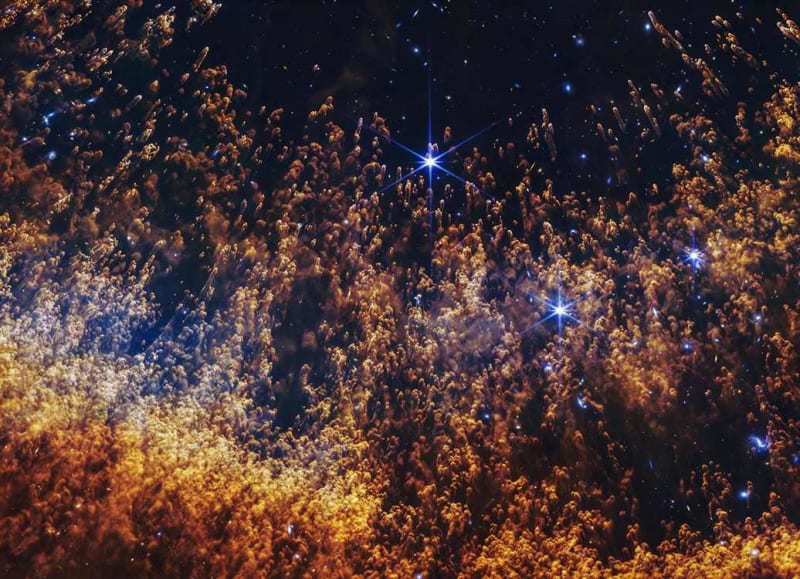
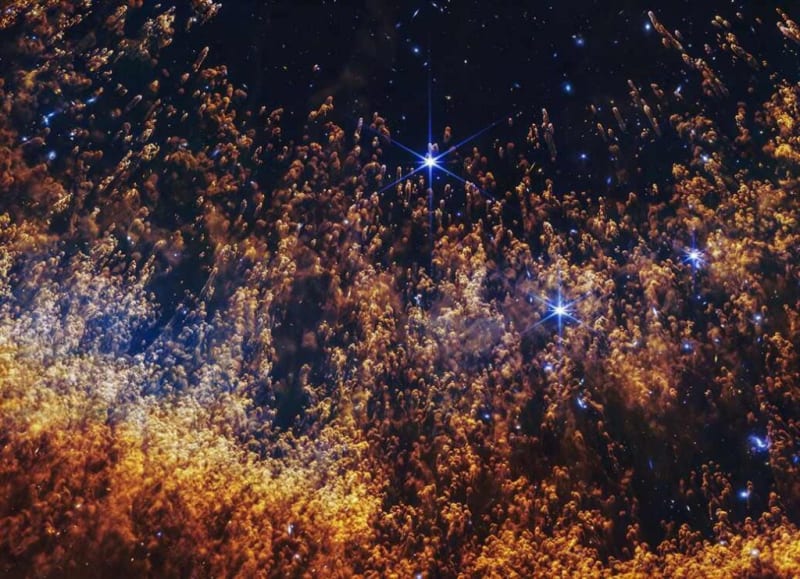
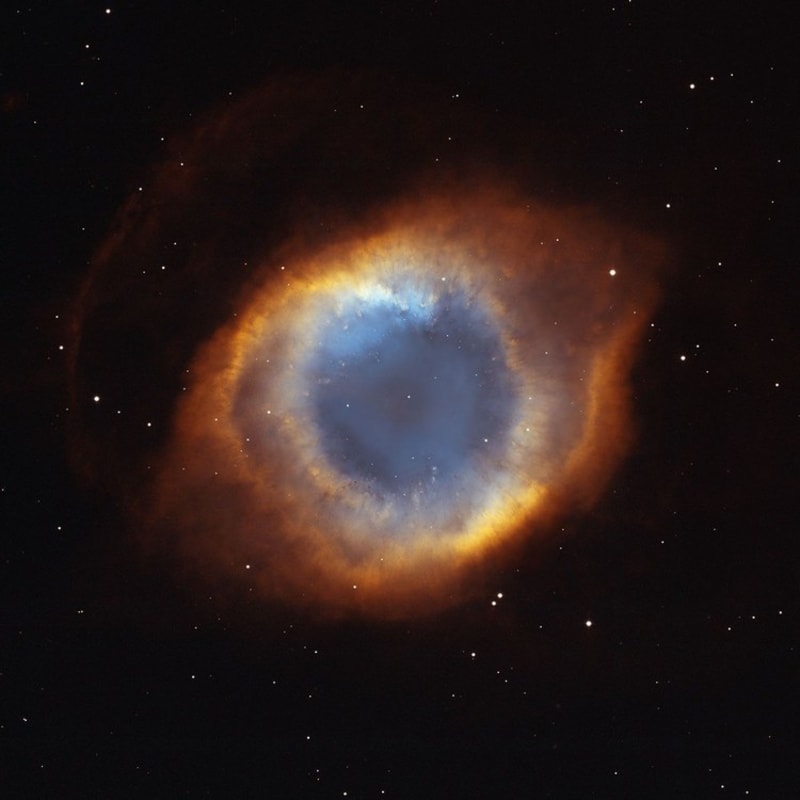
The James Webb Space Telescope captured stunning new details of the Helix Nebula, a white dwarf star in its final life stages. What looks like an enormous cosmic eye is actually layers of gas and dust expelled by the star as it dies.
The new image reveals something scientists have long suspected but never seen so clearly. Streaks of hot, ionized gas appear to shoot outward like fireworks, colliding with cooler material in deep orange rings where hydrogen atoms are fusing into molecules.
These comet-like plumes aren't shooting outward though. They're actually streaming toward the orange mass before cooling and drifting into space as a red haze.
That red material isn't just beautiful. It's the raw ingredients for planets and stars that will form millions of years from now.
The circular shape has earned the nebula a nickname among space fans: the Eye of Sauron from The Lord of the Rings films. But instead of representing evil, this cosmic eye represents renewal.
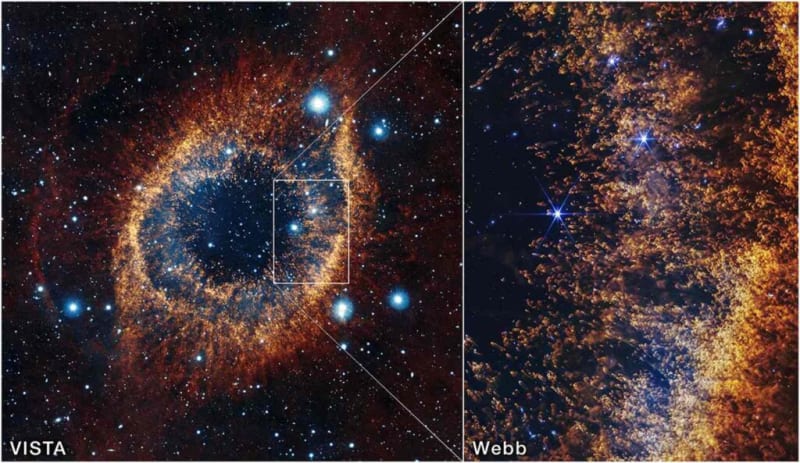
The hottest material in the nebula glows blue, while the coolest parts take on red hues. NASA combined Webb's infrared image with data from the ground-based VISTA telescope to create a complete picture of the star's transformation.
At 650 light years from Earth, the Helix Nebula has been observed for 200 years. Previous images from Hubble and Spitzer telescopes showed its basic structure, but Webb's advanced NIRcam instrument reveals unprecedented detail.
Why This Inspires
This image reminds us that endings in nature are rarely final. What looks like death is actually a transfer of life's building blocks to the next generation.
The star's "final breath" will scatter across space, eventually gathering in clouds that collapse to form new solar systems. Planets like Earth contain atoms from stars that died billions of years ago.
Webb continues to transform our understanding of how matter cycles through the universe. Each new image adds to our knowledge about where planets come from and how the elements that make up our world were created.
Scientists can now study in detail how dying stars contribute to the cosmic cycle of creation. The colors, temperatures, and movements visible in Webb's image help researchers understand exactly how stellar material transforms and spreads.
NASA notes that together, the colors in this image show "the star's final breath transforming into the raw ingredients for new worlds."
More Images

Based on reporting by Google News - Science
This story was written by BrightWire based on verified news reports.
Spread the positivity!
Share this good news with someone who needs it