James Webb Captures Stunning View of Dying Star's Rebirth
NASA's James Webb Space Telescope revealed an incredible close-up of a star transforming into cosmic dust that will seed new solar systems. The breathtaking image shows how stellar death creates the building blocks for future planets and stars.
The universe just showed us that even in death, stars give the ultimate gift of life.
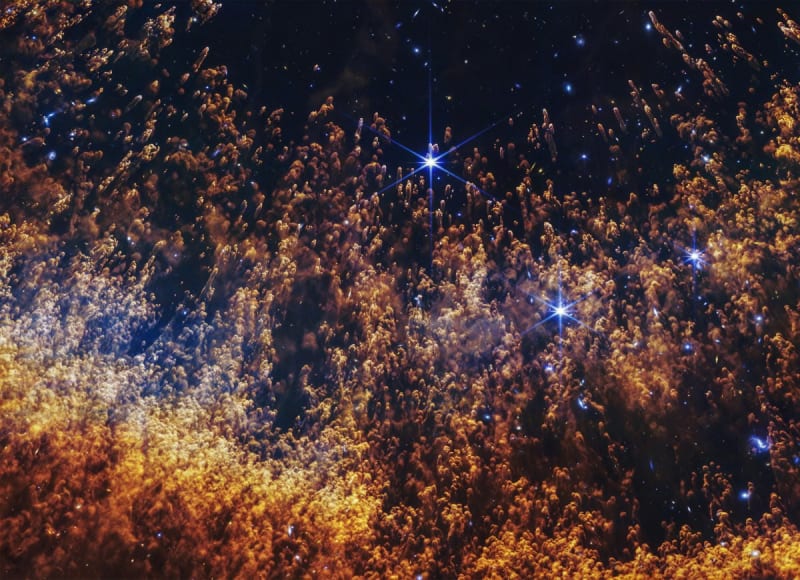
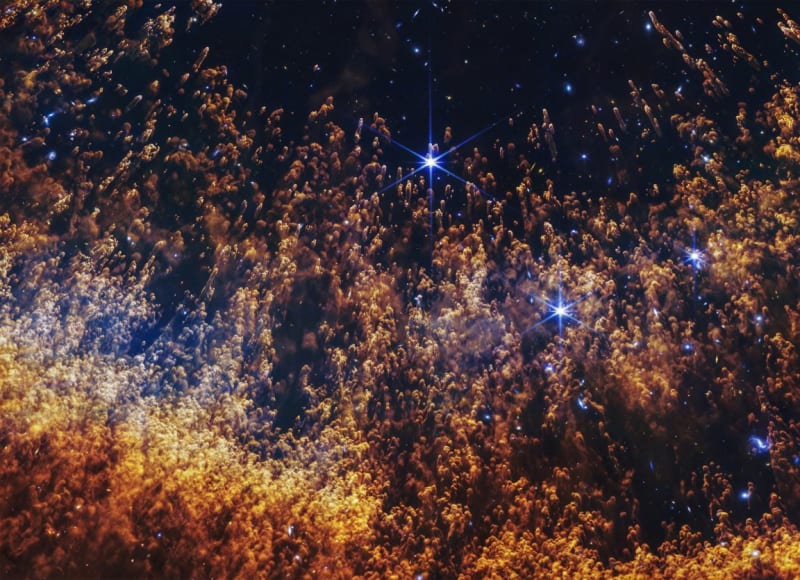
NASA's James Webb Space Telescope captured a stunning new image of the Helix Nebula, showing a dying star 650 light years away as it transforms into a glowing cloud of gas and dust. The star, once similar to our Sun, is now a white dwarf surrounded by brilliant rings of material it shed at the end of its life.
The image reveals something remarkable happening in those colorful clouds. Blue regions show the hottest gases being blasted by radiation from the white dwarf, while yellow areas contain hydrogen and dust clouds where complex molecules are forming.
This isn't just a beautiful cosmic portrait. It's a glimpse at how the universe recycles itself to create new worlds.
When stars die, they don't simply disappear. They release heavier elements and materials forged during their lifetimes back into space. This cosmic recycling process provides the essential ingredients needed to form new planetary systems around other suns.
The process mirrors how decomposition works on Earth, but at a scale that could swallow our inner solar system and over millions of years instead of months. The Helix Nebula, often called the "Eye of Sauron" for its distinctive appearance, demonstrates this galactic upcycling in action.
Webb's infrared camera captured details never seen before in this famous nebula. Previous images from Hubble and Spitzer showed the broader structure, but Webb zoomed in to reveal the intricate dance of temperature, chemistry, and transformation happening within the expanding shell.
The Ripple Effect
This stellar death will have cosmic consequences that ripple forward through time. The materials spreading outward from this white dwarf contain the ingredients for future generations of stars and planets. Elements crucial for rocky worlds like Earth, along with the building blocks of complex molecules, are being distributed across space.
Scientists can observe similar processes throughout our galaxy, with countless dying stars contributing to an ongoing cycle of cosmic renewal. Some white dwarfs exist in binary pairs where they strip material from companion stars, occasionally creating brilliant thermonuclear explosions called novas that briefly outshine entire galaxies.
Understanding these stellar life cycles helps us appreciate our own origins. Every atom in our bodies, except hydrogen, was forged inside stars that died billions of years ago. We're literally made from the recycled material of ancient suns.
Today's dying stars are seeding tomorrow's solar systems, continuing an ancient cycle that makes new worlds and possibly new life possible across the universe.
More Images
Based on reporting by Futurism
This story was written by BrightWire based on verified news reports.
Spread the positivity!
Share this good news with someone who needs it