James Webb Finds Life's Building Blocks in Dying Star
The James Webb Space Telescope captured stunning new images of the Helix Nebula, revealing how a dying star scatters the same elements that make life on Earth possible across the galaxy. This cosmic recycling center offers a preview of our own sun's fate in 5 billion years.
A dying star 655 light-years away is doing something remarkable: creating the ingredients for future life as it takes its final breath.
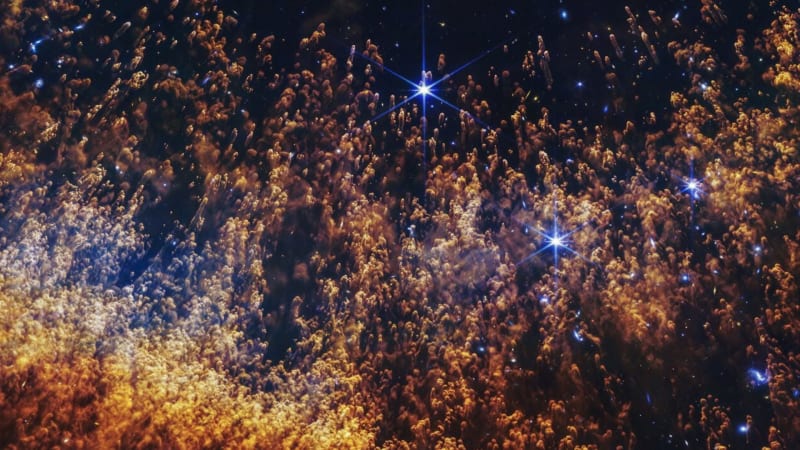
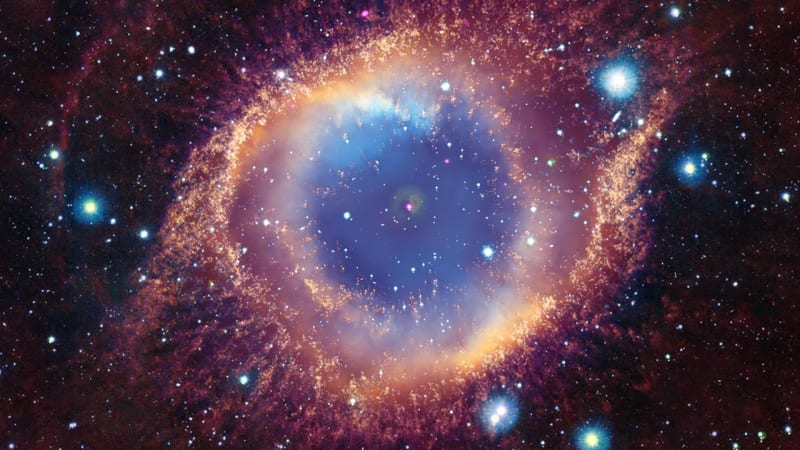
The James Webb Space Telescope just delivered its most detailed look yet at the Helix Nebula, nicknamed the "Eye of God." What scientists found hiding in those colorful clouds is a cosmic gift. As this sunlike star sheds its outer layers, it's launching carbon, oxygen, and nitrogen into space, the exact elements that make life possible on our planet.
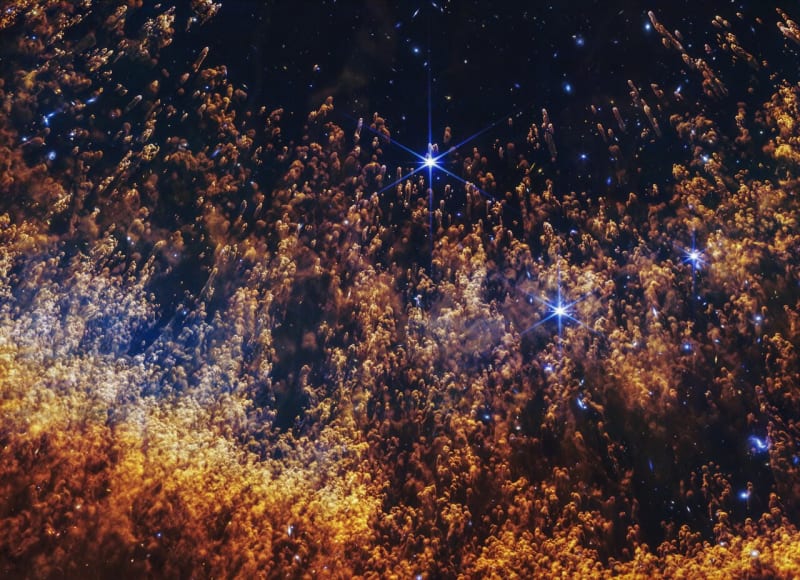
The new infrared images reveal thousands of glowing, comet-shaped pillars streaming outward from the dying star's core. These "cometary knots" mark where superheated winds from the white dwarf star slam into older, cooler gas clouds. It's a violent yet beautiful transition, painting the nebula in shades of gold, orange, and deep red.
Close to the star's remains, ultraviolet radiation ignites hot gas into a brilliant blue glow. Further out, temperatures drop and the colors shift. Yellow marks molecular hydrogen, while deep red dust drifts in the cooler outer regions.
The Helix Nebula sits in the constellation Aquarius, making it one of the closest planetary nebulas we can study. Despite its name, a planetary nebula has nothing to do with planets. Early astronomers just thought these circular, glowing clouds looked like distant worlds through their telescopes.
Why This Inspires
This isn't just the story of one star's death. It's a preview of rebirth. The dust and gas spreading into space will eventually seed new stars and planets. Scientists believe our own solar system formed from similar material left behind by ancient stars.
In about 5 billion years, our sun will follow the same path. It will expand into a red giant, shed its outer layers, and leave behind its own glowing nebula. The atoms in our bodies came from stars like this one, and they'll return to space to build new worlds long after we're gone.
The James Webb telescope's ability to see deeper into these structures than ever before means scientists can now study exactly how stars distribute life's building blocks across the galaxy. Each new image adds another piece to the puzzle of how we got here.
One star's ending is another's beginning, and Webb just gave us front-row seats to the universe's most important recycling program.
More Images

Based on reporting by Live Science
This story was written by BrightWire based on verified news reports.
Spread the positivity!
Share this good news with someone who needs it