James Webb Finds Organic Molecule Factory Beyond Milky Way
Scientists discovered a hidden galaxy nucleus churning out complex organic molecules at rates far beyond what models predicted. The finding reveals cosmic rays are transforming carbon-rich materials into building blocks that could lead to life's essential chemistry.
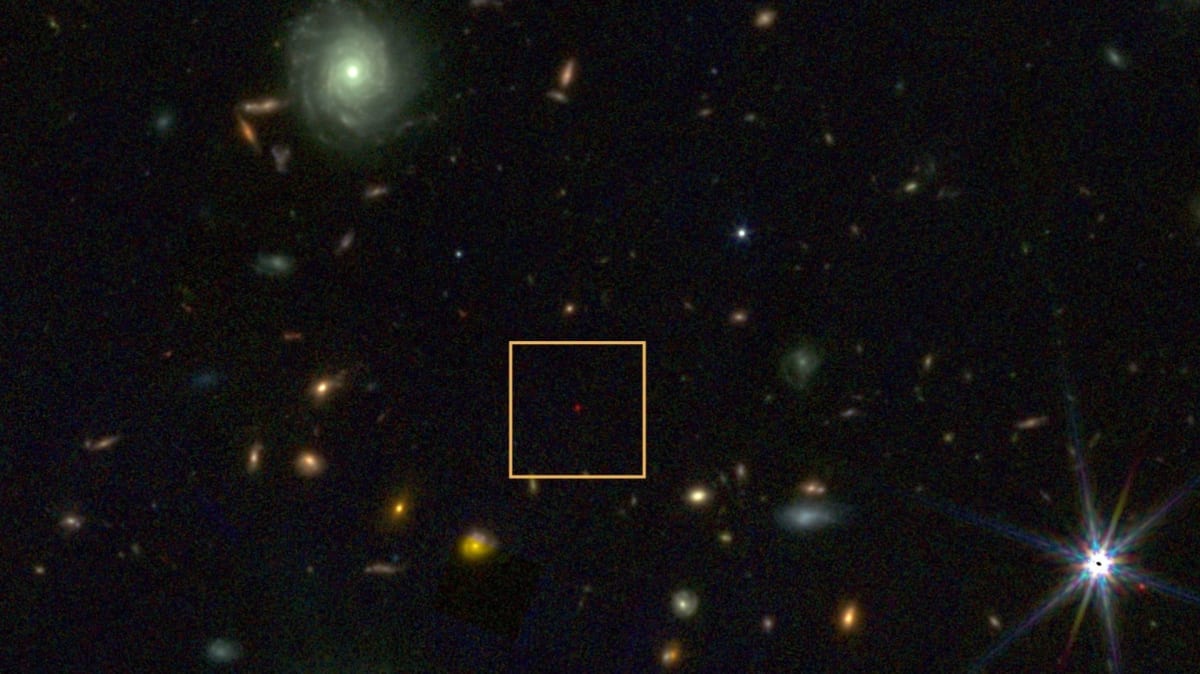
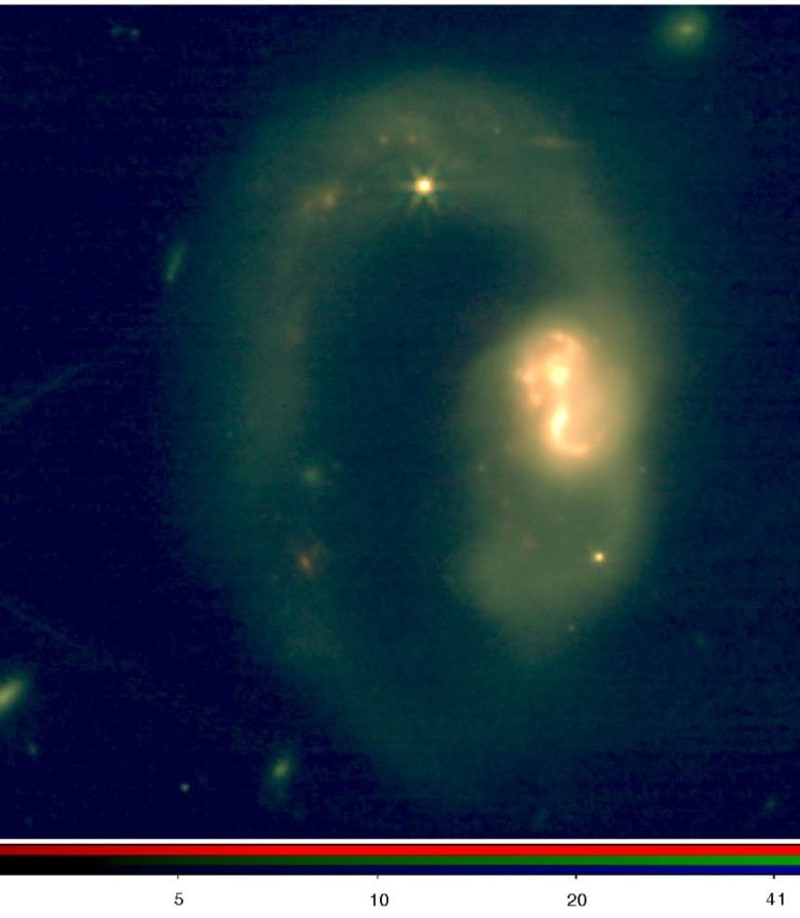
Deep inside a dust-choked galaxy 500 million light-years away, the James Webb Space Telescope just spotted something extraordinary: a cosmic factory pumping out organic molecules at levels scientists never thought possible.
The galaxy's buried core is creating benzene, methane, and other carbon-based compounds in surprising abundance. Even more exciting, researchers detected the methyl radical for the first time ever outside our own Milky Way.
The discovery centers on IRAS 07251-0248, an ultraluminous infrared galaxy whose heart is hidden behind thick clouds of gas and dust. Traditional telescopes can't peer through this cosmic fog, but James Webb's infrared vision cut right through to reveal the chemistry happening inside.
What scientists found shocked them. The galaxy nucleus contains far more small organic molecules than current models predict should be there. Lead author Dr. Ismael García Bernete from Spain's Center for Astrobiology explains that something must be continuously feeding carbon into this rich chemical network.
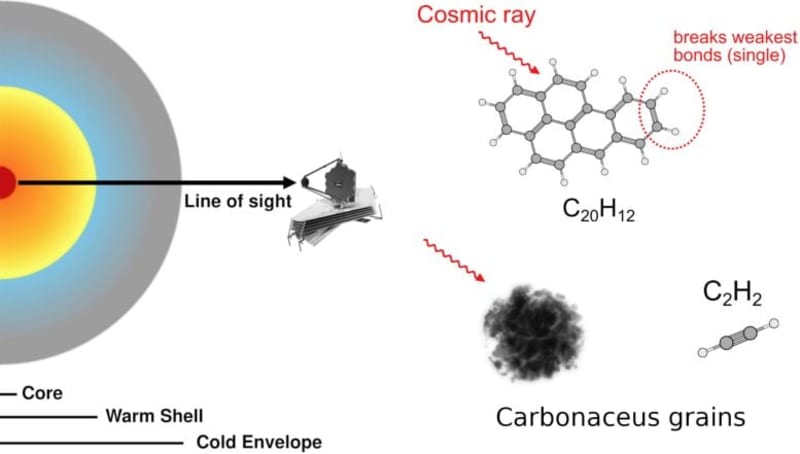
The culprit appears to be cosmic rays. These high-energy particles are smashing into larger carbon structures and breaking them apart, releasing smaller organic molecules into the surrounding gas. It's like a cosmic blender operating in one of the harshest environments in space.
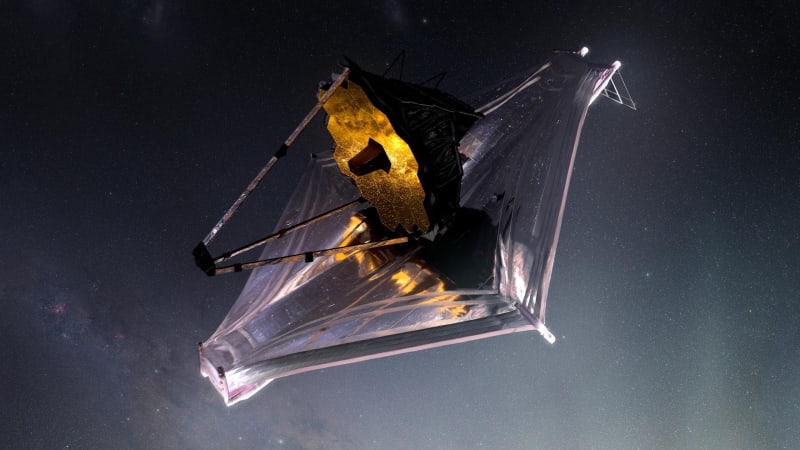
The research team from the Center for Astrobiology and University of Oxford used James Webb's NIRSpec and MIRI instruments to identify molecular fingerprints across wavelengths invisible to human eyes. They found not just gas-phase molecules but also carbon-rich grains and water ice in solid form.
Why This Inspires
These molecules aren't alive, but they're the ingredients that could eventually lead to life. Professor Dimitra Rigopoulou from Oxford notes they could play a vital role in prebiotic chemistry, representing an important step toward forming amino acids and nucleotides.
The discovery suggests that deeply buried galactic cores across the universe might be secret factories churning out organic building blocks. These extreme environments, once thought too harsh for complex chemistry, may actually be driving the chemical evolution of entire galaxies.
By revealing chemistry hidden in regions previously beyond our reach, James Webb is rewriting our understanding of how organic molecules form in space. The universe's capacity to create the ingredients for life appears far more widespread than we imagined.
More Images
Based on reporting by Google: James Webb telescope
This story was written by BrightWire based on verified news reports.
Spread the positivity!
Share this good news with someone who needs it