James Webb Spots 'Failed Stars' in Dazzling Cluster
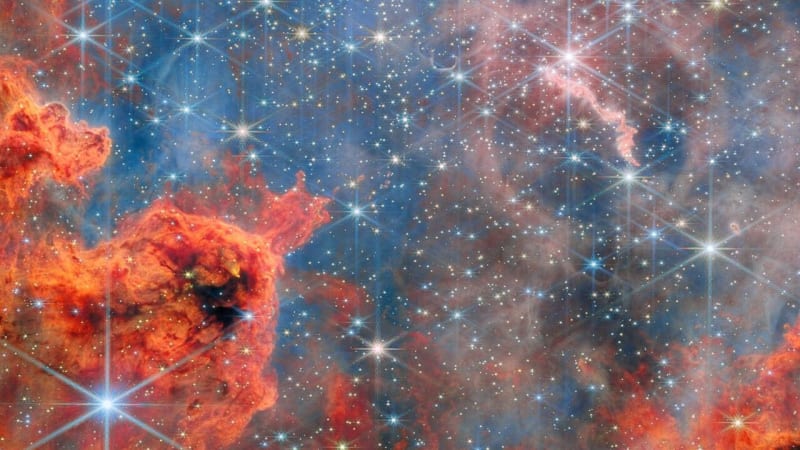
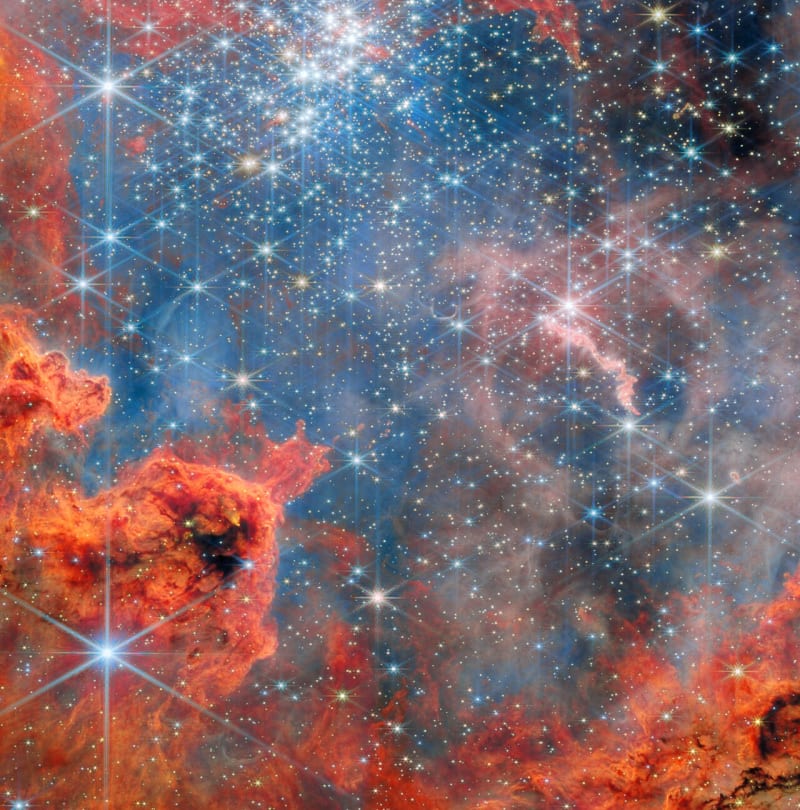
The James Webb Space Telescope captured a stunning portrait of Westerlund 2, a young star cluster just 20,000 light-years away that's home to 3,000 brilliant stars and mysterious brown dwarfs. The breathtaking image reveals not just massive young stars, but also "failed stars" that could unlock secrets about how solar systems form.
A cosmic nursery glowing with 3,000 young stars is giving scientists an unprecedented look at how stars and planets come to be.
The James Webb Space Telescope recently photographed Westerlund 2, a compact star cluster nestled within the Milky Way galaxy. Located 20,000 light-years from Earth in the constellation Carina, this stellar neighborhood measures just 6 to 13 light-years across but packs an incredible punch.
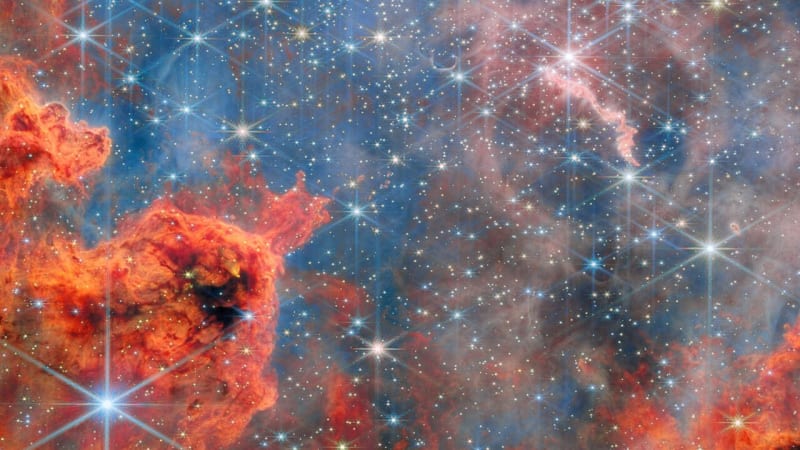
At only 2 million years old (practically a newborn in cosmic terms), Westerlund 2 hosts some of the hottest, brightest, and most massive stars in our entire galaxy. The telescope's infrared cameras captured stunning details invisible to our eyes, revealing orange and brown clouds of gas and dust sculpted by intense starlight, all interconnected by delicate blue and pink wisps of drifting material.
But the real discovery lies in what scientists call "failed stars." Using specialized infrared bands sensitive to methane, astronomers identified a population of brown dwarfs scattered throughout the cluster. These peculiar objects range from 10 to 90 times Jupiter's mass, straddling the line between planets and stars.
Brown dwarfs earn their "failed star" nickname because they never quite make it. Unlike true stars, they lack enough mass to ignite nuclear fusion in their cores, leaving them in a cosmic middle ground. Some of the brown dwarfs spotted in this image are only about 10 times Jupiter's mass, making them among the smallest objects ever identified in such a stellar nursery.
The Hubble Space Telescope photographed this same cluster a decade ago for its 25th anniversary, but Webb's advanced infrared vision reveals details Hubble couldn't see. Tiny stars appear still embedded in the thick clouds where they formed, while larger, closer stars display an eight-pronged diffraction pattern created by Webb's instruments.
Why This Inspires
This discovery represents more than just a pretty picture. Scientists believe studying these brown dwarfs and their planet-forming disks could reveal how solar systems like ours develop around massive stars. The continuous cycle of star birth happening in Westerlund 2 mirrors processes that occurred billions of years ago when our own sun formed.
Each new star blasts out radiation that heats the surrounding nebula, triggering even more stars to form in an ongoing chain reaction of creation. Understanding this process helps astronomers piece together the story of how stars, planets, and ultimately life emerge from clouds of gas and dust.
The Webb telescope continues proving its worth, peering deeper into cosmic mysteries with every image it captures and bringing us closer to understanding our place in the universe.
More Images

Based on reporting by Google News - Science
This story was written by BrightWire based on verified news reports.
Spread the positivity!
Share this good news with someone who needs it