James Webb Telescope Captures Universe's Baby Pictures
After 20 years of development and countless engineering breakthroughs, the James Webb Space Telescope is sending back stunning images of galaxies forming just after the Big Bang. The 7-ton observatory is answering humanity's deepest questions about how the universe began.
A telescope floating a million miles from Earth is showing us what the universe looked like when it was still learning to shine.
The James Webb Space Telescope, the largest telescope ever built for space, spent two decades in development with one ambitious goal: capture the universe's first baby pictures. Since launching and reaching its destination at the Sun-Earth L₂ point, it's doing exactly that and more, revealing newborn galaxies, star-forming nurseries, and alien worlds from the dawn of time.
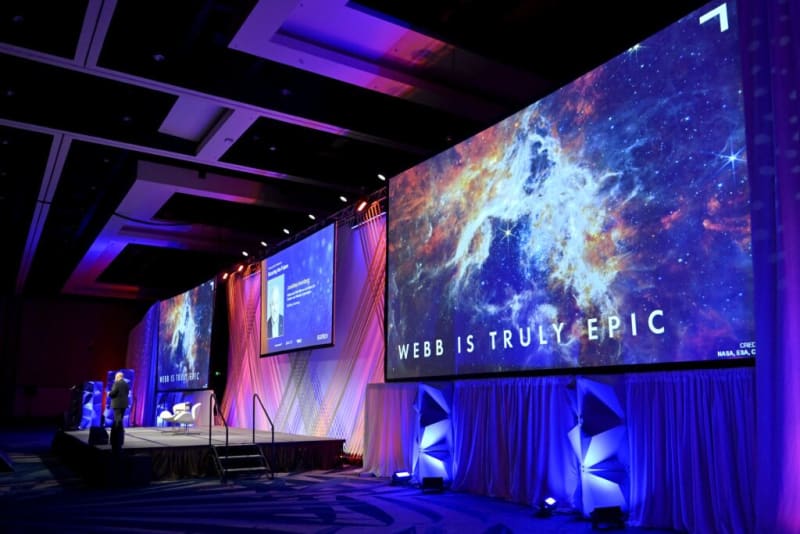
Jonathan Arenberg, Chief Mission Architect at Northrop Grumman, recently shared the remarkable story behind this 6.6-meter-wide cosmic eye at the AIAA SciTech Forum. He described how engineers had to invent technology that didn't exist to make the telescope possible.
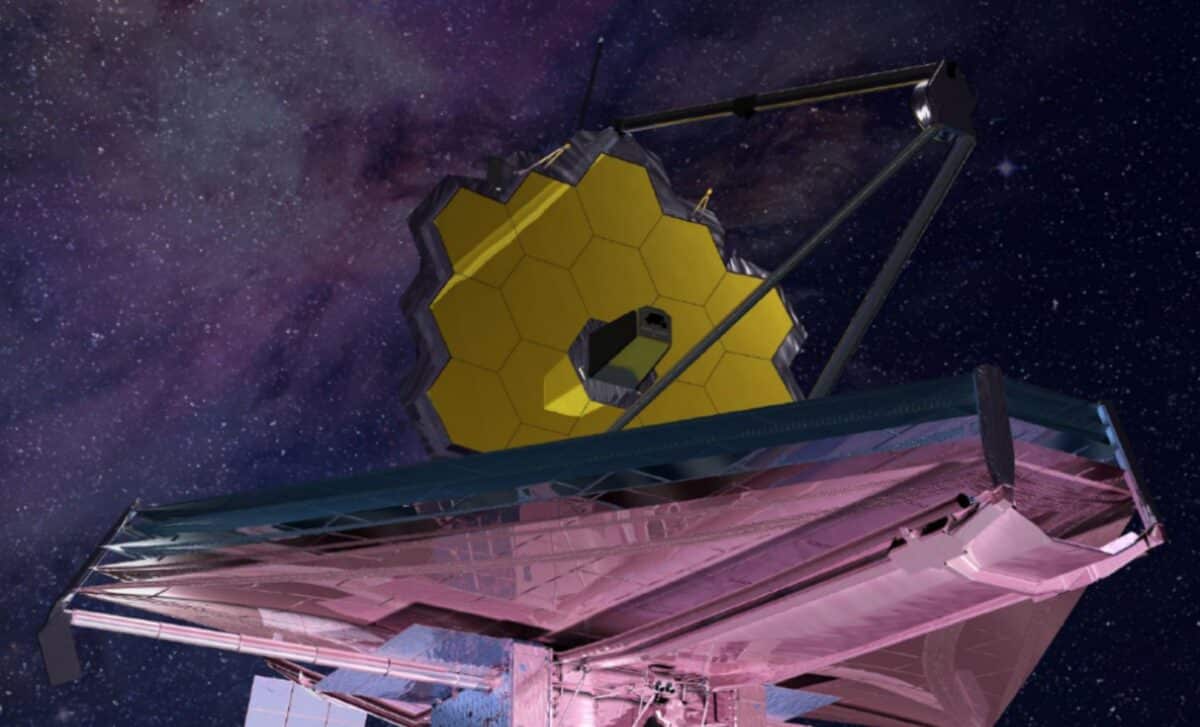
The heart of the house-sized instrument is a primary mirror made of 18 hexagonal beryllium segments coated in gold, designed to capture faint infrared whispers from the first galaxies that formed after the Big Bang. Each segment had to be aligned to within a few nanometers, essentially stitching a perfect mirror out of many tiny pieces.
To keep the delicate instruments cold enough to detect ancient light, engineers created a five-layer sunshield the size of a tennis court. It stretches 21 by 14 meters and creates such an effective shadow that the cold side stays at minus 235 degrees Celsius while the sun-facing side bakes at over 120 degrees.
The team tested every component in the harshest conditions imaginable. They built full-scale replicas, ran parallel models, and subjected each part to brutal vibration tests that mimicked launch forces. By the time the telescope left Earth, every bolt and sensor had been proven flight-ready.
After launching on an Ariane 5 rocket, the Webb performed an intricate 14-day ballet in space. Over 178 devices and 50 deployable structures unfurled with synchronous precision as the telescope sailed to its destination almost a million miles away.
Why This Inspires
What makes this story remarkable isn't just the engineering triumph. It's the collective human determination that made it possible.
"No one ever said we're not going to be successful," Arenberg told the standing-room-only audience. Teams across continents spent decades pressing forward, driven by conviction that answering humanity's deepest questions about our cosmic origins would be worth every risk.
The moment the first images arrived, they exceeded expectations. The telescope's near-infrared camera captured water vapor in the atmosphere of a distant gas giant. Deep field shots revealed galaxies hidden behind massive gravitational fields, showing us views of the universe that were previously impossible to see.
The Webb telescope proves that when humans unite around a shared vision of discovery, we can build instruments that let us peek at the universe's baby photos.
More Images

Based on reporting by Google: James Webb telescope
This story was written by BrightWire based on verified news reports.
Spread the positivity!
Share this good news with someone who needs it