James Webb Telescope Maps Dark Matter in Stunning Detail
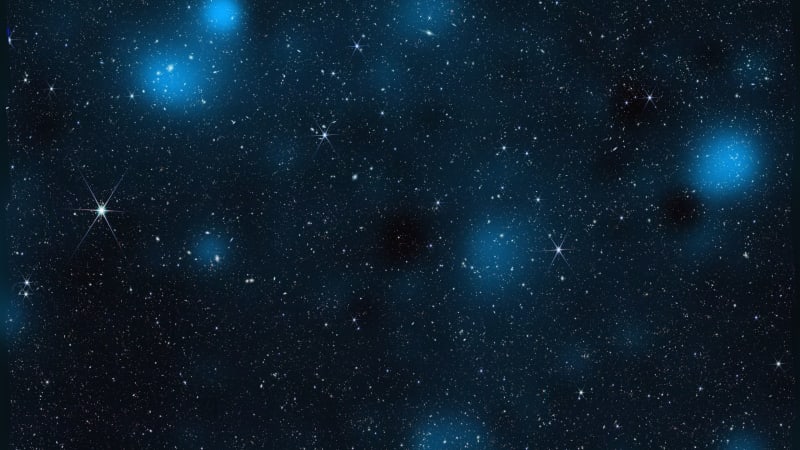
Scientists used the James Webb Space Telescope to create the most detailed map yet of dark matter, revealing the invisible structure that holds our universe together. The breakthrough shows nearly 800,000 galaxies and helps explain how the cosmos evolved into its current form.
Scientists just mapped the largest and clearest picture yet of the invisible force that holds our entire universe together.
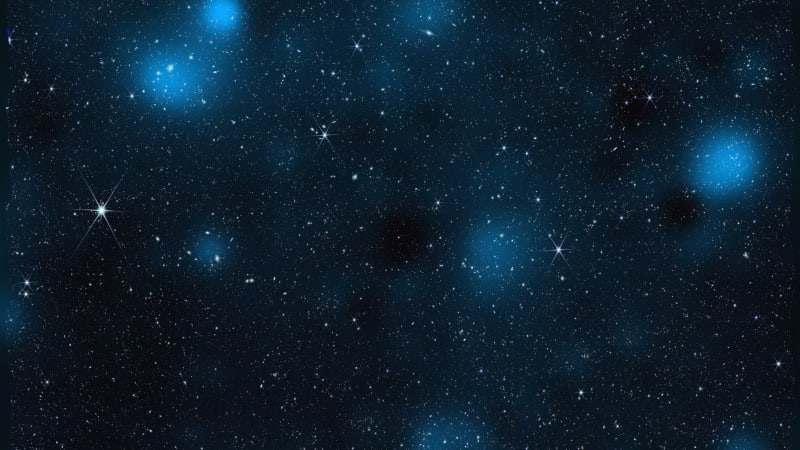
Using the James Webb Space Telescope, astronomers spent 255 hours staring at a patch of sky in the Sextans constellation, creating an unprecedented map of dark matter. They identified nearly 800,000 galaxies in the process, ten times more than ground-based telescopes have spotted in the same area.
Dark matter is one of the universe's greatest mysteries because it doesn't interact with light at all. Scientists can only detect it by watching how its gravity affects regular matter like stars and galaxies. Despite being invisible, dark matter makes up about five times more of the universe than everything we can see.
"Previously, we were looking at a blurry picture of dark matter," said Diana Scognamiglio, an astrophysicist at NASA's Jet Propulsion Laboratory who co-led the research. "Now, we're seeing the invisible scaffolding of the universe in stunning detail."
The new map, published in Nature Astronomy on January 26, reveals something remarkable about how our universe formed. Right after the Big Bang, dark matter and regular matter were evenly spread throughout space. But over time, dark matter began clustering together, pulling ordinary matter into increasingly dense pockets where it eventually sparked star formation.
This invisible scaffolding essentially created the layout of everything we see today. Without dark matter clumping first, galaxies might never have formed at all.
Why This Inspires
This discovery doesn't just solve an abstract cosmic puzzle. It explains how the very building blocks of life came to exist in our galaxy.
"This map provides stronger evidence that without dark matter, we might not have the elements in our galaxy that allowed life to appear," said study co-author Jason Rhodes, a senior research scientist at JPL. The same invisible force that shaped distant galaxies billions of years ago created the conditions necessary for our own existence.
The team plans to expand their mapping project dramatically. NASA's Nancy Grace Roman Space Telescope, launching later this year, will study an area 4,400 times larger than this initial region.
Each new discovery reminds us that the universe still holds profound secrets waiting to be revealed, and humanity's tools for understanding them keep getting better.
More Images



Based on reporting by Google News - Science
This story was written by BrightWire based on verified news reports.
Spread the positivity!
Share this good news with someone who needs it
%2Fhttps%3A%2F%2Ftf-cmsv2-smithsonianmag-media.s3.amazonaws.com%2Ffiler_public%2F3f%2F55%2F3f5579c8-c4a7-43a5-bb54-6498478792fd%2Fhelix1940__fitmaxwzk3mcw2ntbd.jpg)