Jane Goodall's Chimp Discovery Changed What It Means Human
In 1960, Jane Goodall watched chimps use grass stems as tools to fish termites from mounds, shaking the scientific world's understanding of humanity. Her discovery sparked a revolution in how we view intelligence, culture, and our closest animal relatives. --- ##
📺 Watch the full story above
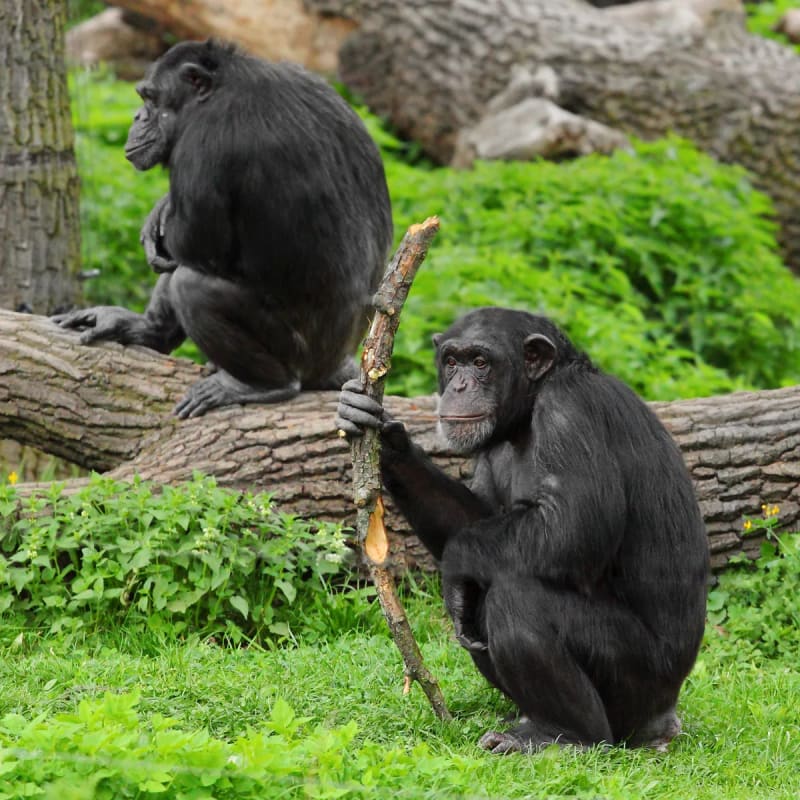
When Jane Goodall spotted chimpanzees stripping leaves from twigs to fish for termites in 1960, she didn't just witness animal behavior. She witnessed a moment that would force humanity to reconsider what makes us special.
At Gombe Stream National Park, Goodall observed chimps inserting grass stems into termite mounds, creating tools with purpose and precision. Scientists had long defined humans as "man the tool-maker," believing this ability separated us from all other creatures.
Anthropologist Louis Leakey captured the earthquake this created: "Now we must redefine 'tool', redefine 'man', or accept chimpanzees as humans." The discovery didn't just challenge definitions. It opened entirely new questions about animal intelligence and consciousness.
What came next proved even more remarkable. Researchers discovered that chimps in different regions use tools differently and pass these skills to their young, demonstrating true culture.
Chimps in Ivory Coast's Tai Forest employ different techniques than those in Gombe. Primatologist Christophe Boesch noted that simply watching a chimp's behavior reveals where it lives, just as human cultural practices vary by location.
Since Goodall's breakthrough, scientists have documented tool use across the animal kingdom. Dolphins carry sponges on their beaks to flush out fish. Capuchin monkeys crack nuts with rocks. New Caledonian crows shape twigs into precise instruments.
Why This Inspires
Goodall's patience and curiosity rewarded her with a discovery that expanded humanity's circle of understanding. Rather than diminishing what makes humans special, her work enriched our appreciation for the intelligence surrounding us.
The genetic split between chimps and humans happened just six million years ago, roughly 250,000 generations. That's a blink in evolutionary time, and Goodall helped us see the family resemblance.
Her discovery reminds us that intelligence takes many forms, and recognizing brilliance in other species doesn't diminish our own but celebrates the wonder of life itself.
---
##
More Images
Based on reporting by Google: scientific discovery
This story was written by BrightWire based on verified news reports.
Spread the positivity!
Share this good news with someone who needs it