Japan Breaks Solar Cell Record at 12.28% Efficiency
Japanese scientists just set a world record for a new type of solar cell that could make future panels cheaper and more efficient. The breakthrough brings us closer to affordable, powerful renewable energy for everyone.
Scientists in Japan have cracked a tough challenge in solar power, achieving a record 12.28% efficiency in a solar cell made without expensive indium.
Researchers at Japan's National Institute of Advanced Industrial Science & Technology created the cell using copper gallium selenide, a material that could reshape how we think about solar energy. The achievement marks the highest efficiency ever recorded for wide-bandgap solar cells in this category.
Lead researcher Shogo Ishizuka says the breakthrough matters because this material works exceptionally well at capturing sunlight. Copper gallium selenide has a special property: it absorbs visible sunlight efficiently even in extremely thin layers, making it ideal for lightweight, flexible solar panels.
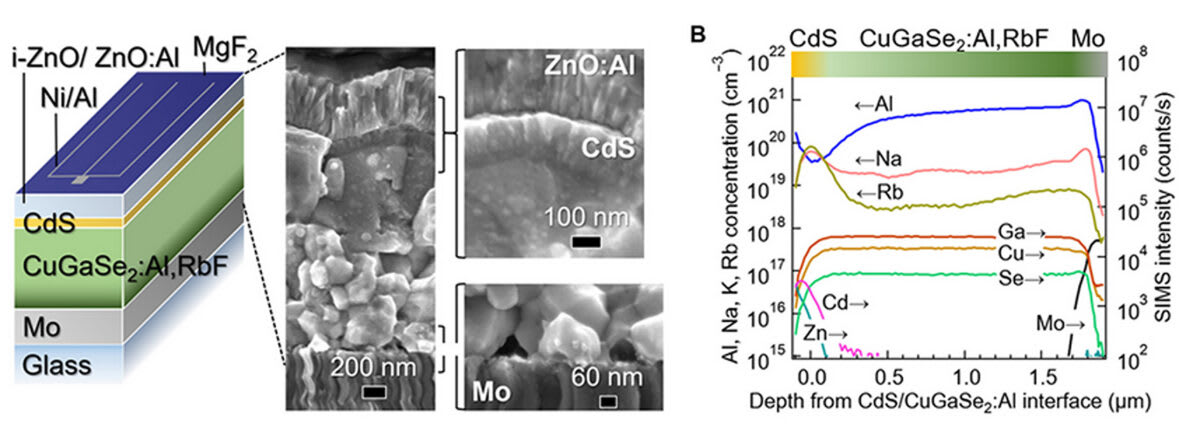
The team built on their 2024 design by carefully adding aluminum to the back of the cell, creating what scientists call a "back-surface field" that helps capture more energy. They also applied a treatment with rubidium fluoride at key stages during manufacturing, improving the cell's ability to convert sunlight into electricity.
The new cell achieved an open-circuit voltage of 0.996 volts, pushing closer to the theoretical maximum for this type of material. An independent testing lab certified the results, confirming this is genuinely record-breaking technology.
What makes this especially exciting is that copper gallium selenide tolerates imperfections in its structure. Even if the crystal isn't perfectly formed during manufacturing, the cell still performs well, which could make production easier and less expensive than current solar technologies.
The Ripple Effect
This research isn't just about breaking records. The team designed these cells specifically to work as the top layer in tandem solar panels, which stack multiple cells to capture different parts of the light spectrum.
Current commercial solar panels typically max out around 20% efficiency. Tandem designs using materials like copper gallium selenide could push that much higher, meaning the same rooftop could generate significantly more power.
The indium-free formula matters too. Indium is expensive and relatively rare, so removing it from solar cells could lower costs and reduce supply chain vulnerabilities as the world transitions to renewable energy.
While Ishizuka cautions that mass production is still years away, the foundation is now in place. His team proved that careful engineering of the material's internal structure can overcome previous limitations.
Each percentage point gained in solar efficiency translates to millions of panels generating more clean energy worldwide. This breakthrough moves us one step closer to a future where solar power is both powerful and affordable for everyone.
More Images
Based on reporting by Google News - Solar Power Record
This story was written by BrightWire based on verified news reports.
Spread the positivity!
Share this good news with someone who needs it