Japan Building Runs on Solar Power Year-Round with Hydrogen
A Japanese company just proved buildings can run entirely on sunshine, even in winter, by storing summer solar energy as hydrogen. The breakthrough could help cities go carbon-free without sacrificing reliability.
Imagine capturing summer sunshine and using it to power your building through dark winter days. That's exactly what Japanese construction giant Taisei Corporation just accomplished at its test facility in Yokohama.
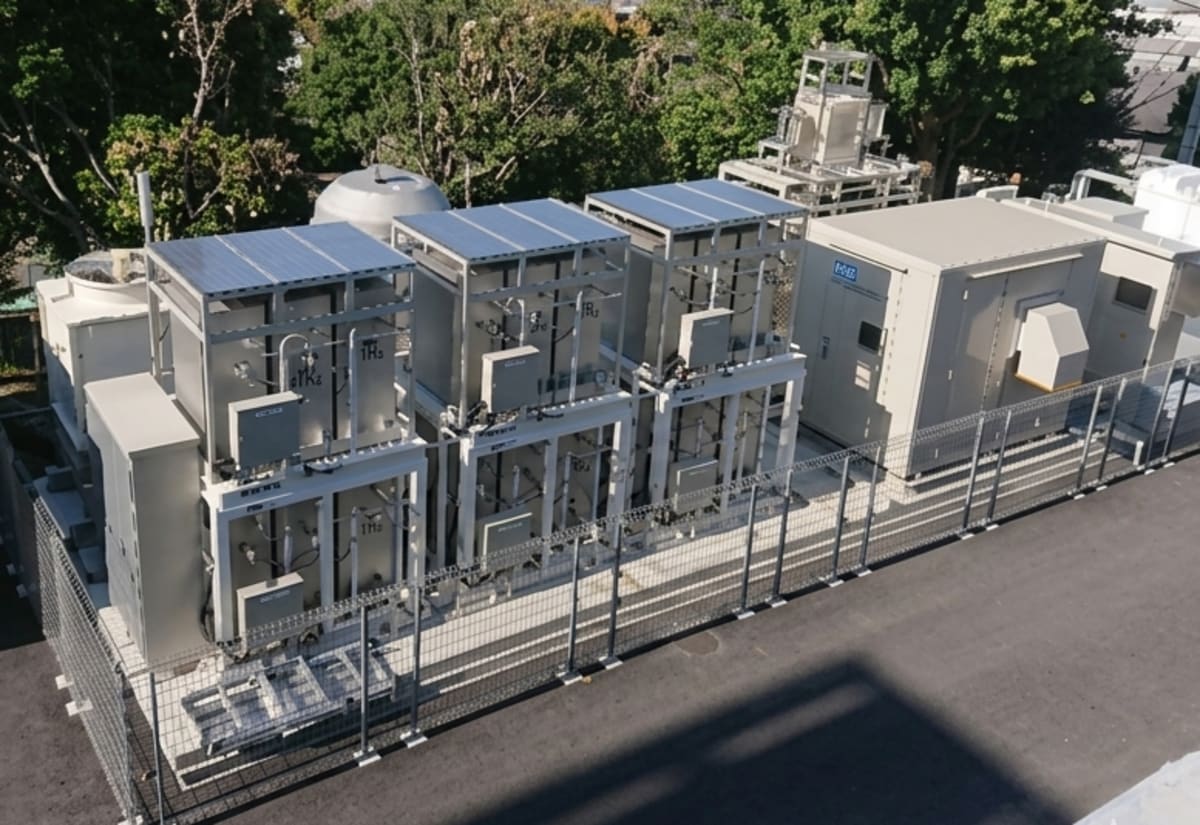
The system works like a two-tier savings account for energy. Solar panels generate electricity during sunny days, and a smart management system decides what to do with it in real time.
Some power goes directly to running the building. Extra energy gets stored in batteries for overnight use. But here's the clever part: any leftover electricity converts water into hydrogen gas, which stores safely at low pressure for months.
When winter arrives with its shorter days, the system taps into that stored hydrogen. Fuel cells convert it back into electricity, bridging the seasonal gap when solar panels can't keep up with demand.
The numbers tell the success story. On a sunny June day with over 12 hours of sunlight, the system generated 444 kilowatt-hours of electricity. More than half went toward making hydrogen for later use.
Fast forward to a gray February day. Solar panels produced just 297 kilowatt-hours. No problem: the fuel cells kicked in, delivering 168 kilowatt-hours from stored hydrogen to keep everything running smoothly.
The breakthrough solves one of renewable energy's biggest puzzles. Solar and wind power are clean and increasingly cheap, but they don't always produce electricity when we need it. Batteries help with daily fluctuations, but seasonal storage has remained elusive and expensive.
Taisei's approach uses low-pressure hydrogen storage, which is simpler and safer than high-pressure tanks. The system operated successfully starting in winter 2023, proving the concept works in real-world conditions, not just on paper.
The Ripple Effect
This Japanese pilot project could accelerate the shift toward carbon-free buildings worldwide. Cities from Berlin to Boston struggle with the same challenge: how to keep buildings comfortable year-round using only renewable energy.
The hybrid storage approach offers a practical answer. Building operators won't need to choose between reliability and sustainability anymore. They can have both.
Taisei isn't stopping here. The company is refining its energy management software and improving storage efficiency. They're also working on hydrogen supply chain projects that could connect multiple buildings and neighborhoods.
The implications extend beyond individual structures. If office towers, apartments, and shopping centers can operate independently on stored solar energy, entire city blocks could disconnect from fossil fuel grids. The technology transforms buildings from energy consumers into self-sufficient power stations.
What started as an experiment in one Japanese test facility might just become the blueprint for how cities worldwide keep the lights on without heating up the planet.
More Images
Based on reporting by PV Magazine
This story was written by BrightWire based on verified news reports.
Spread the positivity!
Share this good news with someone who needs it