Japan Launches Floating Wind Turbines in Deep Ocean Waters
Japan just turned on its first commercial floating wind farm, proving turbines can generate power while bobbing in ocean depths of 450 feet. The island nation is now planning the world's largest floating wind project that could power 850,000 homes from turbines anchored far out at sea.
Japan just solved a problem that has kept it from tapping into one of its greatest natural resources: endless ocean wind.
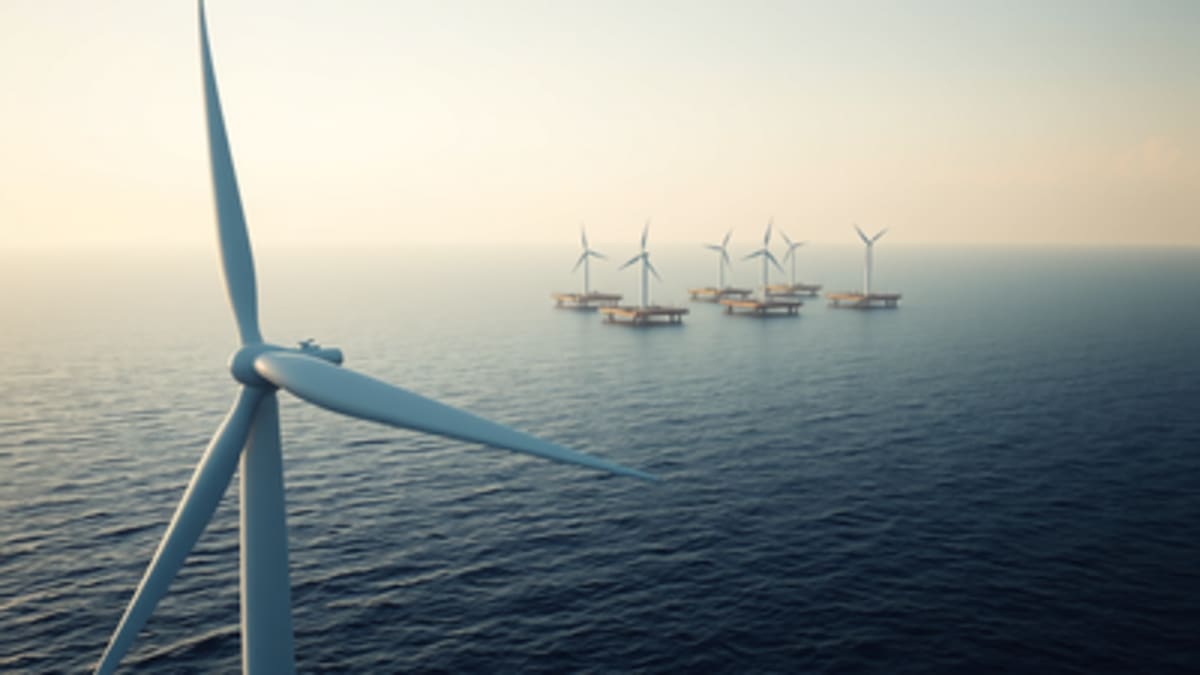
The country flipped the switch on its first commercial floating wind farm in January 2026, marking a breakthrough for renewable energy in places where the seafloor drops away too quickly for traditional turbines. The Goto Floating Wind Farm sits nearly five miles off Nagasaki Prefecture, anchored by mooring lines in waters between 430 and 460 feet deep.
Unlike wind farms in Europe that drill foundations into shallow seabeds, Japan's turbines float on massive platforms secured with cables and anchors. The design works because Japan's coastline plunges into deep water within just a couple miles of shore, ruling out the fixed turbines used in places like the North Sea.
The Goto project uses eight turbines mounted on a hybrid platform made of steel and concrete, a design that took nearly a decade to develop and build. A consortium of energy companies including ENEOS, Osaka Gas and two regional utilities proved the technology could work at commercial scale, not just as a demonstration project.
The real prize comes next. Tokyo is developing plans for a floating wind farm ten times larger than any currently operating anywhere in the world, targeting at least 1,000 megawatts of capacity off the Izu Islands south of Tokyo Bay.
If completed around 2035, the Izu project would generate enough electricity to power roughly 850,000 households. High voltage cables running along the ocean floor would deliver power to both remote island communities and the mainland capital.
Japan estimates its offshore wind potential at around 9,000 terawatt hours annually, more than nine times what the country expects to need by 2050. Most of that potential sits in deeper waters where only floating technology can reach.
The Ripple Effect
This technology opens up vast stretches of ocean to clean energy generation for island nations and coastal countries with steep continental shelves. Norway, South Korea and the United States are all watching Japan's floating wind experiments closely, since similar geography limits their shallow water options.
The breakthrough matters beyond Japan's borders because it proves renewable energy can adapt to challenging ocean conditions rather than waiting for perfect shallow water sites. Floating turbines can work in depths up to 1,000 feet, unlocking wind resources that fixed foundations could never touch.
Tokyo's giant project still faces real hurdles, including rising material costs and a timeline that experts consider ambitious for such complex offshore construction. But the Goto farm already demonstrated that commercial floating wind works in Japanese waters, turning years of research into spinning blades that generate actual power.
The turbines prove that some of the best solutions float rather than stand firm.
More Images



Based on reporting by Google News - Wind Energy
This story was written by BrightWire based on verified news reports.
Spread the positivity!
Share this good news with someone who needs it