Japan Sets New Standards for 6,000+ Solar Farms
Japan is creating national guidelines to help its 6,137 solar-powered farms grow food and energy together successfully. The new rules aim to protect farming while expanding clean energy across rural communities.
Japan is proving that farmland can produce both food and clean energy at the same time, and now the country is setting standards to make sure both thrive.
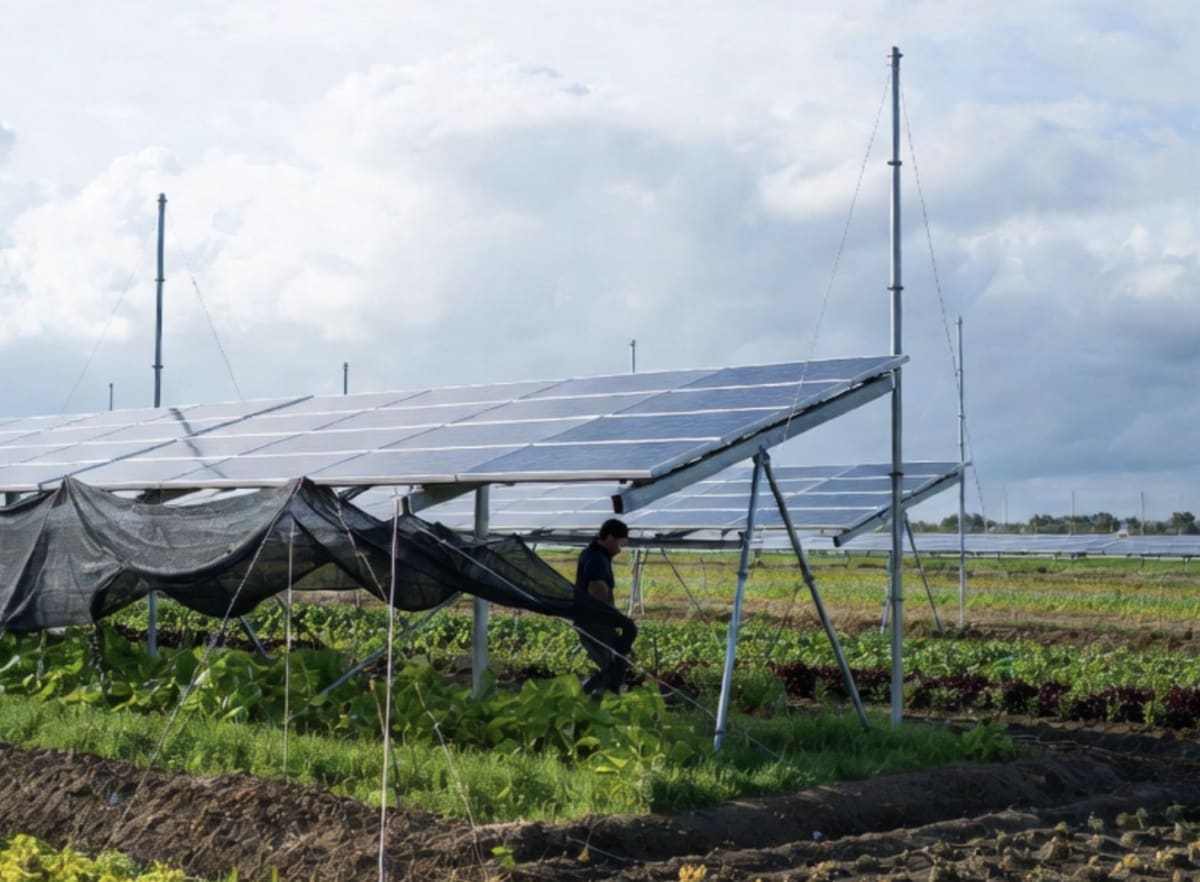
The nation has approved over 6,000 agrivoltaic sites covering 1,362 hectares of farmland. These innovative installations place solar panels above crops, generating electricity while farmers continue growing food beneath them.
But success hasn't been automatic. About 24% of projects experienced farming problems in 2023, mostly due to poor crop management rather than the technology itself.
Japan's Ministry of Agriculture responded by bringing together experts to define what good agrivoltaics looks like. The new standards require developers to submit detailed cultivation plans, financial projections, and proof that crops can flourish under the panels.
The rules protect farmers in practical ways. Panels must be high enough and spaced properly so tractors and equipment can move freely. If crop yields drop by 20% or more, authorities can deny approval.
The government is backing up these standards with action. Officials suspended renewable energy payments to 29 installations that failed to maintain proper farming or let permits expire.
Now technical guidelines are taking shape. Experts recommend panels create no more than 30% shade, stand roughly 3 meters high, and leave 4 to 5 meters between support pillars for machinery access.
What grows beneath matters too. Currently, ornamental plants cover 36% of sites, with vegetables at 28% and fruit at 13%. The government encourages food crops whenever possible to strengthen food security.
The Ripple Effect
These farms are transforming rural economies. Research shows that while rice yields may dip slightly under solar panels, total farm income soars when electricity sales are added in.
Advanced designs keep improving the balance. Scientists at the University of Tokyo found that dual-axis tracking panels can adjust seasonally, optimizing sunlight for both crops and power generation.
Major companies like Idemitsu Kosan are now launching commercial agrivoltaic projects as renewable energy strategies. With solar feed-in rates declining to about 10 yen per kilowatt-hour, these farms are becoming financially sustainable without heavy subsidies.
Japan's approach shows how clear standards can help innovative technology succeed without sacrificing traditional agriculture. Rural communities gain new income streams while contributing to clean energy goals, and the nation moves closer to both energy independence and food security.
These solar farms prove that progress doesn't require choosing between old and new, just finding smart ways to make them work together.
More Images
Based on reporting by PV Magazine
This story was written by BrightWire based on verified news reports.
Spread the positivity!
Share this good news with someone who needs it