Japan Taps Deep Sea Mud to Break Free From China
Japan just made history by pulling rare earth minerals from 6,000 meters below the Pacific Ocean, a world-first mission that could transform the country's economic independence. The breakthrough could supply Japan with centuries worth of critical materials for phones, electric cars, and green technology.
Japan just became the first country to successfully extract rare earth minerals from the deep ocean floor, pulling sediment from an astonishing 6,000 meters beneath the Pacific's surface.
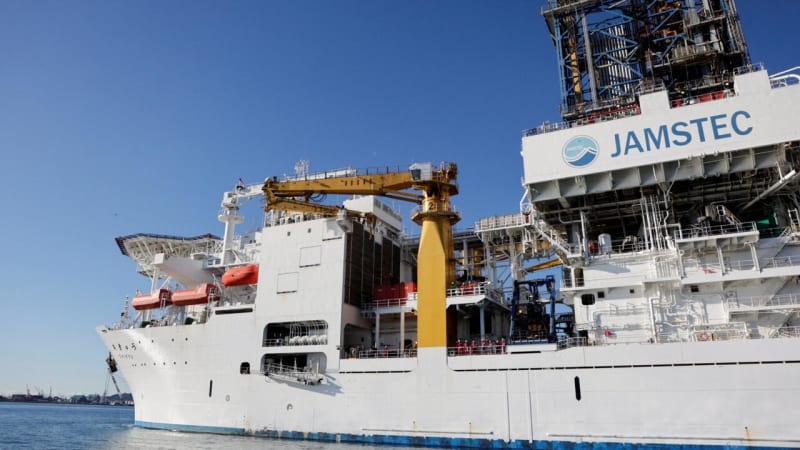
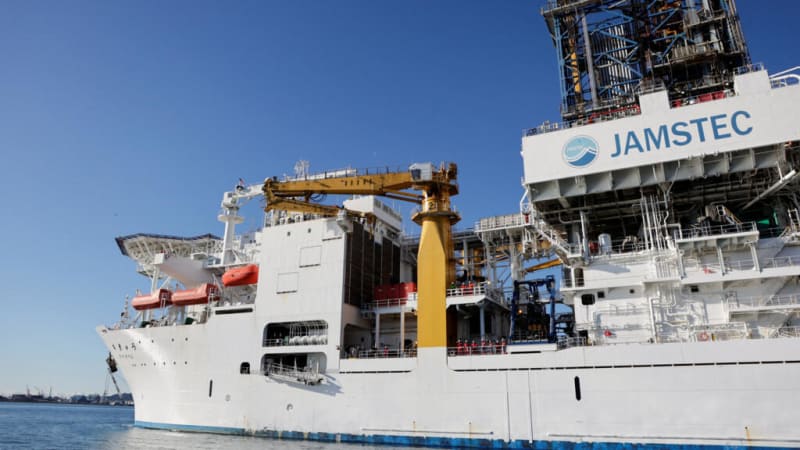
The achievement happened last month when the scientific drilling vessel Chikyu sailed to the remote island of Minami Torishima, where waters hold what may be the world's third-largest reserve of these precious materials. Government spokesman Kei Sato called it "a meaningful achievement both in terms of economic security and comprehensive maritime development."
The timing couldn't be more critical. China currently controls almost two-thirds of rare earth mining and a staggering 92 percent of global refining. These 17 metals power everything from smartphones to wind turbines, electric vehicles to medical lasers.
But geopolitical tensions have pushed Japan to innovate. After Prime Minister Sanae Takaichi suggested Tokyo might respond militarily to any attack on Taiwan, Beijing blocked exports of items with potential military uses. The threat of rare earth cutoffs, which China has used as leverage before, suddenly became very real.
The ocean floor near Minami Torishima offers a stunning solution. Early estimates suggest the area contains over 16 million tons of rare earth minerals. That includes enough dysprosium for high-strength magnets to last 730 years and enough yttrium for lasers to last 780 years.
Scientists are now analyzing exactly how much rare earth the sample contains. The data will determine whether regular deep-sea mining at this depth is commercially viable.
The Ripple Effect
This breakthrough reaches far beyond Japan's borders. If successful, deep-sea mining could reshape global supply chains and reduce dozens of countries' dependence on a single source for materials essential to clean energy and modern technology.
Takahiro Kamisuna, a researcher at The International Institute for Strategic Studies, notes that constant extraction would "secure domestic supply chain for key industries" and serve as "a key strategic asset" for reducing China dependence. Other nations watching closely may soon follow Japan's lead, exploring their own ocean floors for mineral independence.
The mission also advances maritime science itself, proving that humans can access resources at depths once thought impossible to reach. That knowledge opens doors for future discoveries and sustainable resource management.
Japan's deep-sea gamble just paid off, proving that innovation and determination can unlock solutions hiding in the most unlikely places.
More Images
Based on reporting by France 24 English
This story was written by BrightWire based on verified news reports.
Spread the positivity!
Share this good news with someone who needs it