Japan Tests 3-Minute Battery Swaps for Garbage Trucks
Yokohama is testing electric garbage trucks that swap dead batteries for fresh ones in just three minutes, solving the biggest problem facing city fleets trying to go green. If it works, cities worldwide could ditch diesel without disrupting daily services.
📺 Watch the full story above
Electric garbage trucks face an impossible choice: stop for hours to charge midday and leave trash piling up, or carry massive batteries that make the trucks too heavy and expensive.
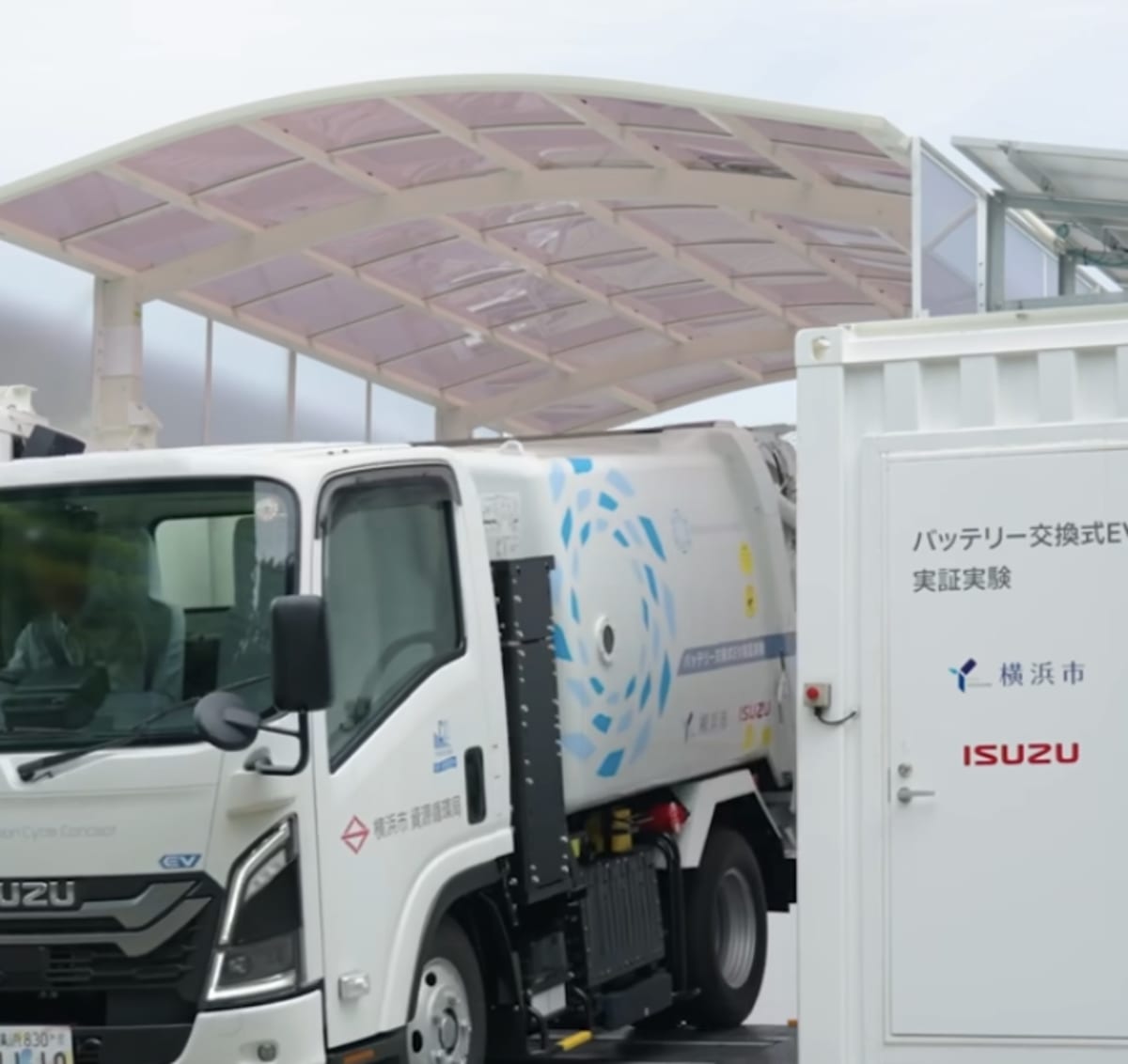
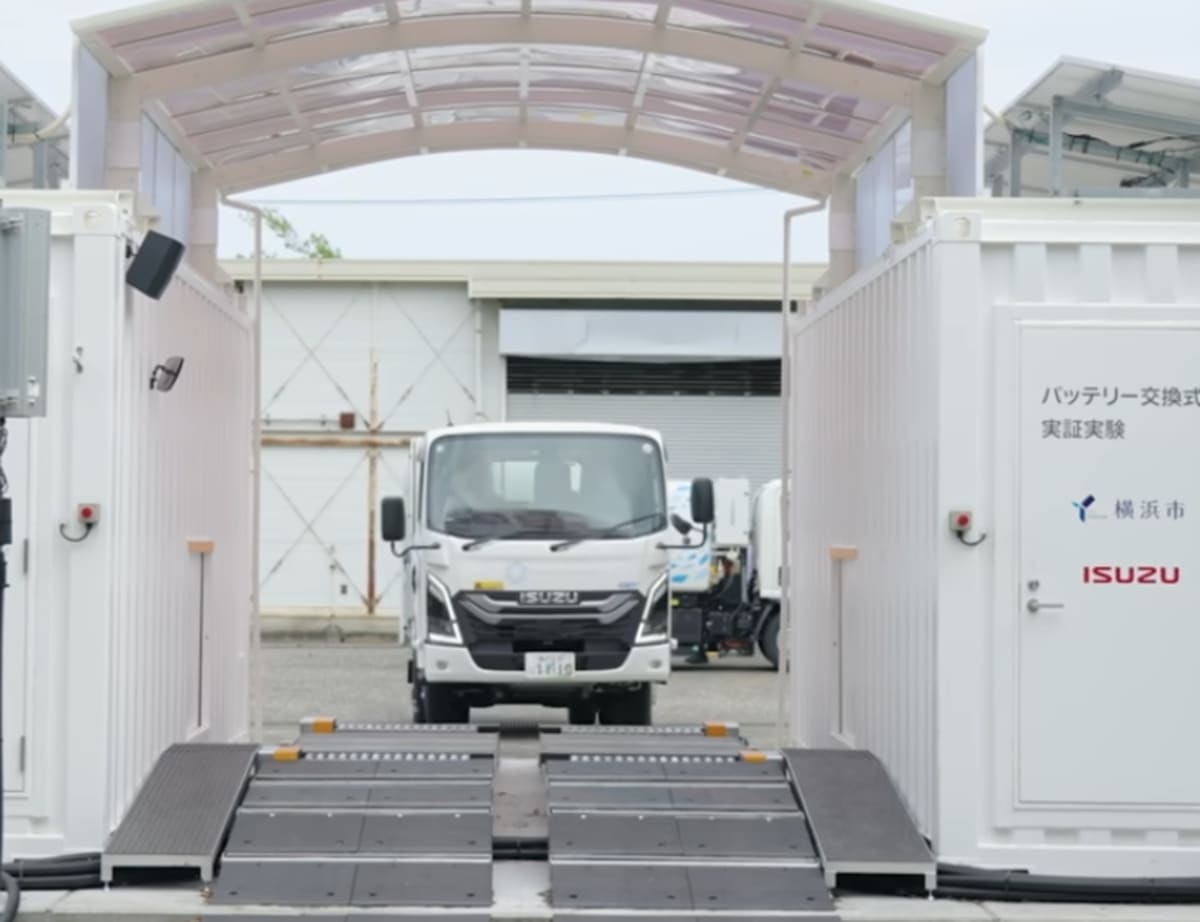
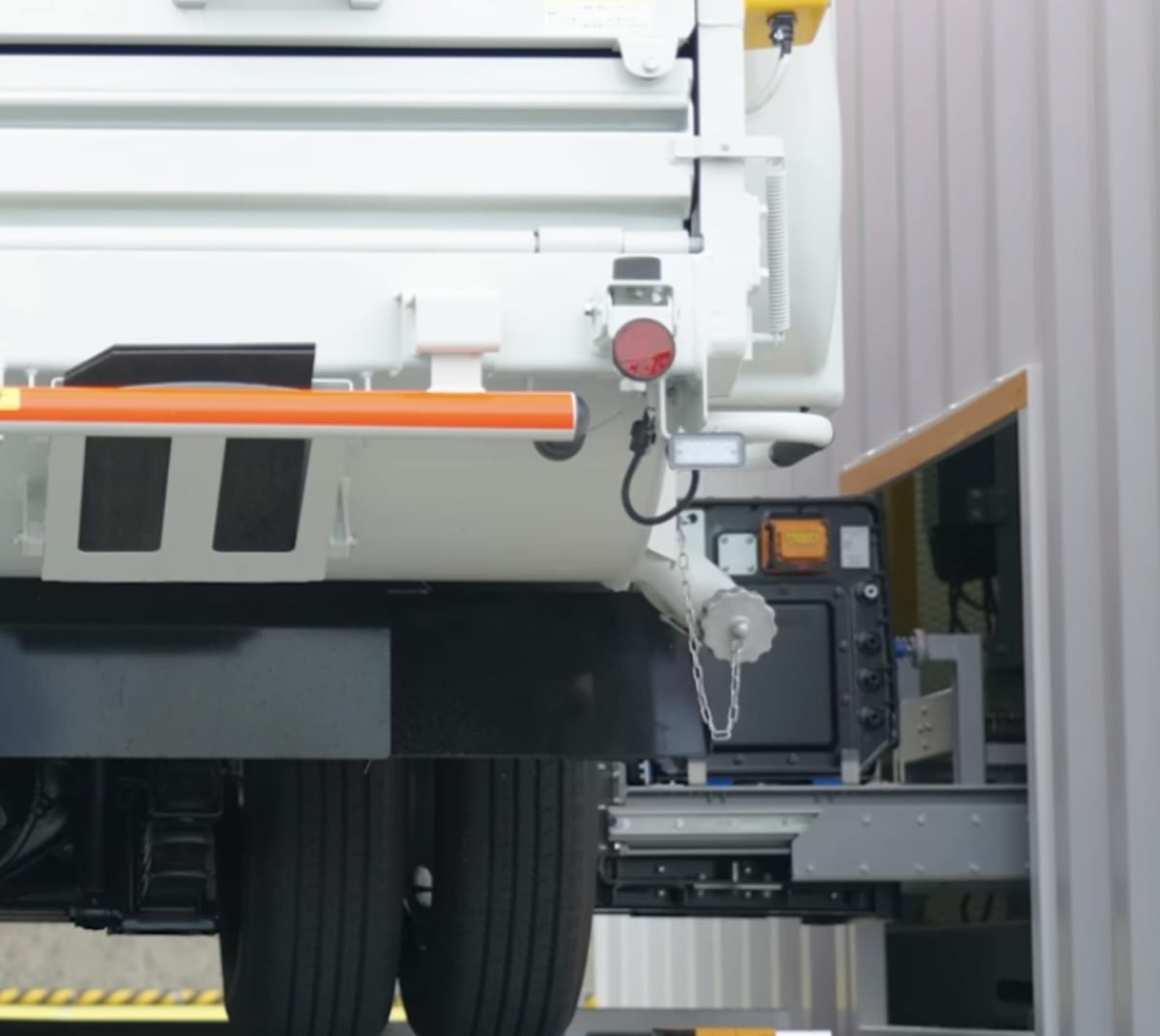
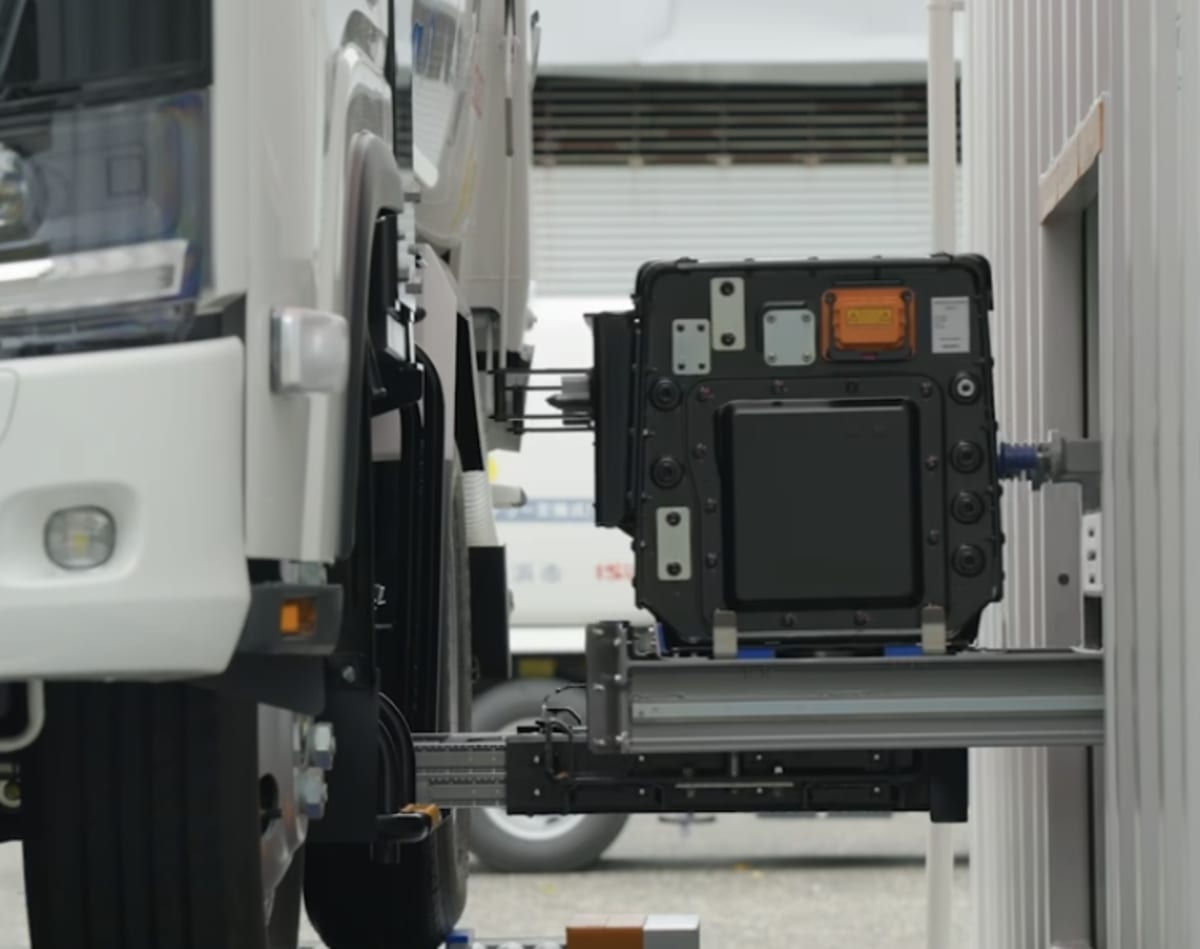
Yokohama, Japan just found a third option. The city is testing garbage trucks that pull into a station, swap out their dead battery for a fresh one in three minutes, and get right back to their routes.
Isuzu Motors is running the pilot program through March 2028 with the City of Yokohama. The system uses robots to remove depleted battery packs and install charged ones while drivers stay in their cabs.
The timing matters because Japanese cities run waste collection during a single daytime shift, usually 7:30 am to 3:30 pm. There are no evening pickups for homes and limited service for businesses after hours. A truck that needs an hour to charge midday throws the entire schedule into chaos.
Garbage trucks drain batteries faster than regular vehicles because they constantly stop and go through neighborhoods while running power-hungry hydraulic compactors. Traditional electric trucks need huge, heavy batteries to last a full shift, which drives up costs and reduces how much trash they can carry.
Isuzu's approach treats batteries like shared resources instead of permanent truck parts. Operators can install smaller, lighter batteries matched to each route's needs because swapping takes less time than a coffee break.
The company already tested the system last year with FamilyMart convenience stores and delivery trucks in the same city. Moving to garbage collection tests whether the technology holds up under heavier power demands and less predictable daily work.
The Ripple Effect
Mitsubishi Fuso is running similar trials in Kyoto and Tokyo with delivery company Yamato Transport, targeting more than 150 commercial trucks. The shift from passenger cars to work vehicles reveals a hidden challenge in going electric: personal cars sit parked most of the day, but commercial fleets need constant uptime to make money.
Shared battery networks offer benefits beyond keeping trucks moving. Fleet managers can charge batteries during off-peak hours when electricity is cheaper and cleaner, which extends battery life. Once battery packs wear out for vehicles, they can serve second lives powering buildings or storing renewable energy.
Isuzu is also developing standard plug-in electric trucks and researching hydrogen fuel cells with Toyota. But if three-minute swaps prove reliable for demanding city work, the system could spread to street sweepers, utility trucks, and construction equipment.
Cities worldwide are under pressure to clean up diesel emissions from municipal fleets, but they can't sacrifice the services residents depend on daily. This experiment in Yokohama could show them how to do both.
More Images

Based on reporting by CleanTechnica
This story was written by BrightWire based on verified news reports.
Spread the positivity!
Share this good news with someone who needs it