Japan Tests Vertical Wind Turbine to Cut Energy Costs
A consortium of six Japanese companies just launched a revolutionary floating wind turbine that could slash offshore energy costs and make clean power accessible in deep waters. The vertical design with a lower center of gravity promises a simpler, cheaper path to carbon-free electricity.
Japan just made floating wind power more affordable by flipping the design on its head.
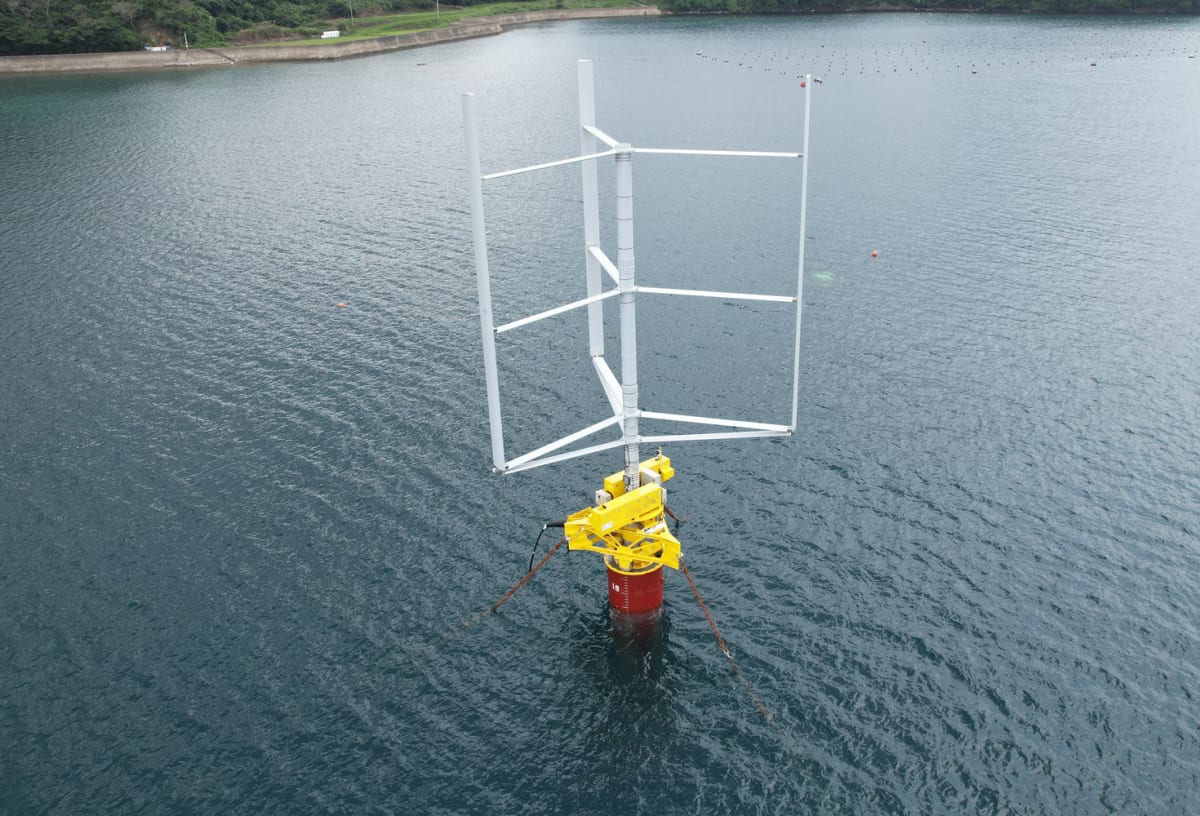
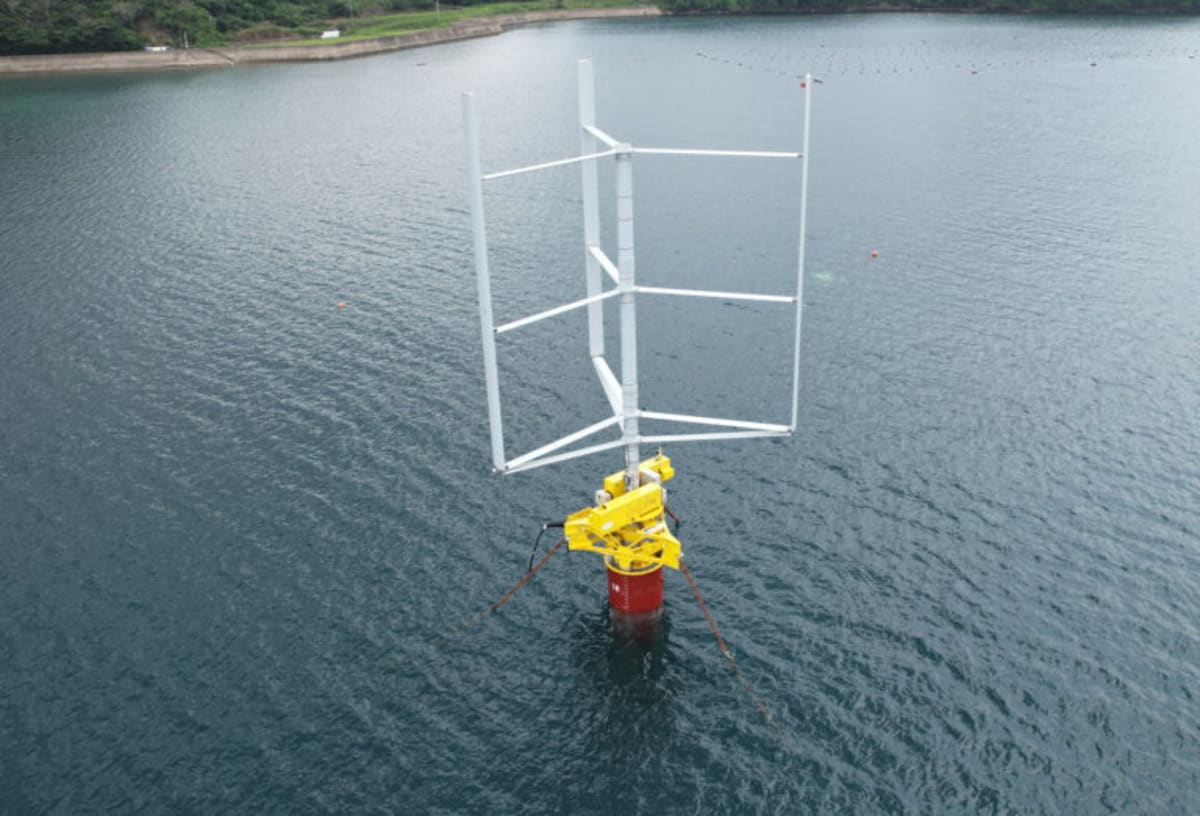
Six major Japanese companies installed an experimental vertical-axis wind turbine in the bay of Iki City this month, testing a design that could transform how the world harnesses ocean winds. Unlike traditional horizontal turbines that need massive floating platforms, this cylindrical tower stands upright with three straight blades spinning around a compact base.
The test turbine stretches 9.3 meters wide and floats on a slim 1.7-meter foundation anchored to the seabed. While its 20-kilowatt output is modest, the design proves a concept that could scale to megawatt-class commercial systems.
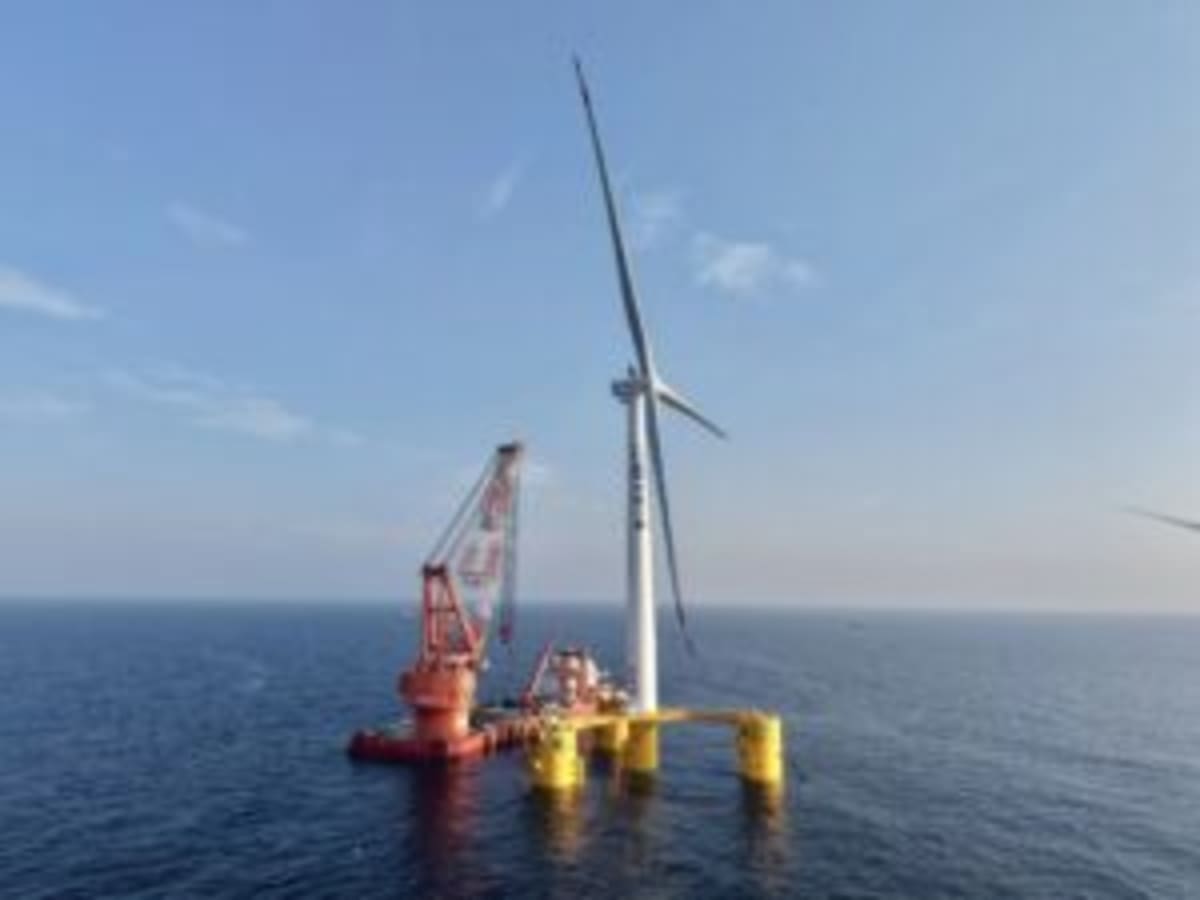
Japan faces a unique challenge in expanding renewable energy. The island nation has limited shallow coastal waters where conventional wind turbines can be anchored to the seafloor. Deep water installations require floating platforms, but traditional designs demand enormous foundations and complex mooring systems that drive costs sky-high.
The consortium tackled this problem by borrowing principles from marine engineering. By placing the turbine's axis vertically instead of horizontally, engineers lowered the center of gravity and simplified the entire structure. Fewer materials means lower costs and a supply chain that Japanese manufacturers can build domestically.
The Ripple Effect
This innovation could unlock floating wind power for coastal nations worldwide facing similar geography constraints. Countries with deep coastal waters have struggled to compete with land-based wind farms on cost. A simpler, stable floating design changes that equation.
The yearlong demonstration will verify computer models and water tank tests under real ocean conditions. After testing wraps, engineers will dismantle the unit and inspect every component to identify improvements for larger systems. Those insights will feed directly into developing commercial-scale turbines.
The consortium includes Electric Power Development, Tokyo Electric Power, Chubu Electric Power, Kawasaki Kisen Kaisha, Sumitomo Heavy Industries, and Albatross Technology. Together they bring expertise spanning power generation, shipping, and heavy manufacturing.
Their ultimate goal reaches beyond technology. By establishing offshore wind as a primary electricity source, they aim to help Japan achieve carbon neutrality while creating a domestic industry that doesn't rely on imported components.
If this vertical approach proves viable at commercial scale, floating wind farms could finally compete on price with traditional energy sources, bringing clean ocean power within reach for millions more people.
More Images

Based on reporting by Google News - Wind Energy
This story was written by BrightWire based on verified news reports.
Spread the positivity!
Share this good news with someone who needs it