Japanese Ant Species Ditches Males, Every Ant a Queen
Scientists confirmed a Japanese ant species where every single individual is a queen who conquers other colonies and clones herself. This marks the first known ant species to completely eliminate both males and workers.
In the ant world, one tiny rebel species just rewrote the rules of how societies work.
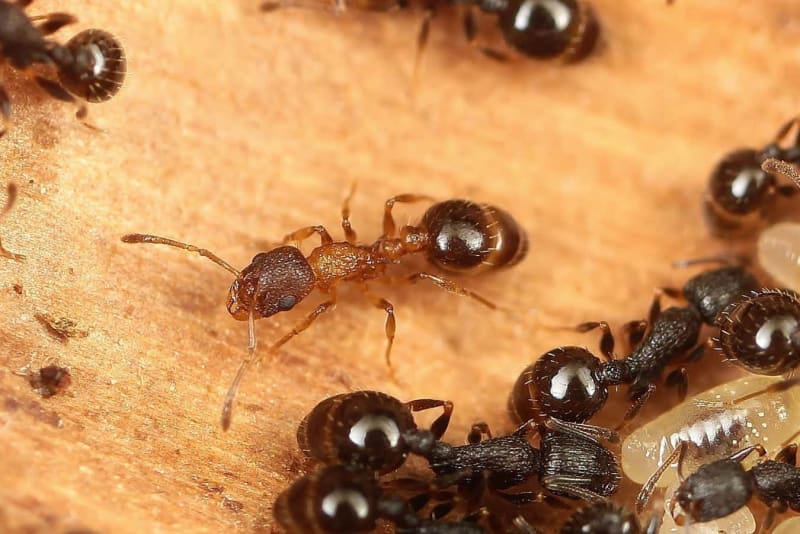
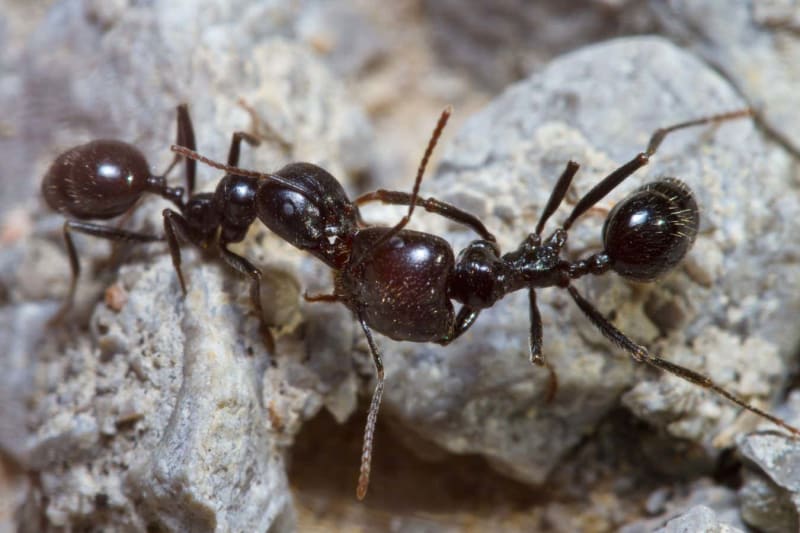
Meet Temnothorax kinomurai, a parasitic ant from Japan where every individual is a queen. No males. No workers. Just fierce female royalty taking over the world, one nest at a time.
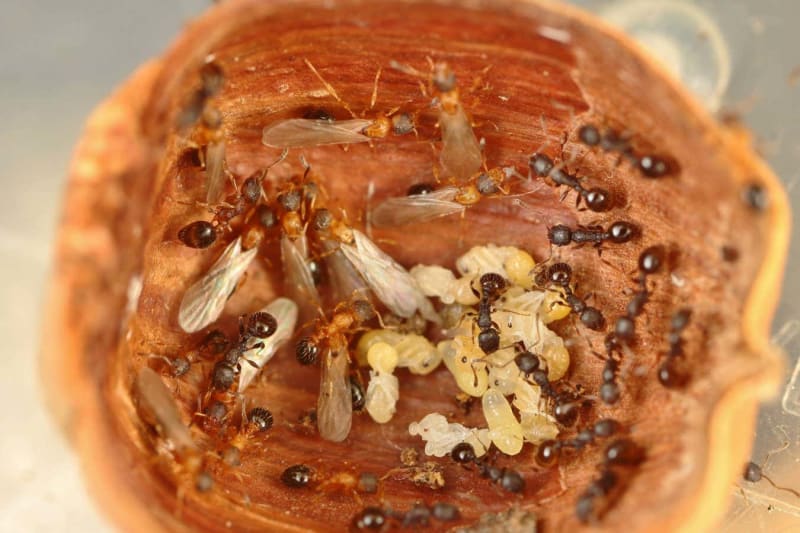
For over 40 years, scientists suspected this ant played by different rules, but they finally have proof. Researchers at the University of Regensburg in Germany collected six colonies and bred 43 offspring in the lab, confirming not a single male among them.
Here's how these tiny rebels operate. Young queens invade the nests of a related species called Temnothorax makora, killing the host queen and some workers with their stings. Once they've staged their successful coup, they reproduce asexually through a process called parthenogenesis, creating perfect clones of themselves.
The conquered workers don't even realize they've been fooled. They dutifully raise the invader's offspring as if they were their own, nurturing the next generation of conquering queens.
In typical ant colonies, you'd find one queen, many female workers, and short-lived males who die after mating. This species threw that entire blueprint out the window.
The strategy sounds risky, and it is. In the study, only seven out of 43 queens succeeded in their takeover attempts. But those seven produced another 57 offspring, all queens ready to continue the cycle.
Why This Inspires
This discovery shows nature's incredible flexibility in solving the puzzle of survival. Where traditional ant societies needed males and workers, these ants found a completely different path forward.
The math actually works in their favor. One queen can produce 100 daughters who don't need to mate, meaning 100 new chances to establish colonies instead of just one. Those odds beat traditional reproduction, even with the high failure rate of invasions.
"They exhibit an entirely new form of social organization, adding another exciting dimension to the already rich and varied world of ants," says lead researcher Jürgen Heinze.
Scientists call this the final step in the evolution of social parasitism. It demonstrates just how creative life becomes when survival demands innovation.
Evolution keeps surprising us with solutions we never imagined possible.
More Images

Based on reporting by New Scientist
This story was written by BrightWire based on verified news reports.
Spread the positivity!
Share this good news with someone who needs it