Japanese Reformer's 1872 Idea: Education Creates Equality
A 19th-century Japanese educator challenged the notion that people are born unequal, arguing that education—not birth—determines success. His ideas helped modernize Japan and still inspire equal access to learning today.
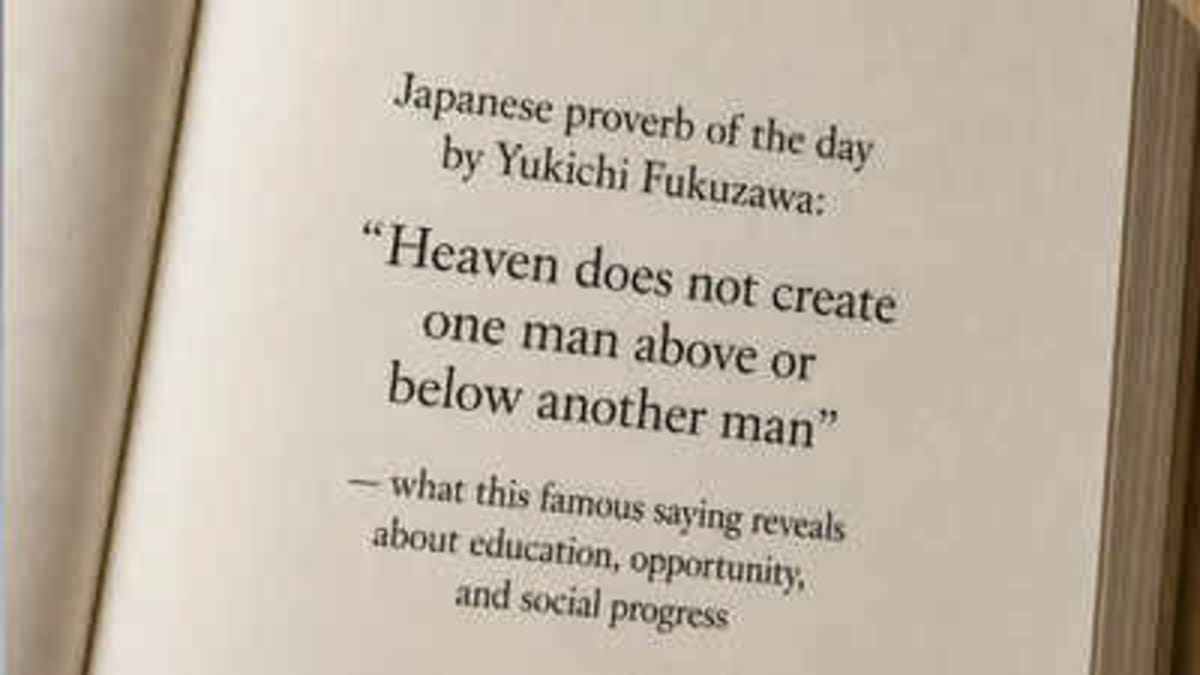
When Yukichi Fukuzawa opened his book with "Heaven does not create one man above or below another man" in 1872, he wasn't just sharing philosophy. He was launching a revolution in how Japan thought about human potential.
Fukuzawa, a writer and teacher who helped modernize Japanese education during the Meiji era, believed something radical for his time. No one is born superior or inferior—the differences we see in wealth, wisdom, and opportunity come from education, not destiny.
His message was simple but transformative. The gap between the successful and the struggling, between the knowledgeable and the uninformed, exists because of learning opportunities, not inherent worth. Give people access to knowledge, skills, and critical thinking, and they can change their circumstances.
This wasn't just about classroom learning. Fukuzawa envisioned education as everything that builds awareness, independence, and practical skills. Books, conversations, experiences, and observation all count as ways people grow and improve their lives.
His philosophy helped reshape Japan's entire educational system in the 1800s. The country invested heavily in schools and literacy, viewing education as the path to national progress and individual freedom.
The Ripple Effect
Fukuzawa's vision created waves that reached far beyond Japan's borders. His emphasis on self-reliance through learning influenced educational reform movements across Asia and reminded the world that opportunity, not birthright, should determine outcomes.
Today, his words feel surprisingly current. Educational inequality still shapes life outcomes in communities worldwide. Access to quality schools, technology, and resources remains uneven, affecting career growth and social mobility for millions.
But his proverb offers hope, not despair. It reminds us that human potential isn't fixed by current circumstances. With the right support and opportunities to learn, people can transform their futures at any age.
The idea extends beyond traditional schooling too. Lifelong curiosity, practical skill-building, and learning from daily experiences all contribute to growth. A person's education never truly ends.
Fukuzawa's legacy lives in every scholarship program, free library, online learning platform, and community education initiative. Each represents the belief that knowledge unlocks doors and levels playing fields.
His 150-year-old wisdom carries a timeless message: investing in education isn't just good for individuals—it's how entire societies progress and reduce inequality, one learner at a time.
More Images



Based on reporting by Times of India - Good News
This story was written by BrightWire based on verified news reports.
Spread the positivity!
Share this good news with someone who needs it