Japanese Scientists Replace Rare Metals With Common Iron
Researchers in Japan just made breakthrough chemistry cheaper and more sustainable using ordinary iron instead of rare metals. The new catalyst could transform how we make medicines while cutting costs dramatically.
Scientists just figured out how to do advanced chemistry with one of Earth's most common metals instead of rare, expensive ones.
Researchers at Nagoya University in Japan created an iron-based catalyst that outperforms traditional systems using ruthenium and iridium. These rare metals cost a fortune and are hard to find, but iron is abundant and affordable.
The breakthrough gets even better. The team's new design uses 67% fewer costly chemical guides called chiral ligands compared to their earlier version. These guides help build molecules in precise three-dimensional shapes, which matters enormously in drug manufacturing.
The catalyst works under simple blue LED light, making the whole process more energy efficient. Professor Kazuaki Ishihara and his team published their findings in the Journal of the American Chemical Society this month.
To prove their catalyst works in the real world, the scientists accomplished something never done before. They created the first complete asymmetric synthesis of a natural medicinal compound called heitziamide A, which helps suppress respiratory issues.
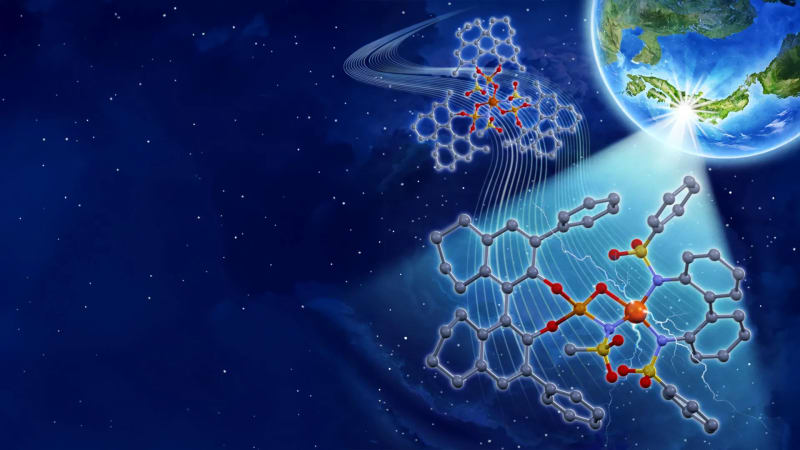
The earlier iron catalyst needed three chiral ligands per iron atom, but only one actually did the important work. The new design combines affordable standard ligands with just one chiral ligand, creating a smarter structure that performs better while costing less.
The Ripple Effect
This discovery could reshape pharmaceutical manufacturing. Drug companies currently depend on expensive rare metals to build complex molecules with the right three-dimensional structure. Getting that structure wrong means a medicine won't work or could even cause harm.
By switching to abundant iron and energy-efficient LEDs, manufacturers could cut costs significantly while reducing environmental impact. The team can even flip the catalyst's mirror image to produce opposite versions of molecules, giving chemists complete control over their products.
Assistant Professor Shuhei Ohmura called the new design "the definitive form of chiral iron photocatalysts." The researchers are already working on synthesizing additional bioactive compounds using their breakthrough method.
Common iron just proved it can do what scientists thought only rare metals could accomplish.
Based on reporting by Science Daily
This story was written by BrightWire based on verified news reports.
Spread the positivity!
Share this good news with someone who needs it