Japan's 310 MPH Maglev Train Clears Major Construction Hurdle
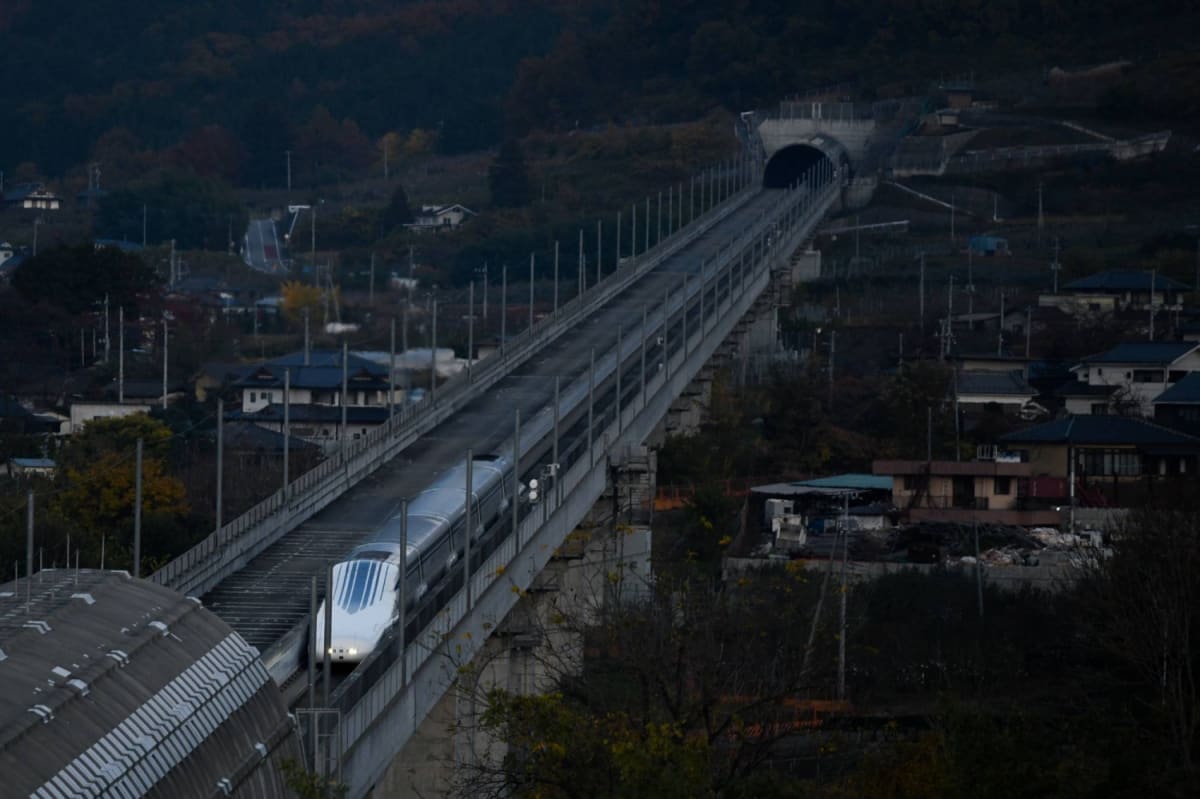
Japan's futuristic maglev bullet train just overcame a decade-long roadblock, bringing the world's fastest train closer to reality. The breakthrough could connect Tokyo and Nagoya in just 40 minutes by the mid-2030s.
After years of standstill, Japan's revolutionary magnetic levitation train project just cleared its biggest obstacle yet.
Shizuoka Prefecture's special committee approved all 28 environmental protection measures for the Chuo Shinkansen maglev line on Thursday. The decision ends a lengthy dispute that had frozen construction on the high-speed rail system designed to reach speeds of 310 miles per hour.
"A very big hurdle has been overcome," said Sho Hiraki, Shizuoka's vice governor. "Construction could start before the end of the year."
The project stalled for years under former Governor Heita Kawakatsu, who blocked construction over concerns about the Oi River's water flow. But current Governor Yasutomo Suzuki supports the project, and approval is now expected soon.
Central Japan Railway worked closely with environmental experts to address every concern. The approved measures include specific protections to reduce water consumption during construction through the mountainous region.
The contested section runs just 8.9 kilometers through Shizuoka's mountains, but its approval unlocks the entire route. JR Central must now secure consent from local municipalities before breaking ground.
The Ripple Effect
This maglev line represents more than just faster travel. When complete, it will cut the journey between Tokyo and Nagoya from 100 minutes to about 40 minutes, transforming how millions of people live and work.
The technology uses magnetic levitation to float trains above tracks, eliminating friction and enabling unprecedented speeds. Japan has been testing and refining this system for decades, making it one of the most advanced transportation projects on Earth.
The project also demonstrates how environmental concerns and technological progress can coexist. Rather than dismissing local worries, JR Central spent years developing comprehensive solutions that protect natural resources while advancing infrastructure.
While the original 2027 opening date has shifted to 2036 at the earliest, the approval marks real momentum. Construction teams are preparing to begin work on the Shizuoka section before year's end.
Japan's commitment to this project shows that even ambitious visions can move forward when communities, governments, and companies work together to find common ground.
More Images

Based on reporting by Japan Times
This story was written by BrightWire based on verified news reports.
Spread the positivity!
Share this good news with someone who needs it