Japan's Floating Robot Whale Makes Safe AI Companions Real
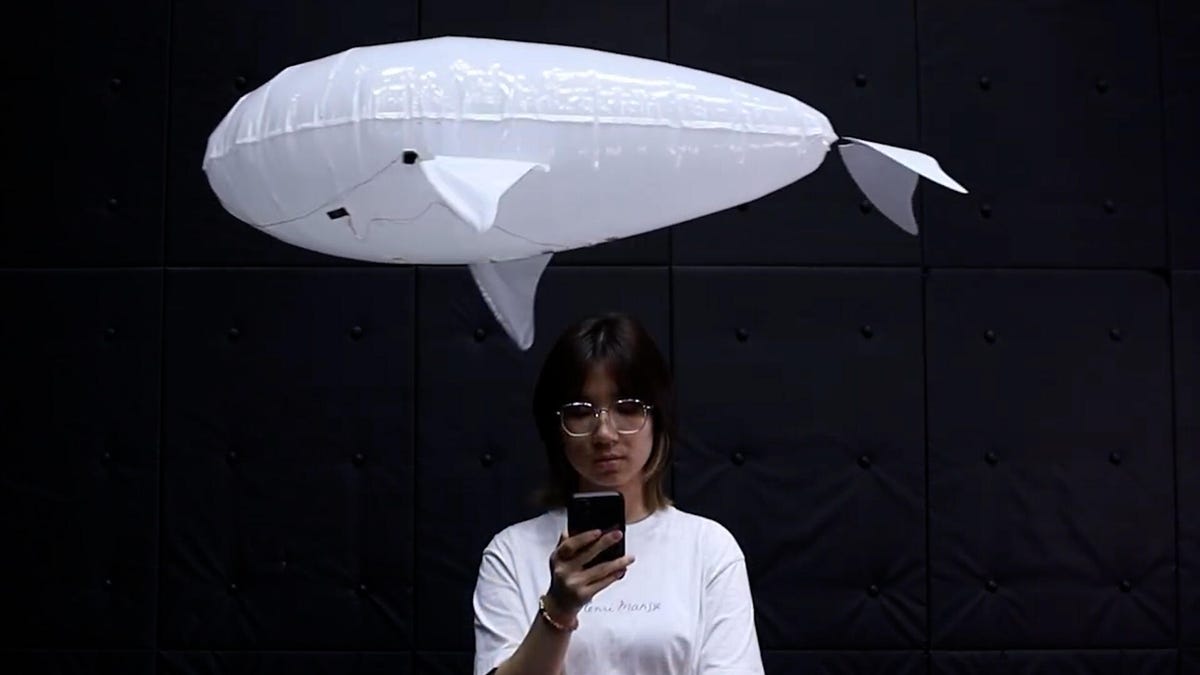
Researchers in Japan created a soft, floating robot inspired by Tinker Bell and Studio Ghibli characters that's safe enough to bump into humans. The gentle, whale-like companion could change how we interact with robots in our daily lives.
Imagine a robot that looks like a floating white whale, moves like a gentle friend, and won't hurt you if you bump into it.
That's exactly what researchers at Keio University in Japan have created. Led by Mingyang Xu, the team drew inspiration from beloved animated characters like Tinker Bell, Pokémon's Mew, and Studio Ghibli's Soot Sprites to design a lighter-than-air robotic companion.
The robot glides silently through the air using fins, without the loud buzzing that makes most drones feel intrusive. Its soft body and light construction mean it can safely interact with humans without risk of injury.
The innovation tackles one of robotics' biggest challenges: making machines that feel both safe and emotionally engaging. Traditional robots with rigid bodies and mechanical faces often trigger the "uncanny valley" effect, that creepy feeling when something looks almost human but not quite right.
This floating companion sidesteps that problem entirely. Instead of trying to replicate human facial expressions, it communicates through gentle, full-body movements that feel organic and calming.
The team's demo video shows the robot serving as a dance partner, study buddy, alarm clock, and entertainment companion. Its soft, pliable form makes every interaction feel natural rather than threatening.
Why This Inspires
This project shows how thoughtful design can bridge the gap between technology and emotional connection. By looking to beloved characters from animation, the researchers created something that feels approachable rather than intimidating.
The floating robot represents a shift in how we think about artificial companions. Instead of making robots look more human, maybe the answer is making them more fantastical, tapping into the characters we already love and trust.
As AI companions become more common in our homes, this gentle approach could define the next generation of human-robot relationships.
Based on reporting by Google News - Technology
This story was written by BrightWire based on verified news reports.
Spread the positivity!
Share this good news with someone who needs it
_07_03_2026_03_50_21_133108.jpg)