Japan's H3 Rocket Soars After Fixing December Failure
Japan's H3 rocket successfully launched six satellites after engineers fixed the flaw that caused last December's mission to fail. The upgraded three-engine configuration worked flawlessly, marking a turning point for the country's newest space program.
Japan's space program just proved that failure doesn't have to be final. The H3 rocket roared back to life on Thursday, delivering all six satellites to orbit after engineers solved the mystery behind December's devastating loss.
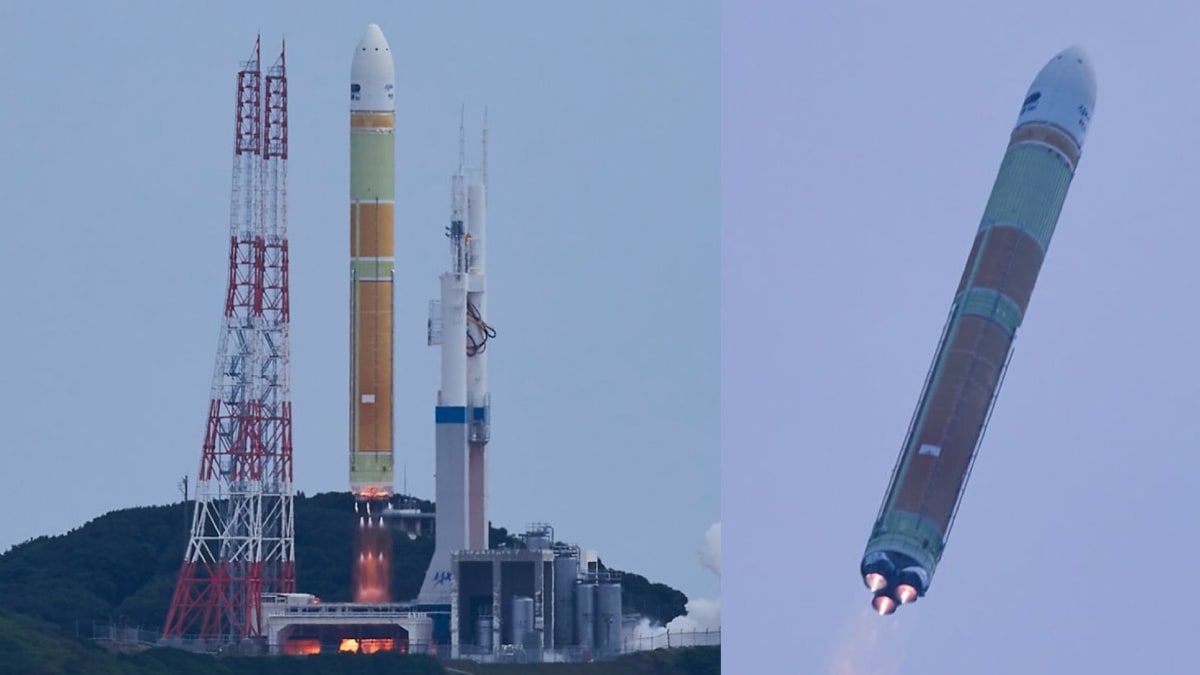
The rocket lifted off from Tanegashima Space Center at 8:54 p.m. EDT on June 11, carrying more than just satellites. It carried the hopes of Japan's aerospace engineers who spent months diagnosing what went wrong six months earlier.
Last December's mission ended in heartbreak when the Michibiki 5 navigation satellite was lost. The rocket's second stage engine shut down prematurely, stranding the valuable payload in the wrong orbit. A thorough investigation traced the failure to a damaged payload adapter that had caused propellant tank damage and ignition problems.
This time, everything went exactly as planned. The rocket separated its payloads PETREL and STARS-X about 16 minutes after launch, followed by the successful deployment of BRO-22, VERTECS, HORN-L, and HORN-R. Each satellite reached its designated orbit perfectly.
Thursday's flight marked another milestone beyond the comeback story. This was the first H3 mission to fly with three LE-9 engines instead of the usual two-engine configuration. The upgrade worked beautifully, opening up new possibilities for heavier payloads in future missions.
The H3 rocket represents Japan's space future as the successor to the retired H-2A vehicle. Developed by JAXA and Mitsubishi Heavy Industries, it endured a rocky start with a failed debut in March 2023, followed by five successful missions before December's setback.
The Ripple Effect
The successful return to flight means more than just one good launch. Japan's space industry depends on reliable domestic access to orbit for communications, navigation, and Earth observation satellites. The H3's recovery strengthens Japan's position in the competitive commercial launch market and ensures the country can deploy critical infrastructure without relying on foreign rockets.
The mission also demonstrates something valuable beyond engineering: the power of methodical problem-solving and perseverance. JAXA's engineers didn't rush back to the launch pad. They took the time to understand exactly what went wrong, fixed it properly, and added improvements.
"Thank you for your support and cheers," Tanegashima Space Center posted after the mission. "Please continue to cheer for the H3 Rocket going forward."
With this success, Japan's newest rocket is back on track to become a workhorse of Asian spaceflight, proving that setbacks are just setup for stronger comebacks.
More Images

Based on reporting by Space.com
This story was written by BrightWire based on verified news reports.
Spread the positivity!
Share this good news with someone who needs it