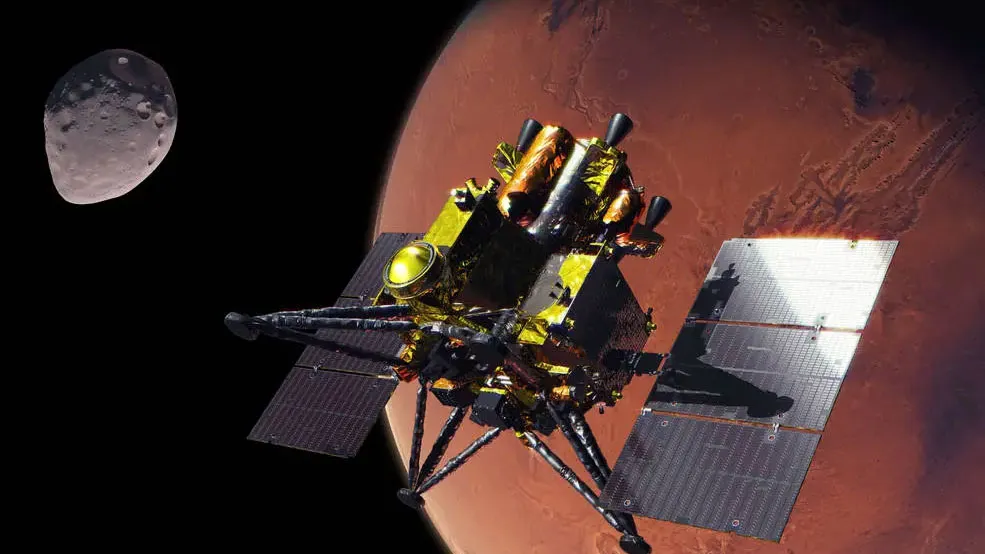
Japan's Mars Mission Launching to Collect First Moon Samples
Japan is about to launch a groundbreaking mission to Mars that could bring back the first samples from the Red Planet's moons. The spacecraft will land on Phobos, deploy a rover, and return to Earth in 2031 with clues about how our solar system formed.
In what could become one of the greatest sample-return missions in space history, Japan is preparing to launch a spacecraft that will bring back pieces of Mars' mysterious moons.
The Martian Moons eXploration (MMX) mission launches Monday from Japan's Tanegashima Space Center on a journey that won't finish until 2031. But the wait will be worth it: scientists expect these samples to reveal secrets about how our solar system formed billions of years ago.
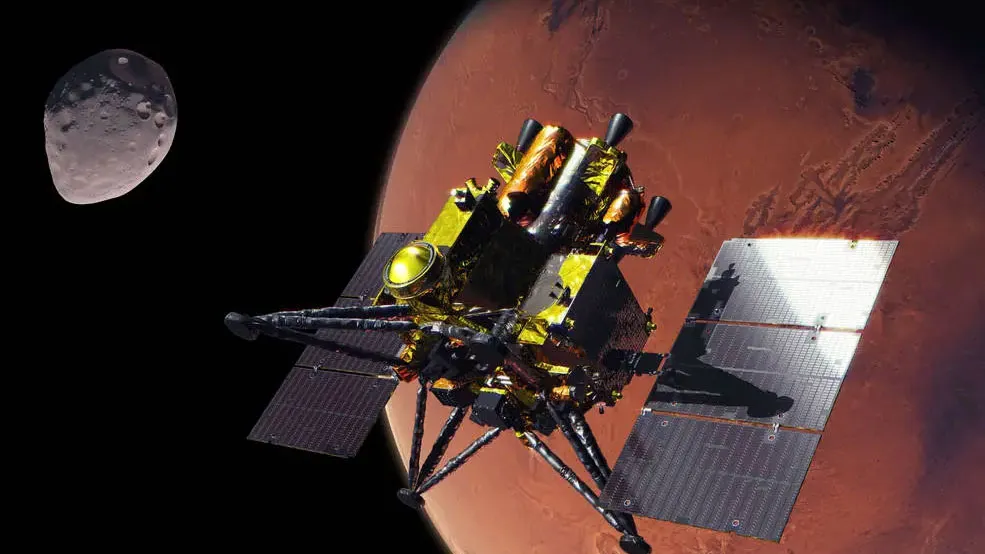
After a 10-month journey to Mars, the spacecraft will spend three years studying Phobos, one of Mars' two small moons. MMX will map the surface, analyze its composition, and eventually touch down to collect samples that have never been examined by human hands.
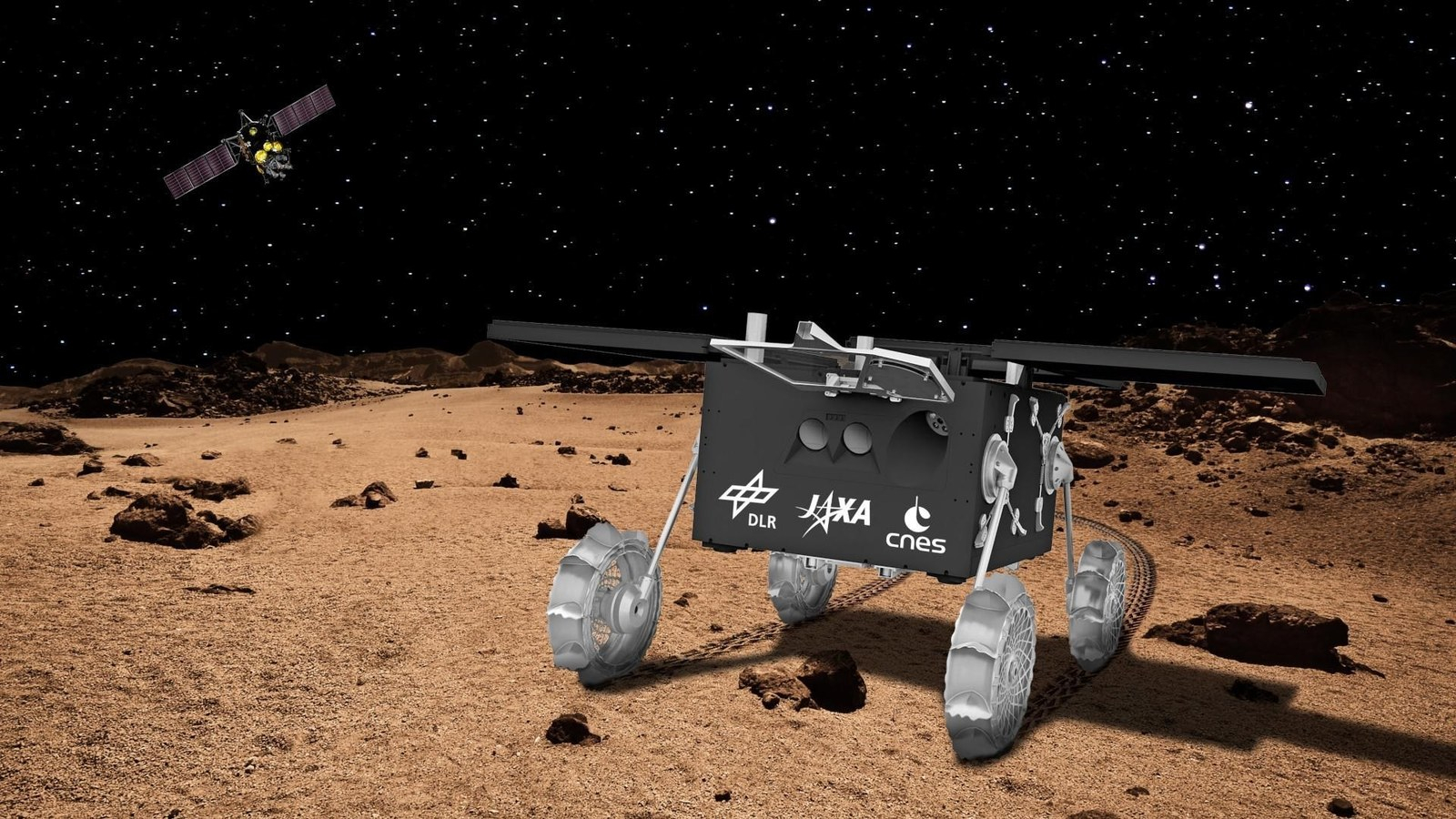
The mission carries a small rover named IDEFIX, built by French and German space agencies. In late 2028 or early 2029, the rover will be released just 40 meters above Phobos and free-fall to the surface, taking advantage of the moon's incredibly weak gravity to land safely.
IDEFIX will explore the terrain while the main spacecraft continues its work overhead. Using cameras, spectrometers, and laser instruments, MMX will gather data about what Phobos and its sister moon Deimos are made of and where they came from.
Scientists have long debated whether Mars' moons are captured asteroids or chunks of Mars itself, knocked off during ancient cosmic collisions. The samples MMX brings home could finally answer that question.
Why This Inspires
This mission represents the best of international cooperation in space. While Japan leads the effort through its space agency JAXA, France, Germany, and NASA have all contributed instruments and expertise to make it happen.
NASA's MEGANE instrument will help determine what elements make up Phobos' surface. French-built cameras and spectrometers will analyze minerals and temperature. Germany partnered with France to create the rover that will roll across an alien moon's surface.
After studying both moons, MMX will depart Mars in November 2030. The sample-return capsule is scheduled to land in Australia in 2031, carrying what will likely be the first physical pieces of the Mars system ever returned to Earth.
Those tiny fragments could tell us whether water once flowed on these moons, what materials were present when the planets formed, and how violent collisions shaped our cosmic neighborhood. Every answer opens new questions about our place in the universe.
The Bright Side
While nations sometimes compete in space, this mission shows what becomes possible when countries pool their talents and resources. Japan built the spacecraft, France and Germany created the rover, and American instruments will make crucial measurements.
The mission also proves that ambitious goals take time and patience. By 2031, scientists will have waited years for answers, but those answers could reshape our understanding of planetary formation across the entire solar system.
Young engineers and scientists around the world now have a new mission to watch and learn from, inspiring the next generation of space explorers who will push even further into our solar system and beyond.
More Images


Based on reporting by Space.com
This story was written by BrightWire based on verified news reports.
Building Something New? Try the BrightWire Tech Stack Advisor
Compare modern frameworks, cloud hosting, and AI tools tailored to your project budget and scale.
Spread the positivity!
Share this good news with someone who needs it


