Jazz Saxophone Made This Physicist More Creative
A theoretical physicist credits his jazz improvisation practice with making him a better scientist. Stephon Alexander says playing music taught him mental flexibility that helps him solve complex physics problems.
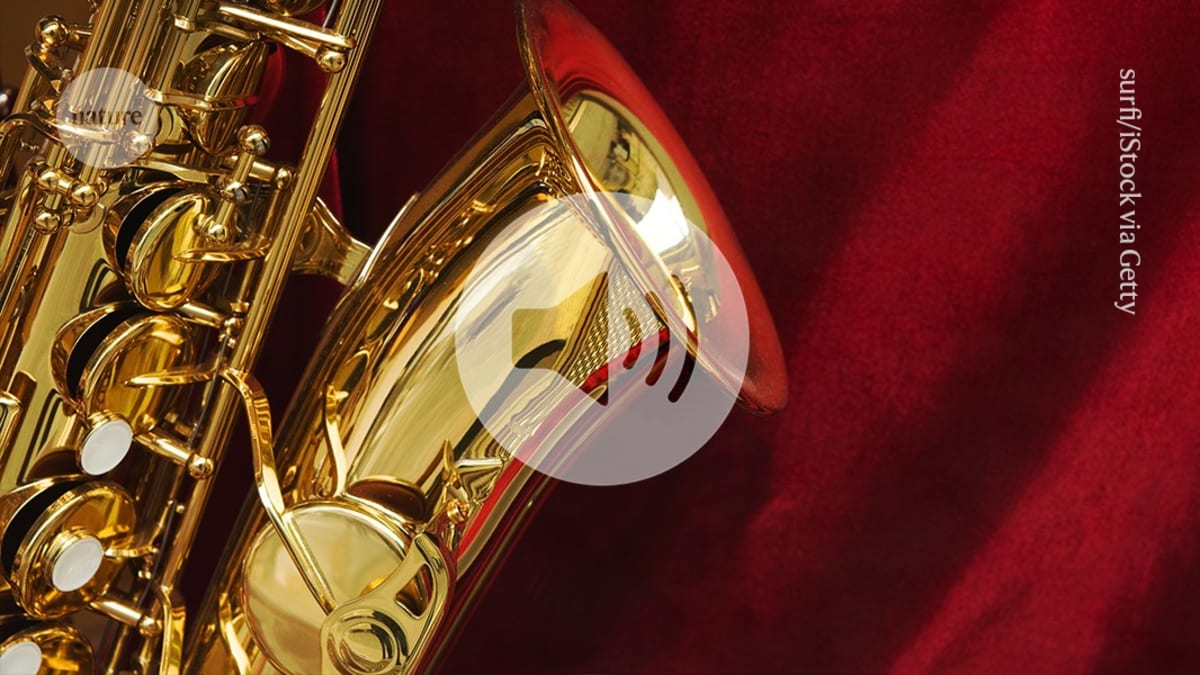
When Stephon Alexander picks up his saxophone at a New York jazz club, he's not just making music. He's training his brain to tackle the universe's biggest mysteries.
The director of Brown University's Center for Theoretical Physics discovered something unexpected during his 30-year journey as both a physicist and jazz musician. The same mental muscles he uses to improvise music help him solve physics problems in ways textbooks never could.
Alexander's musical journey started at age 12 in the Bronx when his father brought home a used saxophone from a garage sale. The instrument came from a former New York Yankees pitcher who never learned to play it. Soon after, Alexander heard Ornette Coleman's free jazz on his radio and fell in love with the idea that you could "play whatever you want and make up whatever you want."
That freedom became his training ground. While most kids dreaded classical piano practice (which he'd done since age eight), the saxophone felt different. It was exploration, not obligation.
The connection between music and science clicked when Alexander met Daniel Kaplan, his high school physics teacher who was also a professionally trained jazz musician. Kaplan taught him something crucial: "Intuition is the lifeblood of a good physicist."
Why This Inspires
Alexander's story challenges how we think about scientific training. Most people imagine physicists hunched over equations in silent laboratories. But Alexander's breakthrough came from embracing creativity in a completely different field.
He now says directly: "I would not be the physicist I am today if it weren't for my practice as a musician, especially as an improvisational musician." The improvisation makes him "more fluid and flexible mentally" when approaching physics problems.
Sometimes he even ponders physics problems while watching live performances in jazz clubs. The music doesn't distract him. It unlocks new ways of thinking.
His experience proves that breakthrough thinking often comes from unexpected places. Scientists don't need to abandon art for equations. Sometimes the art makes the equations clearer.
Alexander's dual career shows young people they don't have to choose between passions that seem worlds apart. Your creative hobby might be training you for your "serious" career in ways you can't yet see.
The universe's secrets might just be waiting for someone who thinks in jazz.
More Images




Based on reporting by Nature News
This story was written by BrightWire based on verified news reports.
Spread the positivity!
Share this good news with someone who needs it