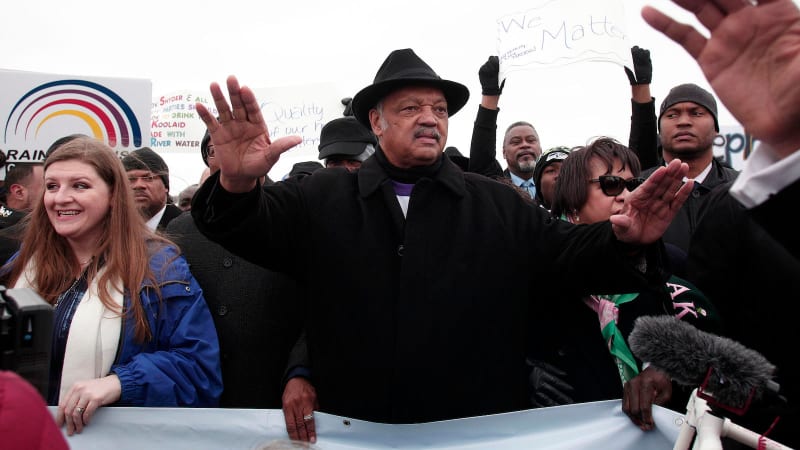
Jesse Jackson Championed Environmental Justice for Decades
Civil rights icon Jesse Jackson, who died Tuesday at 84, made environmental justice a cornerstone of his 1988 presidential campaign and inspired a generation of activists. His groundbreaking work connected civil rights to clean air, safe water, and healthy communities across America.
When Peggy Shepard walked into a Saturday campaign meeting in 1988, she had no idea she was about to find her life's calling. Two hours later, she walked out as press secretary for Jesse Jackson's presidential campaign in Manhattan.
That campaign changed everything for Shepard and for environmental justice in America. Jackson became one of the first presidential candidates to center environmental justice, a term most Americans had never heard at the time.
He called for ending offshore oil drilling, phasing out nuclear energy, reducing car pollution, and restoring wetlands and forests. He even proposed a modern version of the Civilian Conservation Corps, an idea that would take nearly 40 years to materialize.
"Being in the Jesse Jackson campaign led to everything I'm doing right now," said Shepard, who now leads WE ACT for Environmental Justice in New York City. The volunteer position exposed her to stark pollution disparities between neighborhoods that would fuel her decades of advocacy work.
Jackson marched with Dr. Martin Luther King Jr. and transformed American politics with his two historic presidential campaigns. In his later years, he drew powerful connections between segregation in his hometown of Greenville, South Carolina, and the toxic drinking water crisis in Flint, Michigan.
When Melissa Mays filed a lawsuit against Flint in 2016 for exposing nearly 100,000 residents to lead-contaminated water, Jackson showed up. He walked through the doors unannounced, asked if he could speak, and declared that officials should put "tape around the city, because Flint is a crime scene."
"The moment validated her concerns" and kicked off a longtime friendship, Mays said. Jackson returned to Flint repeatedly, helping turn the local crisis into national news and pushing the Obama administration to respond more forcefully.
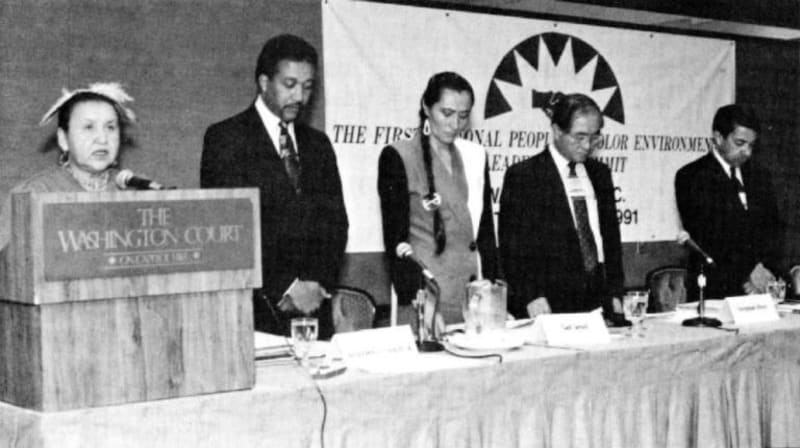
Cheryl Johnson, who runs the Chicago-based environmental justice nonprofit People for Community Recovery, remembers seeing Jackson as a 10-year-old on a field trip. Her mother, Hazel Johnson, founded one of the first environmental justice organizations in the country and worked with Jackson during the Clinton administration.
"To see him fighting, at that particular time, for the right to be black in America, was an inspiration for me that I followed for many, many years," Johnson said.
The Ripple Effect
Jackson's environmental legacy lives in the activists he inspired and the causes he elevated. Shepard went on to co-found WE ACT, which has won major victories for clean air and environmental health in communities of color. The American Climate Corps, which Jackson envisioned in 1988, finally launched in 2024 under the Biden administration.
His work helped establish that environmental justice and civil rights are inseparable. Clean air, safe water, and healthy communities aren't luxuries but basic human rights that every neighborhood deserves.
Jackson died Tuesday at his South Side Chicago home, surrounded by family. He was 84 and had been battling progressive supranuclear palsy, a neurodegenerative disorder.
"Our father was a servant leader," the Jackson family said in a statement. "We shared him with the world, and in return, the world became part of our extended family."
His vision of environmental justice as a civil right continues to inspire activists fighting for clean air and water in communities across America.
More Images


Based on reporting by Grist
This story was written by BrightWire based on verified news reports.
Spread the positivity!
Share this good news with someone who needs it


%2Ffile%2Fdailymaverick%2Fwp-content%2Fuploads%2F2022%2F06%2FOpinion-Simelane-SolarTW.jpg)