Jhansi Women Turn Folk Art Into Thriving Jute Business
In Jhansi, India, 25 women are painting traditional chiteri folk art onto jute bags, turning nearly forgotten wedding decorations into a steady income source. What started as one artist's COVID lockdown project now employs a growing team bringing Bundelkhand's visual heritage to corporate clients and schools across the region.
When Pratibha Dongre saw the deity paintings from her childhood disappearing from doorways in Bundelkhand, she found an unexpected way to preserve them: jute bags.
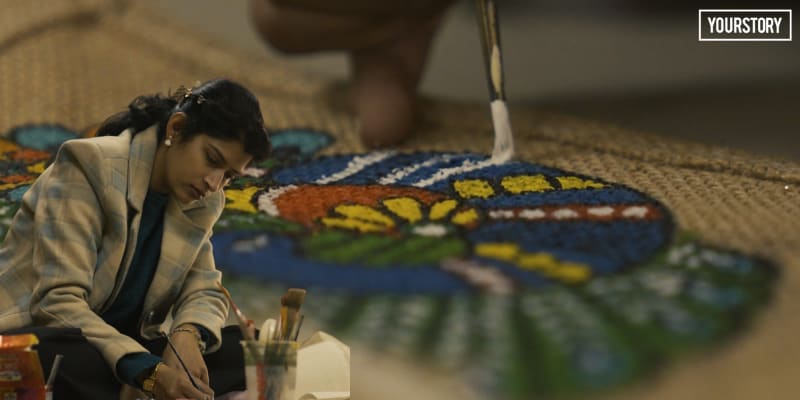
Dongre runs Rachnatmak Arts at the Rise Incubation Center in Jhansi, where she and 25 women transform plain jute into custom bags, medals, and gifts decorated with chiteri art. This traditional folk style once graced village doorframes during weddings, welcoming guests with protective imagery painted around entrances.
The trained fine arts graduate started seriously during the 2020 COVID lockdown when interest in her designs grew. By 2022, orders had increased so much she couldn't keep up alone, so she began training other women to join the production.
Her model accommodates different needs. Some women work at the center, learning and painting alongside Dongre. Others receive materials at home and return finished pieces, allowing those who cannot travel regularly to still participate and earn.
Each order starts with conversation, not products. Clients discuss purpose, size, color, and intended use before any jute gets cut. Banks, schools, government offices, and companies order for conferences, corporate kits, and ceremonies, giving the bags a built-in distribution network through formal events.
The Ripple Effect
What makes this story special isn't just preserving folk art. It's that preservation now provides reliable work for women who might otherwise have limited options.
The model proves especially valuable in smaller cities like Jhansi, where Dongre noticed customized jute bags weren't readily available. Recognition through the CM YUVA Yojana scheme in December 2024 helped her add machinery and formalize operations, making production more predictable even if late nights still happen when deadlines pile up.
The women working with Dongre gain more than income. They're learning a traditional art form that was fading from public view, keeping it alive not through museums or documentation, but through everyday objects people actually use and carry.
From college experiments in 2014 to a workshop supporting 25 families a decade later, Dongre's path shows how cultural preservation and economic opportunity can grow together. The rhythm of orders, training, and production now sustains not just one artist's vision, but a shared livelihood rooted in Bundelkhand's visual memory.
Every painted bag leaving Jhansi carries both local heritage and new possibilities forward.
More Images

Based on reporting by YourStory India
This story was written by BrightWire based on verified news reports.
Spread the positivity!
Share this good news with someone who needs it