Joan Riggs' Shaky Hands Steady After New Brain Treatment
A Pennsylvania nurse who couldn't hold a fork steady for a decade can now write clearly again thanks to focused ultrasound, a breakthrough treatment helping 1.1 million Americans with essential tremor reclaim their lives. The needle-free procedure calms brain tremors in hours, not years.
Joan Riggs stopped eating real dinners because her hands shook so badly she couldn't guide a spoon to her mouth without spilling. The 64-year-old from Lemoyne, Pennsylvania, gave up her nursing career, abandoned her beloved cross-stitch hobby, and resigned herself to a life of finger foods and frustration.
About a decade ago, Riggs developed essential tremor, a brain condition causing uncontrollable rhythmic shaking that affects roughly 1.1 million American adults. Unlike Parkinson's disease, which causes tremors at rest, essential tremor strikes when people try to do everyday tasks like eating, drinking, shaving, or applying makeup.
"I was always spilling food and making a mess on the floor," Riggs said. "Just getting a fork or spoon to my mouth was so frustrating."
Dr. Pratik Talati, a functional neurosurgeon at Penn State Health, sees patients like Riggs regularly. He explains that symptoms typically start between ages 36 and 40, and more than half of patients have a family history of the condition.
Traditional treatments include medications like propranolol and primidone, which calm overactive nerve signals. But when pills don't work, patients now have advanced options that sounded like science fiction just years ago.
Deep brain stimulation uses a "pacemaker for the brain" with small wires delivering targeted electricity to suppress tremors. Focused ultrasound, the newer breakthrough Riggs chose, doesn't require any incisions at all.
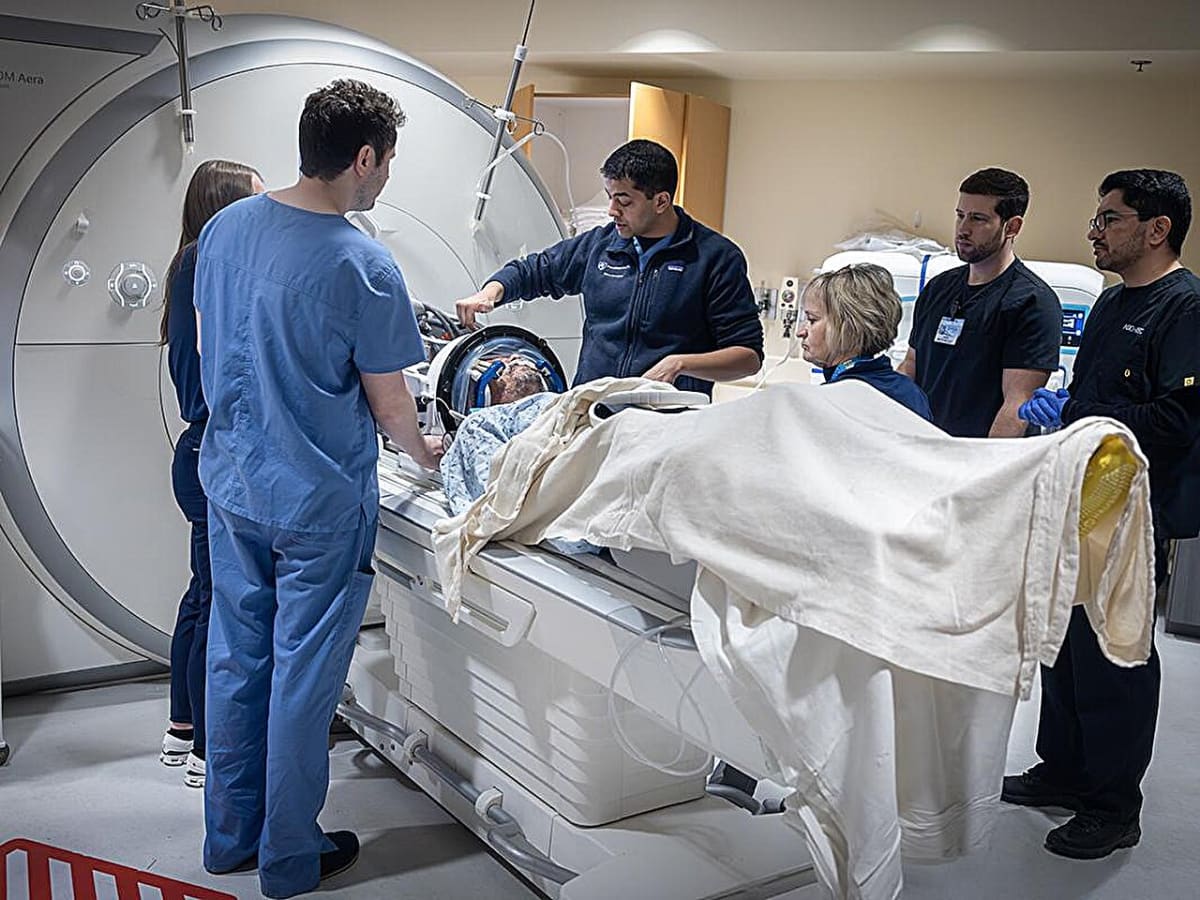
During focused ultrasound, patients stay awake while doctors use ultrasound beams to treat a tiny brain region involved in tremors. Most people go home the same day, and research shows the results can last five years or longer.
Why This Inspires
Riggs underwent her procedure in February. The first time she signed her name afterward, she couldn't believe her eyes. Her handwriting was legible again.
"It's amazing to have patients who've had debilitating tremors for decades come in and, within hours, have a dramatic reduction," Talati said. The treatment reduces tremor severity, eases embarrassment, and improves patients' quality of life.
Now Riggs types at the speed she remembers from her years as a medical secretary. She's planning to pick up cross-stitching again soon, threading needles she couldn't have steadied months ago.
"I'm in a better frame of mind about so many things," she said. "I can start enjoying my life again."
For one million Americans whose hands won't stay still, that future is finally within reach.
More Images

Based on reporting by Medical Xpress
This story was written by BrightWire based on verified news reports.
Spread the positivity!
Share this good news with someone who needs it