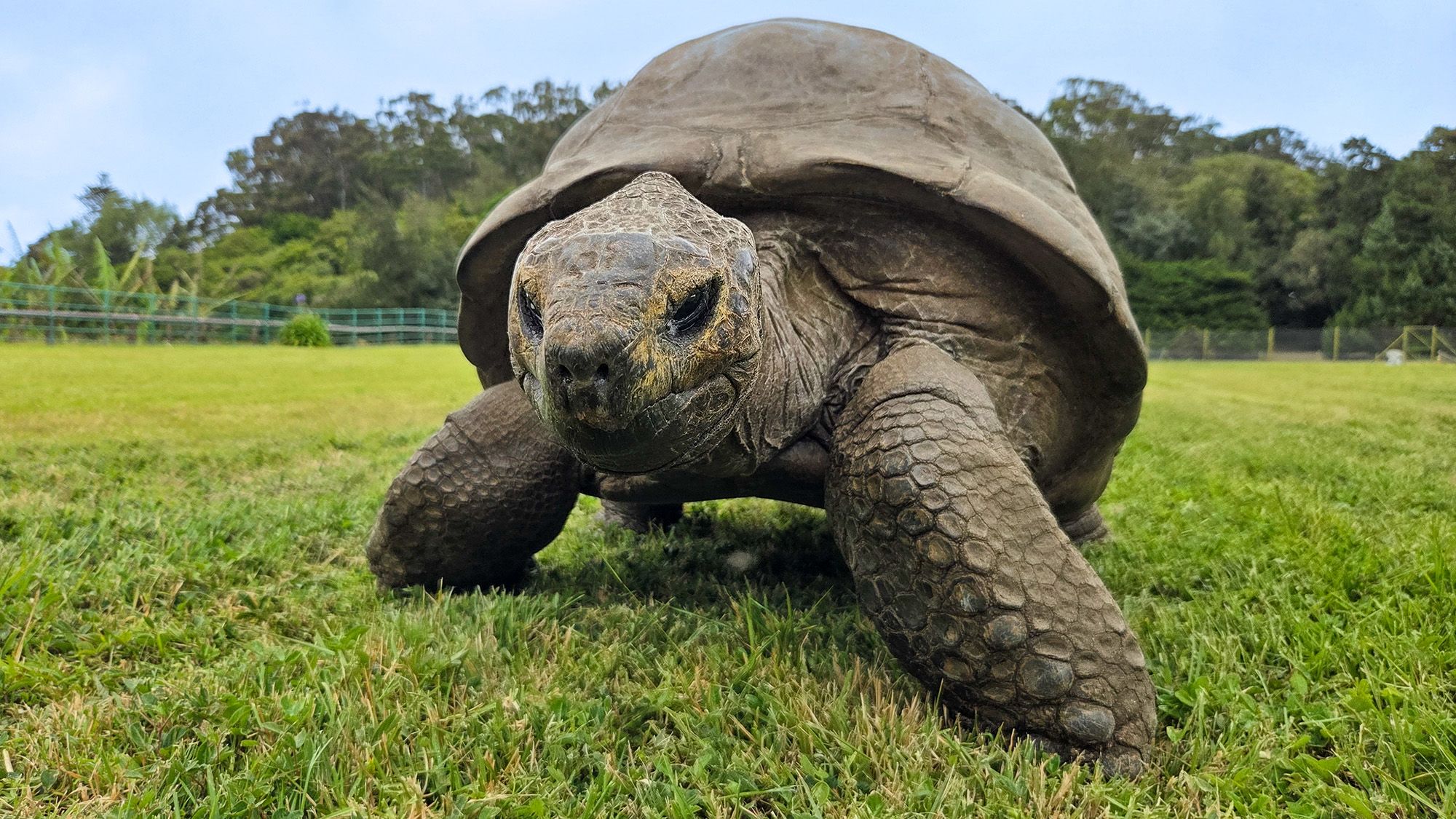
Jonathan the Tortoise's Genes Reveal Secrets to 194 Years
Scientists have unlocked genetic clues explaining how Jonathan, the world's oldest living land animal, has survived nearly twice as long as expected for his species. The 194-year-old tortoise's DNA shows unique traits that keep his cells running like a well-oiled machine.
Jonathan the tortoise has been alive since before the American Civil War, and scientists finally know why he's still going strong at 194 years old.
Researchers discovered that this Aldabra giant tortoise carries special genetic traits that may explain his extraordinary lifespan. Most tortoises in his species live into their 90s, but Jonathan has doubled that and then some on the remote island of St. Helena in the south Atlantic.
Getting samples from the world's oldest land animal proved trickier than expected. Island authorities wouldn't allow blood draws for fear of infection, so the team had to use cheek scrapes instead. The first attempt accidentally collected bacteria from Jonathan's mouth rather than his own DNA, forcing researchers to start over.
Once they got the right samples, the team compared Jonathan's genes to those of younger tortoises. They found 287 unique genetic variants linked to aging processes, including genes that repair DNA and protect the tips of chromosomes that typically wear down with age.
The real breakthrough came when researchers examined chemical tags on Jonathan's DNA called methylation patterns. These tags work like dimmer switches, controlling how active different genes are. In most older tortoises, these patterns become disorganized over time, like a filing system falling into chaos.
But Jonathan's genes related to mitochondria, the powerhouses of cells, showed remarkably organized patterns. His mitochondrial genes appear to stay consistently active, potentially keeping his cells energized and able to repair damage effectively. This pristine maintenance might be the secret sauce to his longevity.
Why This Inspires
Jonathan's genetic profile offers more than just tortoise trivia. The aging pathways researchers identified mirror those in humans, suggesting that insights from this ancient celebrity could inform longevity research across species. Understanding how Jonathan keeps his cellular machinery running smoothly opens doors to exploring similar mechanisms in human health.
The study also demonstrates the value of persistence in science. After the initial sample mix-up and technical difficulties, the team could have given up, but their determination paid off with discoveries that span species boundaries.
While scientists can't prove causation yet, the patterns are compelling. Jonathan's ability to maintain order in critical genes while chaos accumulates elsewhere suggests that targeted preservation of key cellular functions might matter more than preventing all aging changes. It's a reminder that aging isn't just about time passing but about how our bodies maintain themselves along the way.
Jonathan continues living his best life on St. Helena, unaware that his genes might someday help unlock longevity secrets for creatures far beyond his island home.
More Images


Based on reporting by Live Science
This story was written by BrightWire based on verified news reports.
Reset Your Focus With Today’s Daily Affirmations & Mood Check
Take a 60-second mindful pause with curated daily affirmations and our private positivity mood tracker.
Spread the positivity!
Share this good news with someone who needs it

