Journalist Teaches 20,000 Kids Farming in Vadodara Schools
A former journalist quit the newsroom to teach children about farming, and now 20,000 students across five Indian schools are growing their own food and learning where it comes from. Their tears over a destroyed cabbage crop showed they finally understood what farmers face.
When an October rainstorm flattened a cabbage crop at a Vadodara school, children who had tended it for weeks stood speechless and cried. For Hitarth Pandya, those tears meant everything: his students finally understood what real farmers go through.
Pandya spent nearly a decade writing environmental stories for major Indian newspapers like The Times of India and The Indian Express. He covered deforestation, dying wetlands, and struggling farmers, but one question haunted him: did any of his stories actually change anything?
In 2015, he left journalism to find a more direct way to create impact. His answer was simple: teach children to farm.
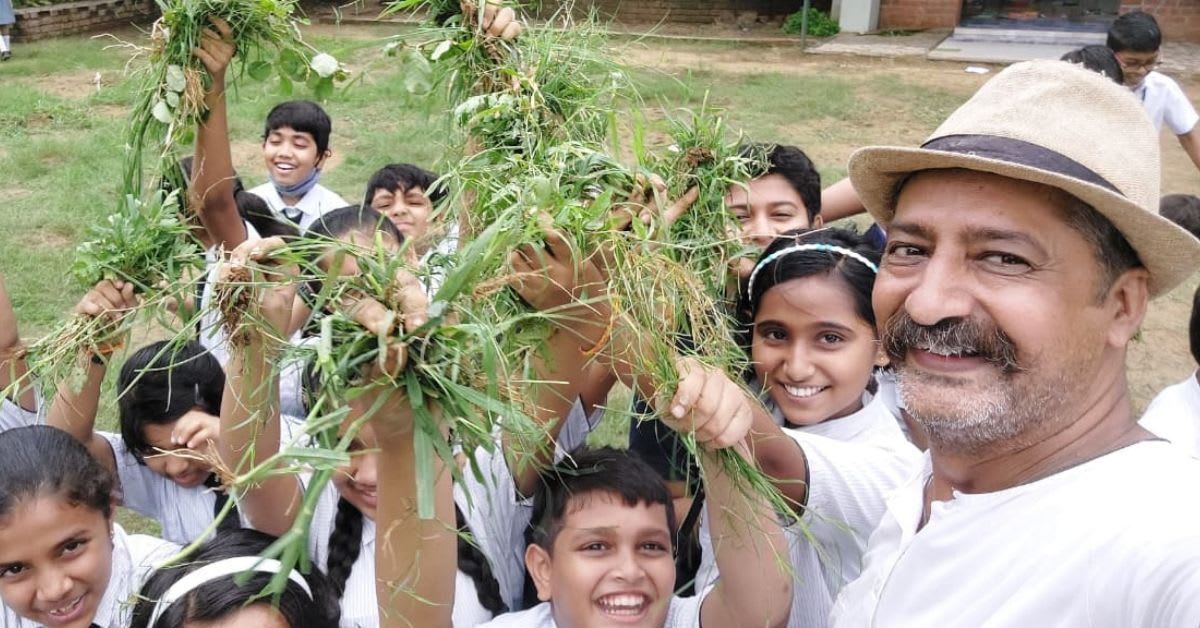
He launched the Kids for the Environment Development Initiative (KEDI) in 2016 at a single Vadodara school. Instead of lectures, he put students directly in the soil. They planted seeds, tracked growth, and watched their gardens come alive.
The curriculum grew organically. Fourth graders start with farming basics, then progress through insects, birds, trees, and water systems as they advance. Each topic connects naturally to the next, building a complete picture of how ecosystems work.
Nandani, who has studied with Pandya for five years, says the hands-on approach makes complex concepts stick. "By being in the field, we understand how everything is connected," she explains. "Then I can teach my cousins and friends."
Principal Lina Shajy of Tejas Vidyalaya puts it bluntly: "One 70-minute session with Hitarth equals 100 hours of textbook learning."
KEDI also teaches the business side of farming through student-run vegetable markets. Children track wholesale prices, compare them to supermarket rates, and sell their own produce. They quickly discover the gap between what consumers pay and what farmers actually earn.
At the annual KEDI Mela, students sell around 2,000 kg of terrace-grown greens and 3,500 kg of vegetables they grew themselves. The Harvest Festival takes it further: everything grown gets cooked in a community kitchen, with each child bringing chapatis from home. Even picky eaters finish their vegetables when they grew them with their own hands.
Teachers notice changes beyond the garden. Students now pour leftover water from their bottles onto school trees instead of dumping it. Urban parents living in apartments have started experimenting with balcony gardens.
The Ripple Effect
What started in one classroom has reached nearly 20,000 children across five Vadodara schools. Two schools have made KEDI part of their permanent eco club programs. The impact goes home with students: families are changing how they think about food, waste, and water because children are teaching what they learned in the dirt.
Pandya found his answer to whether stories can create change. Sometimes you just need to trade your pen for a shovel and let children discover the lessons themselves.
More Images
%2Fenglish-betterindia%2Fmedia%2Fmedia_files%2F2025%2F09%2F23%2Fhitarthpandya-2025-09-23-19-38-11.jpg)
%2Ffilters%3Aformat(webp)%2Fenglish-betterindia%2Fmedia%2Fmedia_files%2F2025%2F09%2F23%2Fhitarth-pandya-explaining-soil-2025-09-23-13-45-33.jpeg)
%2Ffilters%3Aformat(webp)%2Fenglish-betterindia%2Fmedia%2Fmedia_files%2F2025%2F09%2F23%2Fstudents-making-notes-2025-09-23-19-28-58.jpeg)
Based on reporting by The Better India
This story was written by BrightWire based on verified news reports.
Spread the positivity!
Share this good news with someone who needs it