Jupiter's Moon Ganymede Has Auroras Like Earth's
NASA's Juno spacecraft discovered that Ganymede's shimmering auroras break into bright patches that mirror Earth's northern lights. The finding reveals this distant moon's atmosphere behaves more like home than scientists ever expected.
A quick flyby of Jupiter's largest moon just revealed something extraordinary: its auroras dance across the sky in glowing patches strikingly similar to Earth's own northern lights.
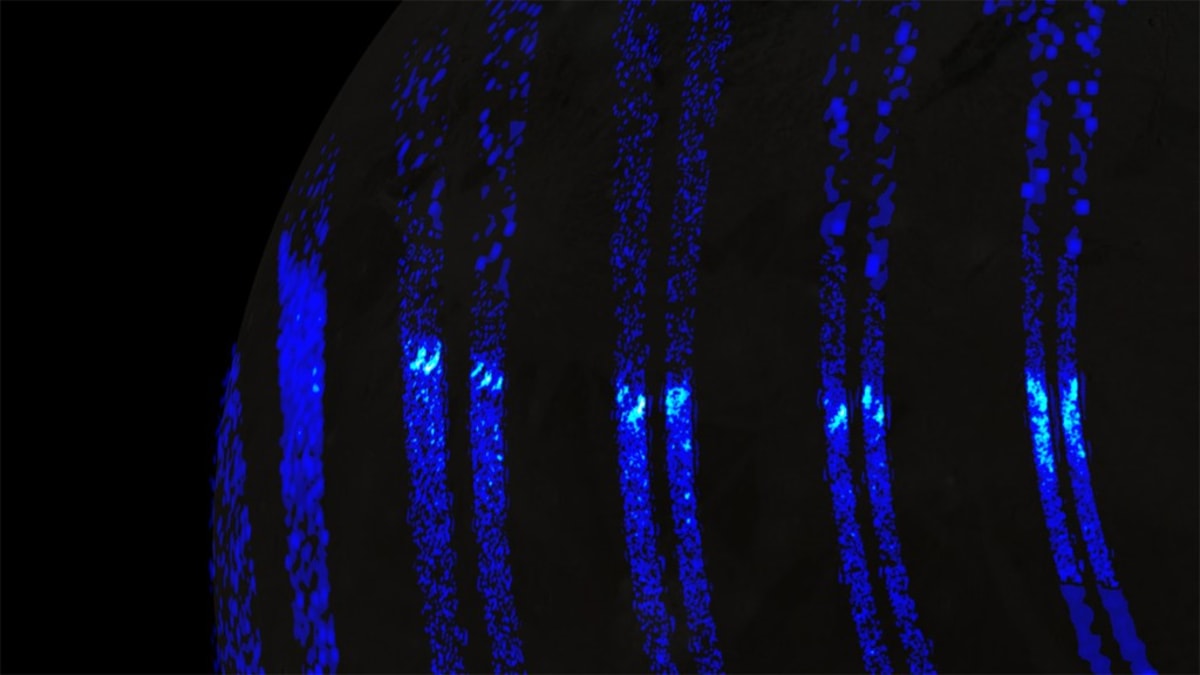
During a 15-minute encounter in July 2021, NASA's Juno spacecraft captured the most detailed ultraviolet images ever taken of Ganymede's polar lights. What scientists found surprised them.
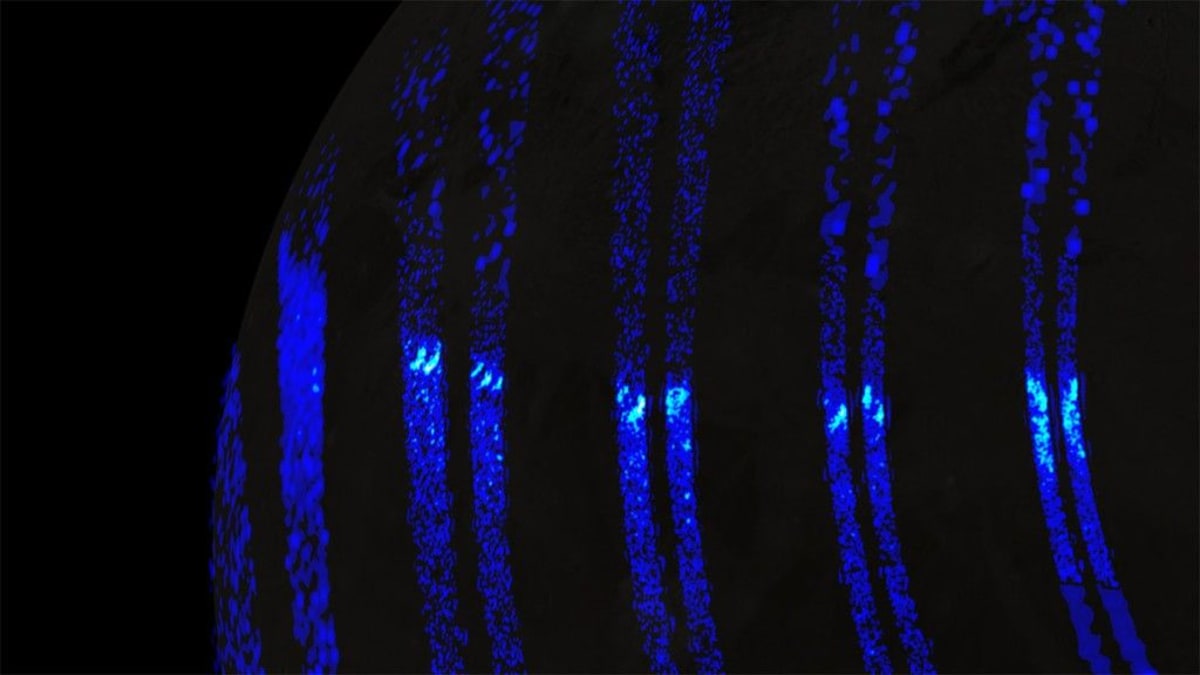
Instead of smooth, continuous ovals, Ganymede's auroras splinter into small, bright patches called "beads." These structures mirror features seen in Earth's auroral displays and are linked to massive energy releases in the magnetosphere.
"Similar structures have been observed in the auroras of Earth and Jupiter, where they are linked to sub-storms and dawn storms," said Alessandro Moirano, a researcher at the University of Liège's Laboratory of Atmospheric and Planetary Physics.
What makes Ganymede special is that it's the only moon in our solar system with its own magnetic field. This crucial ingredient allows it to create auroras when charged particles from Jupiter's vast magnetosphere interact with gases in its thin atmosphere, causing them to glow.
On Earth, auroras occur when solar particles slam into our magnetosphere and get funneled toward the poles. The same basic process happens on Ganymede, except the particles come from Jupiter rather than the sun.
Previous observations from ground-based telescopes couldn't capture these fine details. Juno's ultraviolet spectrograph resolved features just a few kilometers across, finally revealing the intricate "bead" structures that had remained hidden.
Why This Inspires
This discovery shows that even on a moon 390 million miles from Earth, the laws of physics create beauty that feels familiar. The same forces that paint green and red curtains across Arctic skies also illuminate Ganymede's poles with similar dancing lights.
Scientists still don't know how often these bead features appear since Juno's encounter was so brief and the spacecraft won't return. That mystery will fall to the European Space Agency's JUICE mission, which arrives at Jupiter in 2031 for extended studies of Ganymede.
Understanding auroras on distant worlds helps scientists piece together how magnetic fields and atmospheres interact throughout our solar system. Each new discovery reminds us that the universe operates on principles we can recognize and understand, even in places we've never been.
Finding Earth-like phenomena on a moon of Jupiter proves that home might not be as unique as we thought, and the cosmos might be more familiar than it appears.
More Images

Based on reporting by Space.com
This story was written by BrightWire based on verified news reports.
Spread the positivity!
Share this good news with someone who needs it