JWST Spots Ancient "Monster Stars" Before Black Hole Birth
Astronomers think mysterious red dots captured by the James Webb Space Telescope might be giant stars from the universe's first billion years, caught right before collapsing into black holes. These "monster stars" could help solve one of space science's newest puzzles.
Scientists may have just spotted something extraordinary: the universe's first generation of stars, frozen in time moments before their dramatic transformation into black holes.
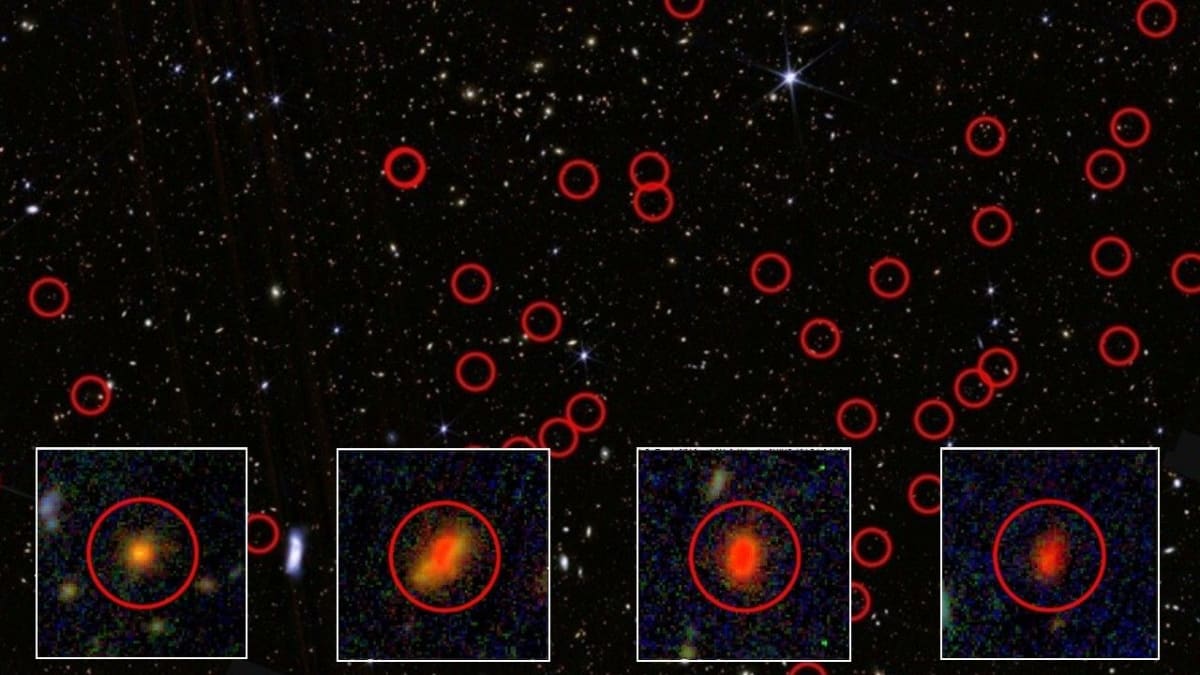
The James Webb Space Telescope has been capturing strange "little red dots" that have puzzled astronomers since their discovery. These tiny, bright objects existed within the first 2 billion years after the Big Bang, but nobody could explain what they were.
Scientists first guessed they might be actively feeding black holes. But the evidence didn't add up. The objects showed no X-ray emissions that black holes typically produce, and they lacked the chemical signatures scientists expected to find.
That's when Harvard researchers Devesh Nandal and Avi Loeb had a different idea. What if these dots weren't black holes at all, but supermassive stars captured just before they died?
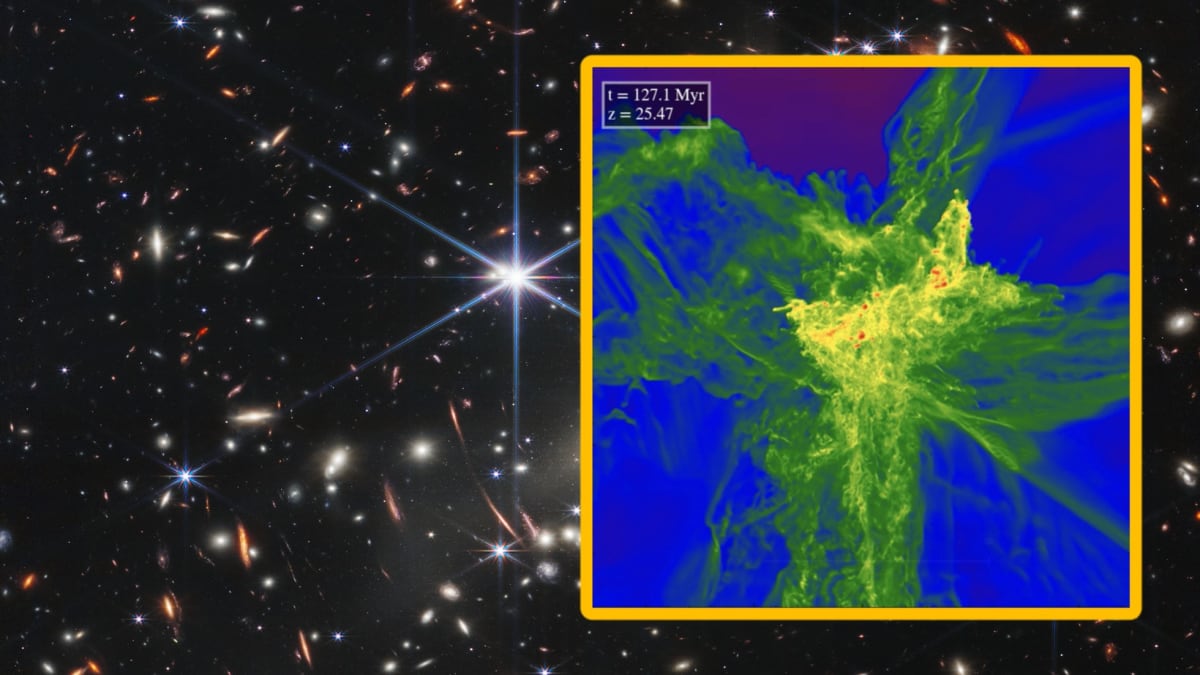
The team built models of "monster stars" made almost entirely of hydrogen and helium, the universe's primordial building blocks. These Population III stars could grow to a million times the mass of our sun.
When they compared their models to two specific red dots, the match was stunning. The simulations explained the objects' extreme brightness and their unusual features, including a distinctive V-shaped dip in the light they emit.
The V-shaped pattern, previously thought to come from dust, actually comes from the star's own atmosphere. As these massive stars shed material, they create shell-like structures around themselves that give off a reddish glow.
Why This Inspires
This discovery opens a window into the universe's earliest moments. Population III stars are the ancestors of everything we see today, but they've remained theoretical until now.
Finding them means we're watching the exact process that created the first supermassive black holes. We're seeing cosmic history unfold, captured in snapshots that traveled billions of years to reach us.
The research shows how scientific mysteries often have simpler explanations than we expect. Instead of complex black hole systems, these might just be stars doing what stars do, caught at a dramatic moment in their lives.
The team is now refining their models to understand how these monster stars lose mass and whether rhythmic pulsations launch material off their surfaces. Each answer brings us closer to understanding how the universe built itself from almost nothing.
We're not looking at dead stars or distant black holes anymore—we're witnessing the living, breathing moments before transformation.
More Images

Based on reporting by Google: James Webb telescope
This story was written by BrightWire based on verified news reports.
Spread the positivity!
Share this good news with someone who needs it