K9 Leon Retires After 8 Years Protecting Assam Wildlife
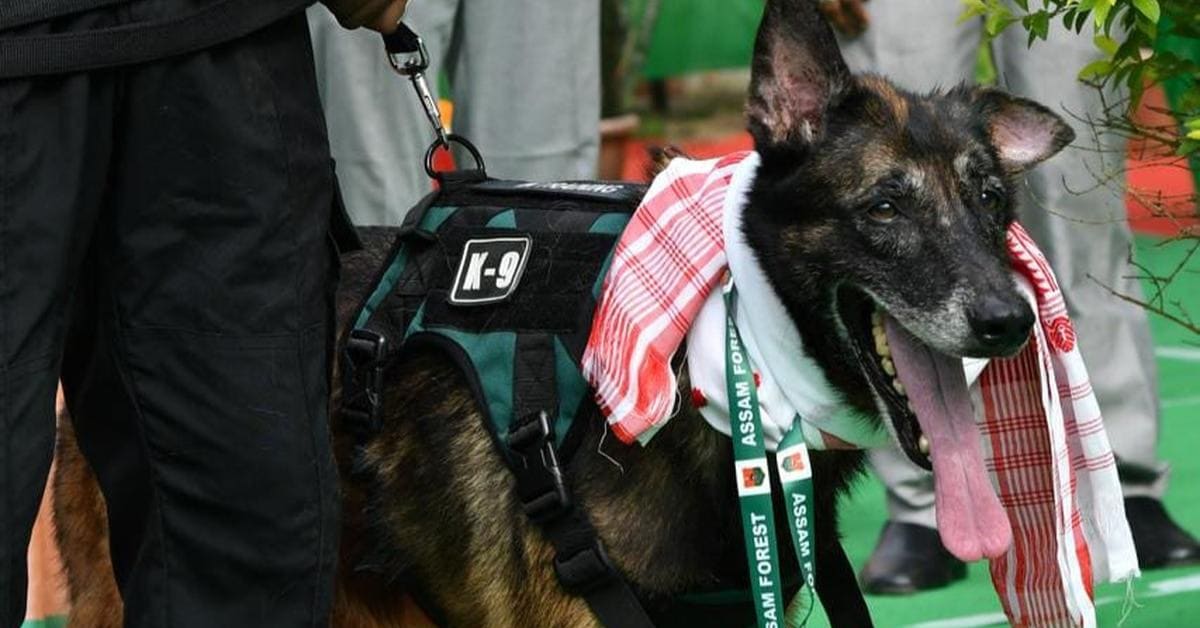
A Belgian Malinois sniffer dog just retired after nearly eight years tracking poachers and protecting endangered rhinos in India's Kaziranga National Park. His career shows how wildlife detection dogs are becoming essential tools in the fight against illegal hunting.
When floodwaters swept through Kaziranga National Park in 2019, most evidence of crime washed away with them.
But K9 Leon, a Belgian Malinois, followed a scent trail invisible to human investigators for nearly 20 kilometers. His nose led police through forest camps and security checkpoints, helping them identify and arrest a suspected rhino poacher who might otherwise have escaped.
On August 15, 2026, Leon retired from active service during Independence Day ceremonies at Kaziranga National Park and Tiger Reserve in Assam, India. Over nearly eight years, he completed more than 200 patrols and 30 specialized operations alongside handlers Anil Kumar Das and Mrigen Das.
His assignments ranged from tracking poachers through dense jungle to helping solve a gold theft case in Golaghat. Leon worked with Aaranyak's K9 Sniffer Dog Squad, the Assam Forest Department, Kaziranga authorities and Assam Police.
What makes dogs like Leon so effective is their extraordinary sense of smell. Research shows dogs can detect scents between 100,000 and 100 million times better than humans, with a much larger portion of their brain dedicated to processing odors.
Wildlife detection dogs are trained to identify scents from rhino horn, elephant ivory, tiger parts, deer meat, and even live animals like birds and turtles. Their abilities compare to detecting a teaspoon of sugar dissolved in two Olympic swimming pools worth of water.
Each nostril works independently, letting dogs detect tiny differences in scent concentration from different directions. The structure of their noses allows exhaled air to leave through the sides, so incoming scents remain uncontaminated while they breathe.
Leon completed 12 months of specialized training with Aaranyak's dog unit, established to strengthen anti-poaching efforts in Assam with support from NABU International. The training taught him not just scent detection, but confidence in difficult terrain like forests and rivers.
Why This Inspires
Leon's retirement marks a career of quiet victories in conservation. Every trail he followed represented a potential crime prevented, an endangered animal protected, or evidence secured that might have been lost forever.
His work also highlights a growing solution in wildlife protection. Traditional patrols often miss what detection dogs find routinely, making them invaluable partners in understaffed and underfunded conservation areas.
The partnership between Leon and his handlers demonstrates what's possible when animal intelligence meets human dedication. For eight years, they worked as a team protecting some of India's most endangered species.
After 200 patrols and countless kilometers through flood and forest, Leon has earned his rest knowing his nose helped protect Assam's irreplaceable wildlife.
More Images
%2Fenglish-betterindia%2Fmedia%2Fmedia_files%2F2026%2F08%2F20%2Fleon-2026-08-20-11-05-32.png)
%2Fenglish-betterindia%2Fmedia%2Fmedia_files%2F2025%2F11%2F20%2Fwild-at-heart-banner-image-microsite-banner-2025-11-20-16-17-04.jpg)
%2Ffilters%3Aformat(webp)%2Fenglish-betterindia%2Fmedia%2Fmedia_files%2F2026%2F08%2F20%2Fleon-1-2026-08-20-11-14-31.png)
Based on reporting by The Better India
This story was written by BrightWire based on verified news reports.
Spread the positivity!
Share this good news with someone who needs it