Kaduna Brings Power to 450 Homes After a Decade of Darkness
A Nigerian state is transforming thousands of lives by treating electricity as a human right, not a luxury. Governor Uba Sani is distributing 600 transformers and 10,000 solar street lights to end power inequality across Kaduna.
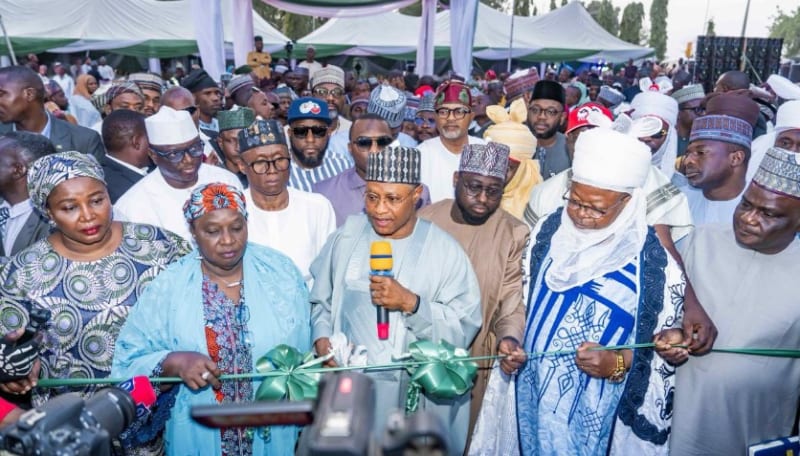
For 450 households in Damau, Kaduna State, the nights just got brighter after ten years without electricity.
Governor Uba Sani launched an ambitious plan to end power inequality across Nigeria's Kaduna State, where reliable electricity has long been a privilege of the wealthy and urban residents. The initiative includes distributing 600 transformers across all 23 local government areas and installing 10,000 solar-powered street lights.
The governor sees electricity as the backbone of a thriving society. Without it, hospitals can't preserve life-saving vaccines, children study in darkness, and small businesses struggle to survive.
Since taking office nearly three years ago, Sani's administration has completed multiple abandoned power projects. They installed solar mini-grids in 190 primary healthcare centers, delivering 1.35 megawatts of clean energy that helped reduce maternal and child mortality rates.
The government also finished a long-stalled 132/33kV substation at the Green Economic Zone in Maraban Jos. This major infrastructure project will attract manufacturing investments and position Kaduna as a competitive economic hub.
Local businesses are already feeling the impact. Welders, tailors, cold-room operators, and ICT hubs can now operate with predictability instead of constant power interruptions that stall productivity and damage equipment.
The Ripple Effect
The transformation extends far beyond keeping lights on. Reliable electricity means farmers can irrigate crops more efficiently, hospitals can operate around the clock, and students can study after sunset.
The Damau solar project alone delivers 100 kilowatts to a community that had lived in darkness since 2015. Additional projects totaling 1,694 kilowatts are underway in four other communities.
Kaduna is also partnering with the Rural Electrification Agency on projects that include 1.5 megawatts for Kaduna Polytechnic and 8 megawatts for Ahmadu Bello University in Zaria. These installations will ensure educational institutions can operate modern facilities without interruption.
The governor emphasized that energy access shouldn't depend on your zip code. His administration rehabilitated distribution networks stretching across hundreds of kilometers in all three senatorial zones, ensuring rural communities receive the same reliable power as cities.
Looking ahead, Kaduna is developing urban generation projects including a 2-megawatt initiative in the TRAPCO community and 4 megawatts in Makarfi to boost local manufacturing. When small businesses thrive with reliable power, entire communities prosper alongside them.
More Images


Based on reporting by Premium Times Nigeria
This story was written by BrightWire based on verified news reports.
Spread the positivity!
Share this good news with someone who needs it